
UNAMA: Afghanistan’s Security Institutions Lack Transparency, Accountability, Undermining Public Trust

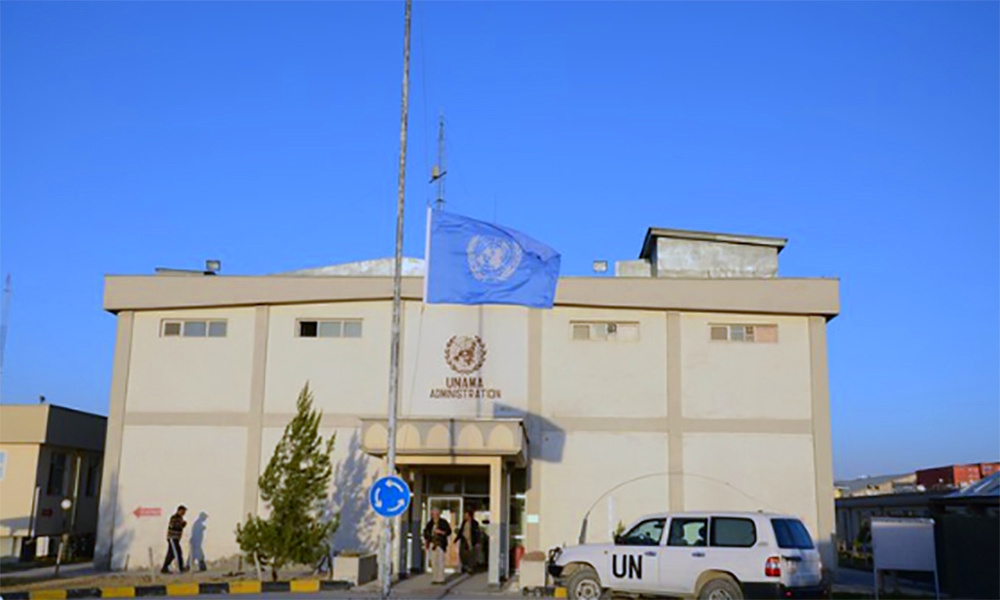
KABUL, August 10, 2026 – The United Nations Assistance Mission in Afghanistan (UNAMA) has released a comprehensive 38-page report warning that while the Islamic Emirate of Afghanistan (IEA) has taken initial steps to discipline and oversee its security forces since taking power in August 2021, persistent opacity, unresolved complaints, and widespread fear of reprisals continue to erode public confidence in the country’s security institutions.
In its detailed assessment, UNAMA acknowledges that the de facto authorities have introduced several internal mechanisms aimed at promoting discipline, including formal directives, the establishment of internal monitoring units, and the creation of new oversight bodies tasked with investigating alleged misconduct by security personnel. Among these are the Security and Filtration Commission, the High Directorate of Supervision and Monitoring of Decrees and Edicts, the Ministry of Propagation of Virtue and Prevention of Vice’s Commission for Hearing Complaints, and the Supreme Court.
However, the mission underscores a critical shortcoming: these measures have not been matched by adequate public disclosure regarding the number of complaints received, the scope of investigations carried out, or the disciplinary and judicial actions ultimately taken. This lack of transparency, UNAMA argues, not only weakens the deterrent effect of accountability systems but also fuels public skepticism about whether rules are applied equally particularly to those in positions of authority.
“The limited amount of public information on complaints received, investigations conducted, and disciplinary or judicial actions taken by relevant de facto bodies undermine confidence and weaken deterrence,” said Georgette Gagnon, UNAMA’s Deputy Special Representative of the Secretary-General and Officer-in-Charge. “Visible and consistent accountability measures indicate that rules are applied equally and to every person, including those in positions of authority.”
According to the report, UNAMA has documented specific cases in which IEA authorities arrested and investigated security personnel accused of misconduct, with some cases referred to military courts. Yet the mission notes that a significant number of complaints remain unresolved, often languishing without clear outcomes or timelines. Compounding this problem, many Afghan citizens are reluctant to report abuses due to a pervasive fear of retaliation, deep-seated distrust in official channels, and physical or bureaucratic barriers that prevent access to oversight institutions.
Women, the report emphasizes, face disproportionately severe obstacles. Ongoing restrictions on their freedom of movement, employment, and public participation imposed by the de facto authorities further limit their ability to lodge complaints or seek redress, leaving many vulnerable to abuse without recourse.
To address these systemic issues, UNAMA has put forward a series of targeted recommendations. The mission urges the IEA to establish and rigorously enforce clear, internationally aligned codes of conduct for all security personnel, alongside explicit regulations governing the use of force, arrests, detention procedures, searches, and crowd control. It also calls for the creation of safe, accessible, and inclusive complaint mechanisms that allow individuals regardless of gender or background to report misconduct without fear of discrimination or retaliation, with robust protections for victims, witnesses, and whistleblowers.
Furthermore, UNAMA advocates for regular, transparent public reporting on all aspects of the disciplinary process, from complaint intake to final judicial outcomes, as well as the development of stronger data-collection and record-keeping systems to monitor trends in misconduct and accountability over time.
The report concludes that greater transparency and consistent accountability are not merely administrative necessities but foundational elements for rebuilding public trust, enhancing the professionalism of security forces, and improving overall governance. In the longer term, such reforms could also facilitate respect for human rights and bolster Afghanistan’s engagement with the international community, which has largely conditioned its diplomatic and developmental support on demonstrable progress in these areas.
“Strengthening accountability within security institutions is not only about addressing individual cases of misconduct it is about signaling a commitment to the rule of law that benefits all Afghans,” Gagnon added. “Without credible oversight, the gap between institutional promises and lived realities will continue to widen, undermining both stability and Afghanistan’s path toward international re-engagement.”
UNAMA’s findings come at a critical juncture, as Afghanistan continues to navigate complex security, humanitarian, and political challenges nearly five years after the IEA’s takeover. The mission has reiterated its readiness to support the authorities in implementing these reforms, should they choose to pursue a more transparent and accountable governance model.
Our Pashto-Dari Website
Support Dawat Media Center
If there were ever a time to join us, it is now. Every contribution, however big or small, powers our journalism and sustains our future. Support the Dawat Media Center from as little as $/€10 – it only takes a minute. If you can, please consider supporting us with a regular amount each month. Thank you
DNB Bank AC # 0530 2294668
Account for international payments: NO15 0530 2294 668
Vipps: #557320

Comments are closed.