
UNICEF Provides Emergency Water Supply to 2,000 Flood-Affected People in Afghanistan’s Nuristan

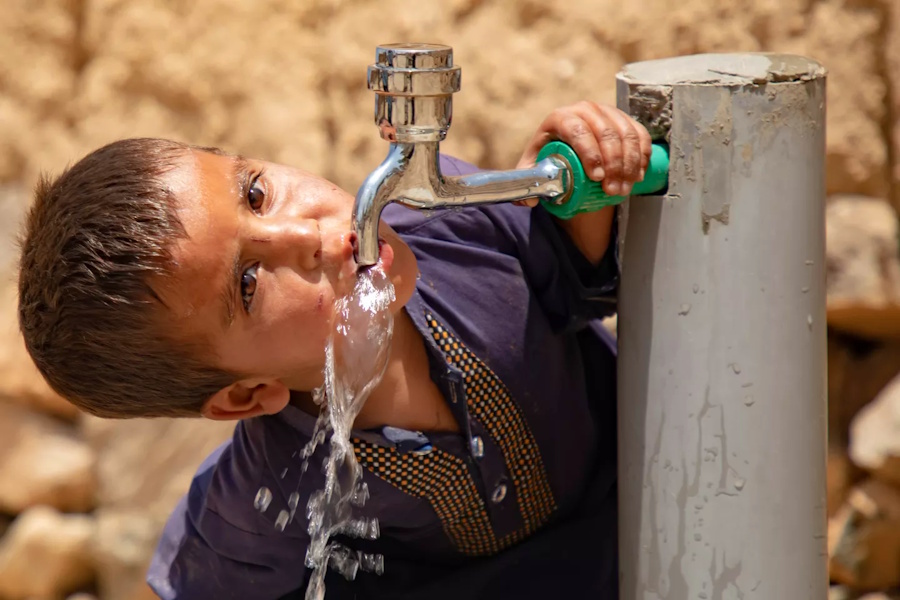
The United Nations Children’s Fund (UNICEF) in Afghanistan, in coordination with humanitarian partners, has established an emergency water supply system in Nuristan province to deliver safe drinking water to communities hard-hit by recent severe floods.
Announced on Monday, August 3, the temporary system features a storage capacity of 60,000 litres and is expected to provide clean water to approximately 2,000 individuals in flood-affected areas across the eastern provinces. The intervention comes as part of a rapid response to widespread inundation that has destroyed homes, swept away roads, and overwhelmed local water infrastructure.
According to UNICEF, the recent floods have impacted multiple districts in eastern Afghanistan, causing significant damage to essential facilities and creating urgent humanitarian needs particularly among already vulnerable populations, including women, children, and the elderly. Many communities in these regions were already facing precarious living conditions due to ongoing economic strain and limited access to basic services.
Access to safe drinking water is especially critical in the aftermath of natural disasters, UNICEF noted. Floodwaters often contaminate wells and piped water networks, while damaged sanitation systems heighten the risk of outbreaks of waterborne diseases such as cholera, acute watery diarrhoea, and typhoid. Children are disproportionately vulnerable to these health threats, given their weaker immune systems and higher susceptibility to dehydration and infection.
The temporary water supply system is part of broader humanitarian efforts aimed at stabilizing living conditions for families struggling with the floods’ aftermath. In addition to water provision, humanitarian teams are working to assess damage to health clinics, schools, and irrigation channels, and are coordinating with local authorities to prioritize emergency repairs.
Nuristan, a mountainous and remote province, poses unique challenges for disaster response. Its rugged terrain, limited road networks, and sporadic communication coverage often slow the delivery of aid and complicate logistics. The destruction of key transport routes by flooding has further isolated some communities, delaying the restoration of water, electricity, and sanitation services. Humanitarian workers have reported that in some areas, relief supplies must be transported on foot or by pack animals, extending response times significantly.
Afghanistan has experienced a rising frequency of climate-related disasters in recent years, from devastating flash floods to prolonged droughts and unseasonal extreme weather. These events have compounded the country’s existing crises including food insecurity, widespread malnutrition, economic collapse, and a strained healthcare system. Humanitarian agencies have repeatedly warned that climate shocks are intensifying vulnerabilities, particularly in rural and hard-to-reach provinces like Nuristan, where subsistence farming and natural springs are lifelines for daily survival.
UNICEF continues to maintain a wide-ranging humanitarian presence across Afghanistan, with programming focused on water, sanitation, and hygiene (WASH), maternal and child health, nutrition, education, and child protection. The organization has stressed that sustaining access to safe water and basic health services is not only a matter of immediate survival but also fundamental to long-term resilience and recovery for children and families.
The current intervention in Nuristan represents an urgent, life-saving measure to address flood-related needs in the short term. Meanwhile, provincial authorities, UN agencies, and NGO partners are exploring longer-term strategies to rehabilitate damaged water systems, reinforce riverbanks, and improve early warning and preparedness mechanisms for future disasters. However, funding shortfalls and access constraints continue to pose significant hurdles to sustainable recovery in one of Afghanistan’s most isolated and disaster-prone regions.
Our Pashto-Dari Website

Support Dawat Media Center
If there were ever a time to join us, it is now. Every contribution, however big or small, powers our journalism and sustains our future. Support the Dawat Media Center from as little as $/€10 – it only takes a minute. If you can, please consider supporting us with a regular amount each month. Thank you
DNB Bank AC # 0530 2294668
Account for international payments: NO15 0530 2294 668
Vipps: #557320

Comments are closed.