

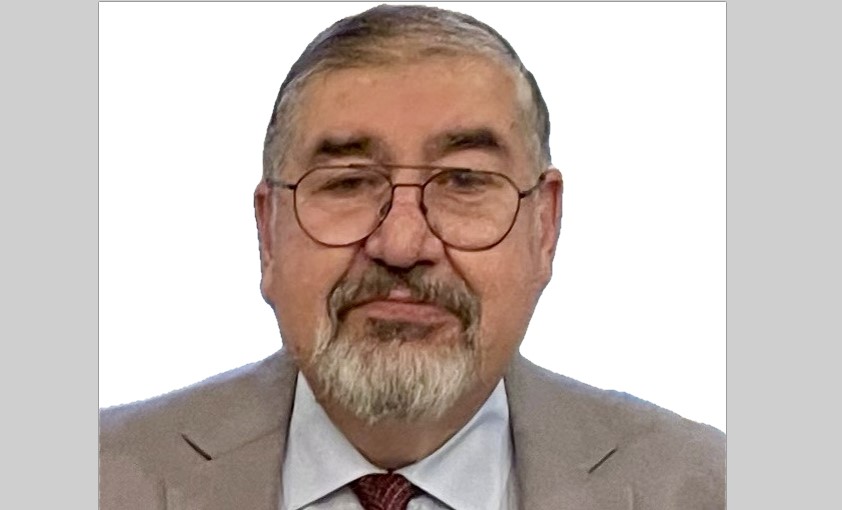
The backlash against Aisha Wahab’s August 2026 remarks reveals less about her position and more about a persistent analytical failure in how Afghanistan is discussed in Western and diaspora circles. Her statement has been hastily caricatured as an endorsement of the Taliban. It is nothing of the sort. It is, in fact, a sober articulation of a long-standing principle of statecraft: you engage with the authority that exists, not the authority you wish existed.

Wahab did not speak as an Afghan nationalist seeking to legitimize a ruling order. She spoke as an Afghan American democratic politician shaped by the institutional logic of U.S. foreign policy and, critically, by the post-Iraq and post-Afghanistan consensus within the Democratic Party that rejects open-ended war. Her position reflects a clear strategic premise: diplomacy is the only remaining instrument available after military options have been exhausted and politically repudiated. To interpret this as ideological sympathy for the Taliban is analytically careless.
The critics, particularly among segments of Afghan civil society in exile, are operating from a binary framework that no longer corresponds to geopolitical reality. In their view, any engagement equals recognition, and recognition equals legitimization. This is a category error. Diplomatic engagement is not an endorsement of internal governance; it is a mechanism for influence. Without channels of communication, there is no leverage on issues such as girls’ education, women’s participation, or civil liberties. Isolation, by contrast, produces exactly the outcome these critics claim to oppose: a closed system with no external pressure points.
Wahab’s argument is also grounded in a blunt recognition of Afghanistan’s structural importance. Geography and resources are not rhetorical devices; they are enduring facts that shape international behavior. Afghanistan sits at the intersection of Central and South Asia, adjacent to nuclear-armed states and major economic corridors. No serious policymaker in Washington believes that total disengagement is viable. The question is not whether to engage, but how.
Equally significant is her critique of the past two decades. The record of U.S.-aligned warlords and factional elites is not a footnote; it is central to understanding the collapse of the republic. Billions of dollars flowed through networks that prioritized patronage over institution-building. For many Afghans, the so-called republic was not experienced as a coherent democratic state but as a fragmented system marked by corruption, coercion, and competing power centers. Wahab’s willingness to state this openly has unsettled those who continue to defend that order as a lost ideal rather than a deeply compromised reality.
The claim that Wahab is “legitimizing the Taliban” collapses under minimal scrutiny. Legitimacy is not conferred by a single statement, nor by diplomatic contact. The Taliban control territory, administer institutions, and exercise coercive authority. That is the empirical basis of their position. Ignoring that fact does not weaken them; it only removes any external capacity to shape their behavior. The alternative proposed by her critics is not a strategy. It is a posture.
More broadly, the outrage directed at Wahab ignores a longer trajectory in U.S. policy. From the outset in 2001, Washington did not commit to building a fully institutionalized Western democratic state in Afghanistan. The early “light footprint” approach relied on proxies, limited troop deployments, and a narrow counterterrorism mandate. State-building was improvised, inconsistent, and frequently subordinated to short-term security objectives. This was not a sustained, coherent project of democratic transformation.
By the time of the Obama administration, the internal debate had already shifted decisively toward exit. The surge was a temporary escalation designed to create conditions for withdrawal, not a long-term commitment to indefinite stabilization. The Democratic Party, shaped by the political costs of Iraq and Afghanistan, moved steadily toward disengagement. This trajectory culminated in the Biden administration’s decision to complete the withdrawal in 2021, ending the longest war in American history. The notion that the United States was ever fully invested in constructing a durable Western-style democracy in Afghanistan is contradicted by its own policy evolution.
Seen in this context, Wahab’s position is not controversial. It is consistent. If the United States has rejected military occupation as a tool, then diplomacy remains the primary instrument. Engagement becomes not a concession, but a necessity.
There is also a deeper discomfort at play. Wahab disrupts a preferred narrative in which moral clarity is maintained through distance. It is easier to denounce than to engage, easier to demand maximalist outcomes than to operate within constraints. But policymaking does not occur in the realm of moral absolutes. It operates within limits imposed by power, geography, and political will.
Her critics would benefit from confronting an uncomfortable question: what is the alternative? Another intervention? Proxy warfare? Continued isolation with no channels of influence? None of these options have demonstrated effectiveness. All carry significant costs, primarily for Afghans inside the country.
Diplomacy is not a reward. It is a tool. It does not guarantee progress, but it creates the conditions under which progress can be attempted. Wahab’s statement recognizes this fundamental reality. The attempt to recast it as betrayal reflects a refusal to engage with the constraints that now define Afghanistan’s situation.
The debate should move beyond accusations and toward strategy. That requires abandoning rhetorical absolutism and accepting that influence, however limited, is preferable to irrelevance. Wahab has articulated that position clearly. The reaction against her has not refuted it.
Afghanistan’s Three Paths to Change: War, Restoration, or Conditional Engagement
Our Pashto-Dari Website

Support Dawat Media Center
If there were ever a time to join us, it is now. Every contribution, however big or small, powers our journalism and sustains our future. Support the Dawat Media Center from as little as $/€10 – it only takes a minute. If you can, please consider supporting us with a regular amount each month. Thank you
DNB Bank AC # 0530 2294668
Account for international payments: NO15 0530 2294 668
Vipps: #557320

Comments are closed.