

A Global Scandal and Its Regional Implications
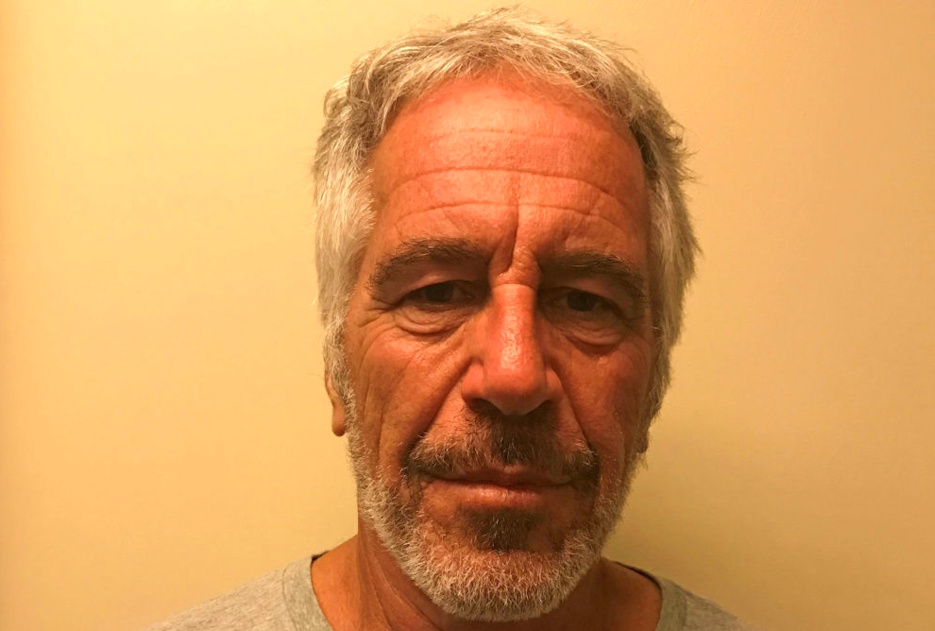
Amidst grave global events, including the looming specter of a potential American-Iranian war, the world was jolted by new document releases from the U.S. Department of Justice. These disclosures shed further light on the sprawling scandals orchestrated by Jeffrey Epstein, who, as reported by The New York Times on February 3rd, managed to assemble and leverage a network comprising Washington’s political decision-makers, Wall Street magnates, Hollywood elites, and global power brokers.
The intense global focus on the Epstein scandal following these latest leaks underscores its worldwide nature and the profound shift it reveals in the realms of business and public relations. The “Epstein-gate” scandal can be analyzed through four interconnected, spiraling rings:
The First Ring: Influence Peddling and Brokerage. This layer involves Epstein’s role as a facilitator and fixer, conducting high-stakes business deals and offering privileged access and services for a price, essentially monetizing influence.
The Second Ring: The “Orgy Island” and Criminal Enterprise. Centered on Little St. James Island, dubbed “Pedophile Island,” this ring was the site of debauched parties where the “chosen” elite, Epstein’s so-called “saved sect,” indulged. Their preferred “dish” was underage girls, accompanied by various forms of licentiousness.
The Third Ring: Intelligence by Proxy and Blackmail. Activities on the island were not secret; attendees were often filmed. This harvested material was allegedly provided to official intelligence agencies of countries Epstein was linked to, with some reports suggesting it ultimately reached Mossad, Israel’s intelligence service, for potential use in blackmail or influence.
The Fourth Ring: Ideological Casting and “Savior” Complex. Frequenters of the island often viewed themselves as a superior breed, “übermensch” figures bearing the world’s burden. They believed that through their technology, connections, and sheer will, they could solve global problems, including the intricate issues of the Middle East. Notably, this included some figures involved in Arab-Israeli diplomacy and international stakeholders from the U.S. and Europe.
These rings are not isolated. Figures from the first ring (business/politics) could graduate to becoming guests on the island. Material from the first and second rings could fuel intelligence operations. All rings contribute to the ideological self-perception of the fourth. Some may remain solely in the first ring, engaging in deals without ever setting foot on the infamous island.
This scandal is undeniably global, reminiscent of WikiLeaks and the Panama Papers, yet more complex. It points to a phenomenon where money, politics, sex, intelligence, and ideology dangerously intertwine. More precisely, moral deviance—encompassing sexual crime, financial corruption, and money laundering—has become a lever of power in politics, economics, and security. This is the critical and dangerous shift.
However, understanding this shift requires a measured, objective approach, avoiding two major pitfalls evident in some initial Arab media and commentary:
-
Avoid Civilizational Reductionism: It is a grave injustice to reduce Western civilization to the criminal, aberrant actions of a convicted felon and his associates. Judgment must be specific, just as it is unjust to judge Islam by the extremist actions of some Muslims.
-
Avoid Hasty Judgments Based on Association: One must not rush to condemn every individual named in the vast trove of documents without scrutinizing the specific nature of their involvement. Mere presence in the documents is not proof of criminal activity.
This necessitates verification by media through objective investigation or by judicial bodies before issuing definitive judgments. Nevertheless, from a public opinion standpoint, individuals listed as guests on Little St. James Island are understandably viewed with suspicion. Consequently, it becomes imperative for those named to issue clarifications—as several figures have done—detailing the nature of their relationship with Epstein.
Silence does not dispel suspicion; it damages reputations, not only of the individuals but also of the institutions they represent. Therefore, a “statement of truth” is required to protect these institutions, or appropriate measures must be taken against those implicated.
The impact of these leaks will likely vary between the West and the Arab world. In the West, repercussions may be moral and legal: expulsions from legislative bodies (e.g., the UK House of Lords), removal of names from public buildings, or forced public explanations.
In the Arab world, however, the impact is more likely to be political. The leaks could trigger repercussions similar to, though potentially less explosive than, the WikiLeaks cables. While the Epstein documents may not contain “major state secrets” on the same scale, they are potent enough to destabilize. They could act as a spark in a combustible environment, reminiscent of the kindling that fueled the Arab Spring, by exposing compromising connections and undermining the legitimacy of figures in power.
The Epstein scandal seems unprecedented in its scale, the status of the implicated, and its global character. We are not dealing with a local affair but with a network of global figures. Yet, the practices it reveals—condemned by law and morality—are not new to the worlds of politics, finance, or intelligence, where blackmail and the exploitation of interests are long-standing tools.
We are witnessing not merely an event but a phenomenon. Given the ongoing entanglement of money, intelligence, and politics, it is highly probable that similar leaks—if not as vast—will emerge in the future. Epstein may be the brightest star of this phenomenon, the case that reached the public, but he is unlikely to be the last. Parallel intelligence structures using similar methods (parties, decadence, recording) can turn on their handlers or be sacrificed in inter-agency conflicts.
Two factors make future exposures likely:
-
The Digital Revolution: A single storage device can hold vast amounts of damning data, easily transmitted or “accidentally” leaked to expose what was meant to stay hidden.
-
The Illusion of Secrecy: Contrary to what the “saved sect” might believe, their private moments of “relaxation” are never beyond the reach of surveillance and potential exposure at an opportune time.
Therefore, it is probable that the Epstein leaks will unsettle the political scene in the Arab world, unless they are buried by a larger international event that pushes them from the headlines. Their potential to erode trust and expose compromising ties remains a significant, lingering factor in the region’s complex political landscape.
Our Pashto-Dari Website

Support Dawat Media Center
If there were ever a time to join us, it is now. Every contribution, however big or small, powers our journalism and sustains our future. Support the Dawat Media Center from as little as $/€10 – it only takes a minute. If you can, please consider supporting us with a regular amount each month. Thank you
DNB Bank AC # 0530 2294668
Account for international payments: NO15 0530 2294 668
Vipps: #557320

Comments are closed.