
While Qatar Delivers Diplomacy, Kashmir Unrest Expands Pakistan’s Internal Crises in Balochistan and Khyber Pakhtunkhwa
By Ahmad Fawad Arsala


In the closing weeks of a volatile and dangerous confrontation between the #UnitedStates and #Iran, an unexpected diplomatic actor has emerged with tangible results: #Qatar. Quietly, methodically, and without theatrical posturing, Qatari negotiators moved between Washington and Tehran, narrowing gaps and constructing the framework of what now appears to be a credible pathway to de escalation.
At precisely the same moment, #Pakistan, loud, self promoting, and desperate for relevance, has once again exposed the hollowness of its diplomatic claims.
For months, #Islamabad projected itself as a central mediator in the crisis. Its officials issued statements, hosted meetings, and cultivated the impression of indispensability. Yet when the decisive phase arrived, Pakistan was nowhere. No breakthrough, no framework, no trust from either Washington or Tehran. The contrast with Qatar could not be more stark. One delivered outcomes, the other manufactured headlines.
This failure is not incidental. It reflects a deeper structural reality: Pakistan is no longer viewed as a credible or neutral actor in regional diplomacy. Its long record of duplicity, simultaneously aligning with Western interests while facilitating opposing forces, has eroded whatever trust it once possessed. Mediation requires credibility. Pakistan has spent decades depleting it.
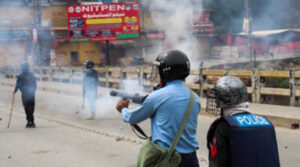
Now, as its external ambitions falter, internal pressures are erupting with renewed intensity.
The latest flashpoint is in #Kashmir under Pakistan administration, where widespread protests, strikes, and violent clashes have shaken the region. What began as grievances over economic hardship and governance failures has escalated into a broader expression of political discontent. Roads have been blocked, cities shuttered, and confrontations with security forces have turned deadly. This is not an isolated disturbance. It is a symptom of systemic instability.
And it comes on top of two already active fault lines.
In #Balochistan, a long running insurgency continues to challenge the authority of the state. Attacks on infrastructure and security forces persist, fueled by deep resentment over resource extraction, political marginalization, and heavy handed military responses.
In #KhyberPakhtunkhwa, the situation is equally volatile. Militant violence, cross border tensions, and growing public dissatisfaction have combined to create a region that remains far from stable. The state’s control is contested, its governance strained, and its security apparatus overstretched.
Taken together, these three fronts, #Kashmir, #Balochistan, and #KhyberPakhtunkhwa, paint a picture of a country grappling with internal fragmentation while simultaneously attempting to project external influence. It is an unsustainable contradiction.
Pakistan’s strategic establishment has long relied on a familiar formula: amplify external relevance to offset internal weakness. But that formula is breaking down. The world is no longer willing to indulge inflated claims of diplomatic centrality, especially when more reliable actors are available.
Qatar understood the assignment. It leveraged trust, maintained discretion, and delivered results. Pakistan, by contrast, relied on noise, symbolism, and outdated assumptions about its geopolitical importance.
The consequences are now visible. Diplomatic marginalization abroad. Escalating unrest at home.
The lesson is blunt but unavoidable: credibility cannot be improvised in moments of crisis. It is accumulated over time and lost the same way.
Pakistan is now confronting the cost of that loss.
#Geopolitics #MiddleEast #SouthAsia #IranWar #USIran #PakistanCrisis #RegionalStability
Support Dawat Media Center
If there were ever a time to join us, it is now. Every contribution, however big or small, powers our journalism and sustains our future. Support the Dawat Media Center from as little as $/€10 – it only takes a minute. If you can, please consider supporting us with a regular amount each month. Thank you
DNB Bank AC # 0530 2294668
Account for international payments: NO15 0530 2294 668
Vipps: #557320

Comments are closed.