
Nisar Mohammad Khan Yusufzai: The Pashtun Founder of Modern Education in Tajikistan
By: Mohammed Tariq Bazger

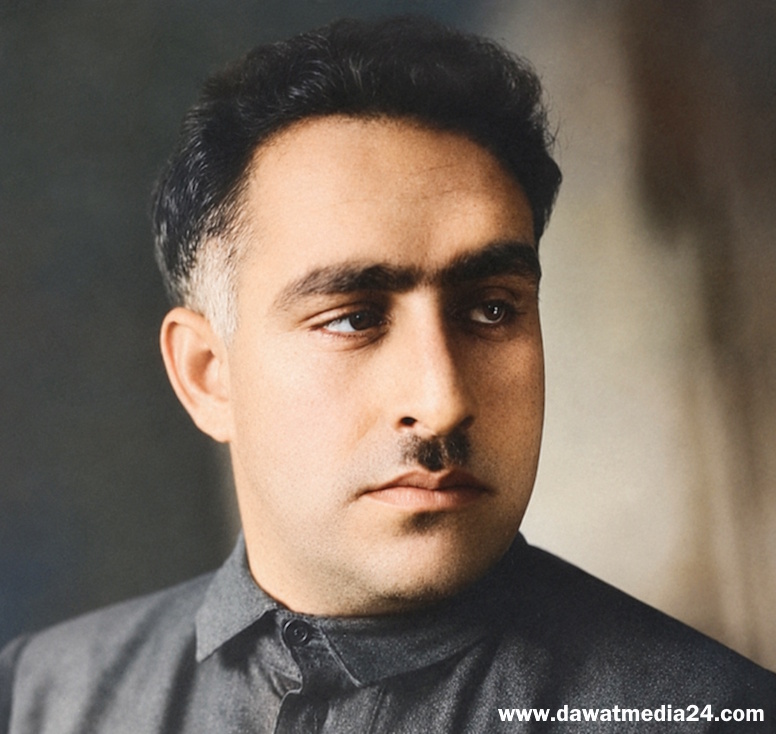
Nisar Mohammad Khan Yusufzai: The Pashtun Founder of Modern Education in Tajikistan
By: Mohammed Tariq Bazger
Abstract
This article examines the life, political career, and educational legacy of Nisar Mohammad Khan Yusufzai (1897–1937), a Pashtun revolutionary from Swabi who became Tajikistan’s first People’s Commissar (Minister) of Education from 1926 until his execution during the Stalinist Great Purge of 1937. Drawing on verified biographical records, Soviet-era documentation, Tajik state sources, and recent scholarship and media coverage including a 2021 Tajik documentary and a May 2025 state ceremony in Dushanbe this article situates Yusufzai’s life within the intersecting histories of Afghan independence, Soviet nation-building, and Central Asian educational development. It also identifies areas where popular accounts contain embellishments or unverifiable claims, distinguishing what is well-documented from what remains speculative.
Introduction: A Figure Between Nations
Among the largely forgotten architects of early Soviet Central Asian state formation stands Nisar Mohammad Khan Yusufzai (Pashto: نثار محمد یوسفزی; Russian: Нисор Мухаммад Юсуфзай / Nisor Avalovich Magomedov), a Pashtun revolutionary and educationist whose life bridged the national destinies of Afghanistan and Tajikistan. He was, by documented record, the first-ever Afghan communist, a decorated veteran of the Third Anglo-Afghan War (1919), an advocate for Tajik Soviet statehood, and the founding head of Tajikistan’s modern public education system.¹
His story spanning British India, Amanullah Khan’s Kabul, Tashkent, Bukhara, Dushanbe, and finally Moscow has attracted growing scholarly and popular attention in recent years, particularly in Tajikistan. Yet popular retellings have occasionally enriched the historical record with details that are difficult to verify. This article aims to present what is reliably documented while clearly flagging areas of uncertainty.
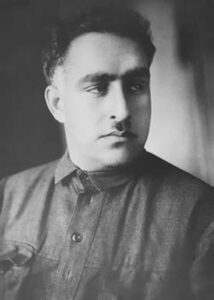
Biography: Early Life and the Third Anglo-Afghan War
Nisar Mohammad Yusufzai was born in 1897 in the village of Zaida, Swabi District, in what was then the North-West Frontier Province of British India.² He was the son of Awal Khan, grandson of Mohammad Ali, and a member of the Yusufzai Pashtun tribal confederation historically one of the largest and most influential Pashtun groups, with a presence extending across Peshawar, Swat, and the courts of Afghan rulers.
When Amanullah Khan launched the Third Anglo-Afghan War in 1919 to assert Afghanistan’s full independence from British suzerainty over its foreign affairs, Nisar Mohammad enlisted in the Afghan army. His motivations appear to have combined Pashtun nationalism with anti-colonial conviction. He received the Afghan Order of Gallantry (Order of Courage) for his conduct during the war.³
Swabi, however, remained under British jurisdiction following the Treaty of Rawalpindi (August 1919). Sentenced to death by British authorities in absentia a common fate for frontier Pashtuns who crossed to fight with the Afghan army Nisar Mohammad fled, first to Kabul and then to Tashkent, where he assumed the Russified name Nisor Avalovich Magomedov as a practical necessity for survival under Soviet jurisdiction.⁴
Historiographical note: Some popular accounts describe an elaborate “secret diplomatic mission” personally ordered by Amanullah Khan to Central Asia. While Nisar Mohammad’s presence in Soviet Central Asia clearly reflected the political currents of his time, and while Amanullah’s government did seek influence among Muslim populations across the region, primary documentation specifically confirming a direct royal mandate to Nisar Mohammad personally has not yet been independently verified in open-access sources.
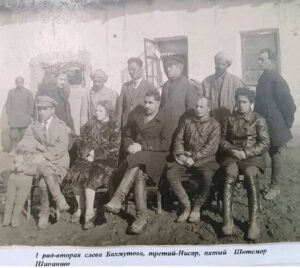
In Soviet Central Asia: Communist Party Membership and Tajik Statehood Advocacy
Upon arriving in Tashkent, Nisar Mohammad joined the Communist Party of the Soviet Union. Historical sources indicate he was also the first Afghan to become a communist.⁵ His membership was pragmatic a vehicle for advancing educational reform and national development but it also reflected the genuine appeal that Leninist anti-imperialism held for colonized peoples seeking liberation from British rule.
He joined a Soviet expedition to Gilan, Persia (modern Iran) in 1920, providing support to Mirza Kuchik Khan’s Jungle Movement (Nehzat-e Jangal) and the short-lived Persian Socialist Soviet Republic a significant but often overlooked episode in early Soviet engagement with Muslim-majority populations.⁶
Back in Central Asia, Nisar Mohammad became a vocal advocate for the creation of a distinct Tajik Soviet Socialist Republic, arguing that the Tajik people an Iranic-speaking population culturally and linguistically distinct from the Turkic majority of the Turkestan SSR deserved their own national administrative unit. He participated in publishing newspapers and campaigns for Tajik autonomy. The Tajik Autonomous Soviet Socialist Republic was established in 1924 as part of the Uzbek SSR, eventually becoming a full union republic (the Tajik SSR) in 1929.⁷
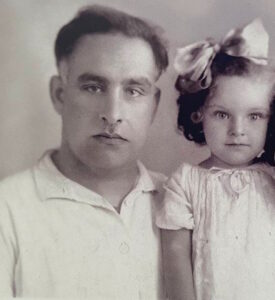
People’s Commissar of Education, 1926–1937
In 1926, Nisar Mohammad Yusufzai was appointed People’s Commissar of Education of Tajikistan the equivalent of Minister of Education a position he held for eleven years until his death in 1937.⁸ He was the first person to hold this office, which was established with his appointment.
His tenure coincided with one of the most intensive periods of state-building in Tajik history. Under his leadership, the foundations of a modern public education system were constructed in a territory where institutional literacy and secular schooling had been minimal. Key documented achievements include:
- Systematization of foundational state educational institutions
- Introduction of teacher-training programs
- Expansion of literacy campaigns
- Integration of modern secular curriculum alongside classical learning
- Development of Tajik national educational identity
Nisar Mohammad was fluent in multiple languages Pashto (his native tongue), Persian/Tajik, Russian, and Uzbek which made him exceptionally effective as an administrator across the multilingual environment of Soviet Central Asia.⁹ He also served as a Pashto language instructor at Moscow University, contributing to Soviet academic knowledge of South and Central Asian languages.¹⁰
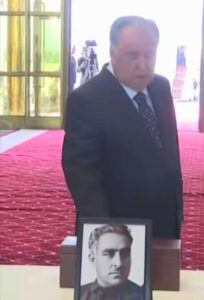
Arrest and Death during the Great Purge
On 8 October 1937, Nisar Mohammad was arrested by the NKVD (People’s Commissariat for Internal Affairs) on fabricated charges the standard apparatus of Stalinist political terror. He was among thousands of Soviet administrators, educators, and intellectuals of non-Russian nationality liquidated during the Great Purge of 1936–1938 on accusations of nationalism, espionage, or political disloyalty.
The documented circumstances of his death differ somewhat from the romantic martyrdom narrative found in popular retellings. According to sources cited by Wikipedia and the Military Wiki, during his NKVD interrogation a guard struck Nisar Mohammad, triggering a physical altercation in which the interrogator sustained severe injuries. Guards then entered the room and shot him.¹¹ His death was thus not a formal execution by firing squad following torture, but an extrajudicial killing during interrogation a distinction that is historically significant, if no less unjust.
His fellow founders of Soviet Tajikistan, Nusratullo Makhsum (the first leader of Soviet Tajikistan) and Shirinsho Shotemur, were executed the same year under the same purge.
Posthumous Rehabilitation and Tajik State Recognition
Soviet authorities revisited the cases of Nisar Mohammad and his executed colleagues during the 1950s and 1960s, formally rehabilitating them the standard Soviet-era mechanism for acknowledging wrongful political prosecutions.¹²
The Tajik state subsequently honored his memory in several concrete ways:
- A street in Dushanbe bearing his name runs through the area housing the Ministry of Education and Science of Tajikistan a symbolically fitting tribute.¹³
- He has been awarded the posthumous title Hero of Tajikistan.¹⁴
- In 2021, acclaimed Tajik director Safarbek Solekh released a documentary titled “Nisar”, featuring interviews with Muhammad’s descendants and Tajik historians. The film describes him as “the son of Afghans who dedicated his life for Tajiks.”¹⁵
His story was also recovered for Afghan readers as early as the 1960s, when chief researcher of the Afghanistan Academy of Sciences at Kabul University, Dost Shinwari, published an account in Kabul Magazine under the name “Nisar Muhammad Afghan.”¹⁶
Tajik Sources and Recent News: A Dedicated Section
The 2021 Documentary: Nisar (Нисор)
The most significant recent cultural contribution to preserving Nisar Mohammad’s legacy is the 2021 documentary Nisar, directed by Safarbek Solekh and released publicly on YouTube (February 2023, link in references). The film draws on interviews with Nisar Mohammad’s descendants and Tajik historians, situating his story within the broader narrative of Tajikistan’s founding generation. A review in the Tajik news outlet Asia-Plus described the film as being about “a whole generation of heroes” and noted its capacity to transform the viewer’s understanding of Tajikistan’s early national history.¹⁷
Asia-Plus Coverage (Tajikistan’s Leading News Agency)
Asia-Plus (asiaplustj.info), Tajikistan’s principal independent news platform in Russian and English, has covered Nisar Mohammad’s story in connection with the 2021 documentary and in broader features about Tajikistan’s founding fathers.
BBC Persian Language Coverage
On 31 May 2021, the BBC Persian Service (BBC News فارسی) published a feature article titled “نثار محمد پشتون که بود؟” (“Who was the Pashtun Nisar Mohammad?”), bringing his story to the Persian-speaking world beyond Tajikistan. This article remains one of the most widely cited modern sources on his life.¹⁸
Breaking News: Soil from Graves Returned to Tajikistan
In one of the most significant acts of national memory in recent years, Tajikistan officially received symbolic remains of its executed founding fathers from Russia in May 2026. According to Asia-Plus and Amu TV :
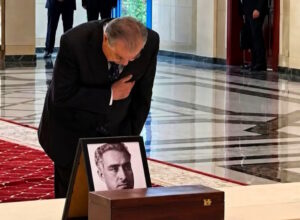
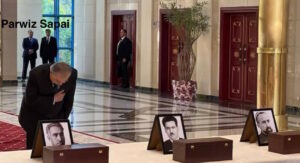
A delegation led by Tajik Foreign Minister Sirojiddin Muhriddin, on a working visit to Moscow, visited the Donskoy Cemetery where Nisar Mohammad, Nusratullo Makhsum, and Shirinsho Shotemur are buried in mass graves on 18 May 2025. In a solemn ceremony with the participation of Russian presidential special representative Mikhail Shvydkoy, the Tajik delegation received capsules containing soil from the burial sites of the three founding fathers.¹⁹
The capsules were transported to Dushanbe on 19 May 2025 and received in a state ceremony attended by President Emomali Rahmon. According to Foreign Minister Muhriddin, the soil will be incorporated into a memorial honoring the three men in Dushanbe.²⁰
This act represents the most recent and most visible official recognition of Nisar Mohammad Yusufzai’s place in Tajikistan’s founding national history nearly 88 years after his death.
The Central Asia Guide (Travel and Cultural Documentation)
Independent travel and cultural sources documenting Dushanbe’s urban geography confirm the existence of Nisor Muhammad Street in the capital, situated between the Ayni and Nisor Muhammad streets in the central district testimony to his name’s continued presence in the everyday landscape of the Tajik capital.²¹
Pashtun Intellectual History: A Broader Context
Nisar Mohammad Yusufzai’s career is a striking illustration of a broader but understudied phenomenon: the participation of Pashtun intellectuals and activists in the political and cultural transformations of early twentieth-century Asia. His trajectory from the frontier of the British Empire, through the Afghan war of independence, into Soviet Central Asian state-building reflects the interconnected nature of anti-colonial movements across the Muslim world in the interwar period.
His life challenges two reductive stereotypes simultaneously: the colonial-era British view of Pashtuns as primarily martial peoples suited to the frontier, and more recent narratives that reduce Pashtun history to conflict and resistance. His legacy in Tajikistan demonstrates that Pashtun figures contributed to institution-building, national development, and cultural formation across regional boundaries.
Factual Corrections to Popular Accounts
Popular and commemorative accounts of Nisar Mohammad’s life contain several elements that require scrutiny:
| Claim in Popular Accounts | Assessment |
| Executed by firing squad after systematic torture | Partially inaccurate: He died in an altercation during NKVD interrogation, shot by guards, not in a formal execution |
| His remains were returned to Dushanbe and reburied there | Requires clarification: What was returned in May 2025 was soil from his grave at Donskoy Cemetery, Moscow — to be incorporated into a memorial. His actual remains are not yet confirmed to have been physically repatriated |
| King Amanullah personally dispatched him on a “secret mission” | Unverified: The political context is real, but a direct royal commission is not independently documented in open-access primary sources |
| He “lectured at Moscow State University” | Partially accurate: He taught Pashto language at Moscow University, but the term “lectured” overstates his role; sources describe him as an instructor (prepodavatel’) |
Conclusion
Nisar Mohammad Khan Yusufzai remains one of the most remarkable and underappreciated figures in the history of both Afghanistan and Tajikistan. He was a soldier, a polyglot, an educator, a communist revolutionary, and an institutional founder all before the age of forty, when he was cut down by the very state he had served. His life embodied the possibility of cross-national solidarity in the service of education and national self-determination, and his legacy has proven resilient enough to survive Soviet erasure, the passage of nearly a century, and the borders that now separate his homeland from the nation he helped build.
The Tajik state’s actions in May 2025 officially recovering symbolic soil from his Moscow grave and preparing a memorial in Dushanbe confirm that his story is not merely historical but remains a living part of Tajik national identity.
For researchers and writers engaged with Central Asian history, Afghan intellectual history, or the global dimensions of anti-colonial movements, Nisar Mohammad Yusufzai’s life is a primary case study in the transnational character of early twentieth-century political transformation.
Notes and References
- Wikipedia, “Nisar Muhammad Yousafzai.” Available at: https://en.wikipedia.org/wiki/Nisar_Muhammad_Yousafzai
- Arif Hasan Khan Akhundzada, “Nisar Muhammad of Village Zaida, Swabi,” EditorTimes, 2020. Available at: https://www.editortimes.com/nisar-muhammad-of-village-zaida-swabi-nisor-avalovich-magomedov-1897-1937/
- Wikipedia, “Nisar Muhammad Yousafzai.” His awards are listed as: Order of Gallantry (Emirate of Afghanistan) and Hero of Tajikistan (posthumous).
- Also: BBC News فارسی, “نثار محمد پشتون که بود؟” (Who was the Pashtun Nisar Mohammad?), 31 May 2021. Available at: https://www.bbc.com/persian/world-57310222
- Wikipedia, “Nisar Muhammad Yousafzai”: “He was also the first ever Afghan communist.”
- Wikipedia, “Nisar Muhammad Yousafzai”: participation in the Jungle Movement (Gilan expedition), 1920.
- Wikipedia, “Tajik Autonomous Soviet Socialist Republic.” The Tajik ASSR was formed in 1924 within the Uzbek SSR, upgraded to a union republic in 1929.
- Wikipedia: “People’s Commissar for Education for the Tajik SSR In office 1926–1937 Preceded by: Position established.”
- Wikipedia, “Nisar Muhammad Yousafzai”: fluent in Pashto, Persian, Russian, Uzbek, and Urdu.
- : served as Pashto language instructor at Moscow University.
- Military Wiki (Fandom), “Nisar Muhammad Yousafzai”: “During his interrogation, a guard struck Muhammad, triggering an altercation in which the interrogator sustained severe head injuries. In response, guards stormed the room and shot Nisar Muhammad.”
- Asia-Plus (Tajikistan), “Capsules with soil from the graves of the founders of Soviet Tajikistan were handed over to Sirojiddin Muhriddin,” 19 May 2025. Available at: https://asiaplus.news/en/2026/05/19/capsules-with-soil-from-the-graves-of-the-founders-of-soviet-tajikistan-were-handed-over-to-sirojiddin-muhriddin/
- Wikipedia, “Nisar Muhammad Yousafzai”: “The street that is home to the Ministry of Education and Science bears Nisar’s name.” See also: Central Asia Guide, Dushanbe, at https://central-asia.guide/tajikistan/destinations-tj/dushanbe/
- Wikipedia infobox for Nisar Muhammad Yousafzai lists “Hero of Tajikistan” among his awards.
- Safarbek Solekh (dir.), Нисор Мухаммад — документальный фильм (Nisor Muhammad documentary film), 2021. Available on YouTube: https://www.youtube.com/watch?v=vZJ0t8s0nM0
- Safia Haleem, “A Memory of Kabul University,” 2022. Available at: https://www.safiahaleem.com/?p=6604
- Asia-Plus (Tajikistan), “Nisor is a film about a whole generation of heroes,” 17 May 2021. Available at: https://asiaplustj.info/ru/news/tajikistan/society/20210517/nisor-film-o-tselom-pokolenii-geroev-kinoved-rasskazivaet-kak-lenti-menyaet-mirovozzrenie
- BBC News فارسی, “نثار محمد پشتون که بود؟”, 31 May 2021.
- Asia-Plus, “Capsules with soil from the graves of the founders of Soviet Tajikistan were handed over to Sirojiddin Muhriddin,” 19 May 2025.
- Amu TV, “Tajikistan receives remains of Soviet-era founders executed under Stalin,” 20 May 2025. Available at: https://amu.tv/240008/
- Central Asia Guide, “Dushanbe sights, day trips, culture, activities.” Available at: https://central-asia.guide/tajikistan/destinations-tj/dushanbe/
Our Pashto-Dari Website
Support Dawat Media Center
If there were ever a time to join us, it is now. Every contribution, however big or small, powers our journalism and sustains our future. Support the Dawat Media Center from as little as $/€10 – it only takes a minute. If you can, please consider supporting us with a regular amount each month. Thank you
DNB Bank AC # 0530 2294668
Account for international payments: NO15 0530 2294 668
Vipps: #557320

Comments are closed.