
Over 10,000 Afghans Forcibly Return from Iran and Pakistan in 48-Hour Surge

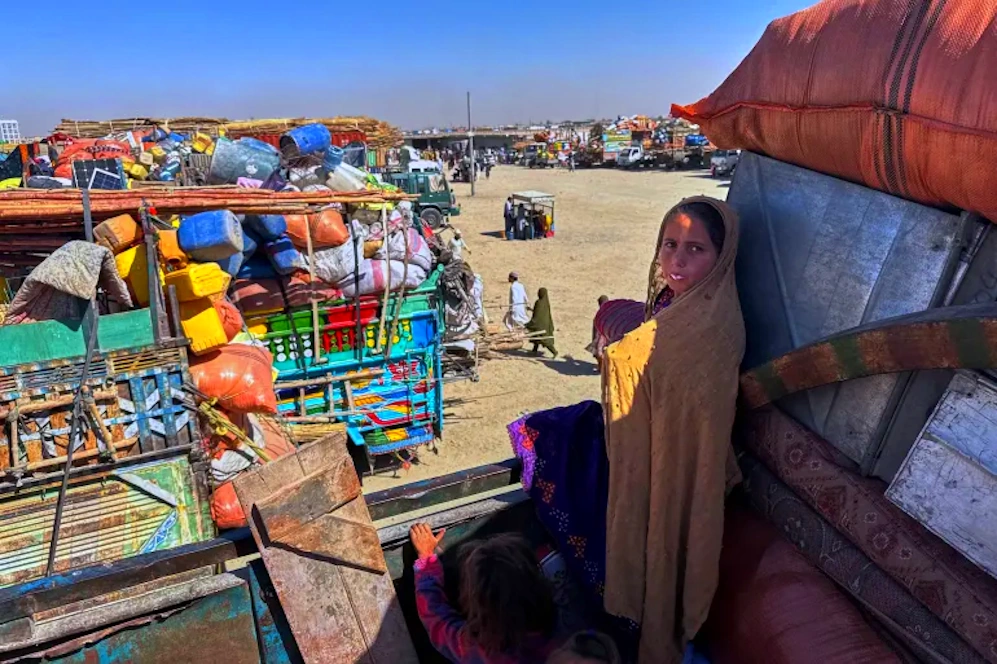
Kabul, – More than 10,000 Afghan refugees have been forcibly deported from neighbouring Iran and Pakistan over the past two days, a Taliban official reported on Saturday, marking a sharp increase in the ongoing repatriation crisis.
The announcement was made by Mullah Hamdullah Fitrat, deputy spokesman for the Islamic Emirate of Afghanistan (IEA). He shared a report from the government’s High Commission for Addressing Migrants’ Issues on his social media account, detailing that 1,939 families, comprising 10,043 individuals, returned to Afghanistan on Thursday and Friday alone.
This latest wave follows the forced repatriation of 2,300 Afghan migrants just the previous Wednesday, indicating a sustained and accelerated pace of deportations from both countries.
Border Crossings Overwhelmed
The returnees entered Afghanistan through several key border points, overwhelming facilities and aid groups. The primary entry crossings included:
-
Islam Qala in Herat (from Iran)
-
Pul-i-Abresham in Nimroz (from Iran)
-
Spin Boldak in Kandahar (from Pakistan)
-
Bahramcha in Helmand (from Pakistan)
-
Torkham in Nangarhar (from Pakistan)
Limited Government Response Amid Deepening Crisis
According to Fitrat, the IEA’s response efforts included transporting 1,464 families (8,140 individuals) to their provinces of origin and providing humanitarian assistance—primarily food and basic supplies—to 1,279 families. Additionally, telecommunication companies distributed 1,626 SIM cards to returning refugees.
However, these measures fall far short of addressing the scale of need. Afghanistan is grappling with severe economic collapse, entrenched unemployment, and one of the world’s most dire humanitarian emergencies following the Taliban’s takeover in 2021. The United Nations has repeatedly warned that the country is ill-equipped to absorb such a rapid influx of returnees, who often arrive with nothing but the clothes on their backs.
Context of Regional Pressure
The mass deportations come amidst increasing pressure from Iran and Pakistan, who collectively host an estimated 5-6 million Afghans. Both nations cite economic pressures and security concerns to justify the crackdown. Pakistan in particular has intensified its deportation campaign since late 2023, targeting both documented refugees and undocumented migrants. Human rights organizations have condemned the actions as violations of international principle, citing the dangers faced by many returnees, including former interpreters for Western forces, human rights activists, and others with profiles that could put them at risk under Taliban rule.
The sudden surge in returns places immense strain on Afghanistan’s crippled infrastructure and aid networks as winter approaches, raising fears of a catastrophic humanitarian situation for the most vulnerable. International aid agencies are calling for urgent funding and for host countries to halt forcible returns, but the flow across the borders continues unabated.
Our Pashto-Dari Website


Support Dawat Media Center
If there were ever a time to join us, it is now. Every contribution, however big or small, powers our journalism and sustains our future. Support the Dawat Media Center from as little as $/€10 – it only takes a minute. If you can, please consider supporting us with a regular amount each month. Thank you
DNB Bank AC # 0530 2294668
Account for international payments: NO15 0530 2294 668
Vipps: #557320

Comments are closed.