
Over 1,000 Afghan Returnees Cross Borders in Single Day as Repatriation Efforts Intensify

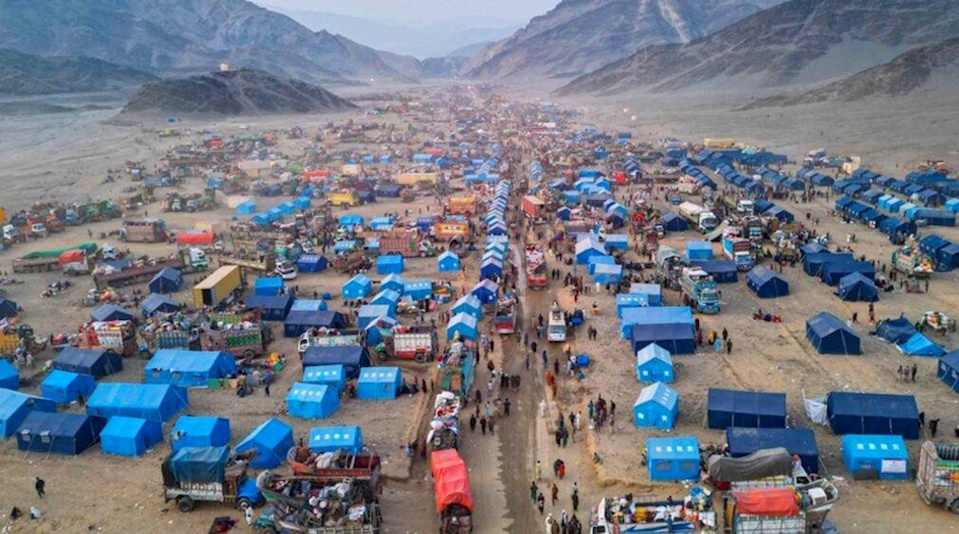
KABUL, Afghanistan – In a significant single-day movement, a total of 209 Afghan families comprising 1,017 individuals returned to their homeland from neighboring Iran and Pakistan, an official confirmed on Wednesday. The coordinated repatriation, facilitated through multiple border crossings, underscores the ongoing challenges and humanitarian responses surrounding Afghan displacement.
Mullah Hamdullah Fitrat, the deputy spokesman for the Islamic Emirate of Afghanistan (IEA), published a detailed operational report on his X (formerly Twitter) account, sourced from the Commission for Addressing the Problems of Afghan Refugees. The commission’s data reveals a multi-pronged effort to manage the influx, which included registration, transportation, and immediate relief distribution.
Eastern Corridor: Torkham Crossing (Pakistan Border)
The busiest entry point remained the Torkham crossing in the east, where 95 families (536 people) were registered upon arrival. Of these, 84 families (441 individuals) were immediately transported to their final destinations in the eastern and central provinces of Nangarhar, Kunar, Laghman, and the capital, Kabul. To facilitate this internal movement, the commission disbursed over 3.75 million Afghanis (approximately $42,000) to cover transportation costs, ensuring returnees could reach their communities or temporary shelters without additional financial burden.
Southern Corridor: Spin Boldak Crossing (Kandahar Province)
In the south, 31 families (142 people) crossed through the Spin Boldak border point in Kandahar province. From this group, 22 families (108 individuals) were forwarded to various provincial destinations, with more than 286,000 Afghanis allocated for their transit. Additionally, the commission reported providing 228,000 Afghanis in direct cash assistance to 30 families at the border, alongside critical in-kind support, including food parcels, emergency healthcare screenings, and telecommunications services to help them reconnect with relatives.
Western and Southern Gateways: Nimroz and Herat
Further west, the Silk Bridge crossing in Nimroz province processed 75 families (253 people) . Notably, this point also saw a substantial flow of 1,255 individual travelers, suggesting that single or unaccompanied migrants are also returning in significant numbers, potentially for seasonal or economic reasons. In the cash assistance section at this crossing, 34,000 Afghanis were distributed to four families.
Meanwhile, at the Islam Qala crossing in Herat province a key conduit for returnees from Iran 26 families (86 people) re-entered the country. Each of these families received a cash grant, totaling 166,000 Afghanis to ease their immediate reintegration needs.
Consolidated Assistance and Communications
In summary, the commission’s final tally for the day stands at 209 families (1,017 people) . Of these, 129 families (674 individuals) required and received government-assisted transport to provinces beyond the border zones. Financial or in-kind assistance was extended to 162 families, covering food, shelter, and medical contingencies. To bridge the digital divide, 126 SIM cards from various telecommunications networks were distributed, enabling returnees to contact relatives and access information about aid distribution.
Context and Challenges
The returnees are part of a larger, complex wave of Afghan migration. Many are long-term residents of Pakistan and Iran who have faced increasing economic pressures, changing visa regulations, and, in the case of Pakistan, a government-led campaign to repatriate undocumented foreigners. Upon arrival, returnees often face daunting challenges: lack of housing, scarce employment opportunities, and overstretched humanitarian infrastructure within Afghanistan, which is already grappling with a protracted economic crisis and the aftermath of natural disasters.
The Commission’s daily reports highlight a systematic but resource-intensive response. However, aid agencies have repeatedly warned that the scale of returns could outpace available support, urging the international community to increase funding for reintegration programs, shelter construction, and livelihood initiatives to prevent secondary displacement and social instability.
Looking Ahead
While the Islamic Emirate has pledged to facilitate the dignified return of all Afghans, the sustainability of these efforts depends on sustained donor support and the stabilization of Afghanistan’s fragile economy. As winter approaches, the urgency to provide adequate heating, clothing, and shelter for newly arrived families will intensify, making each day’s repatriation data a critical indicator of both need and response capacity.
Our Pashto-Dari Website
Support Dawat Media Center
If there were ever a time to join us, it is now. Every contribution, however big or small, powers our journalism and sustains our future. Support the Dawat Media Center from as little as $/€10 – it only takes a minute. If you can, please consider supporting us with a regular amount each month. Thank you
DNB Bank AC # 0530 2294668
Account for international payments: NO15 0530 2294 668
Vipps: #557320

Comments are closed.