

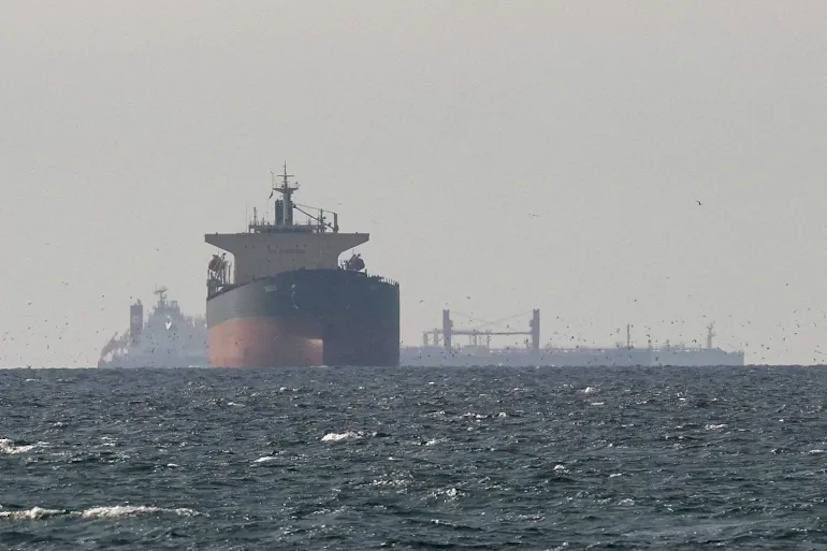
TEHRAN – Iran’s central military command announced on Saturday that it would resume “strict management” of the Strait of Hormuz, reversing a previous decision to unblock the strategic waterway as part of ongoing negotiations with Washington.
In a statement shared on state television, the Iranian military headquarters said the United States had broken a promise by continuing its naval blockade of ships sailing to and from Iran’s ports. Until Washington restores freedom of movement for all vessels visiting Iran, “the situation in the Strait of Hormuz will remain strictly controlled,” the statement warned.
The announcement followed remarks by U.S. President Donald Trump, who said the blockade of the Strait would remain in place and that attacks would resume if no agreement was reached with Iran. Trump did not specify the nature of the potential attacks, but tensions have remained high in the region for months.
The Strait of Hormuz, a narrow passage between the Persian Gulf and the Gulf of Oman, is one of the world’s most critical oil transit chokepoints. Roughly 20% of global petroleum consumption passes through it, making any disruption a potential trigger for global energy price spikes.
Reversal After Brief Reopening
The move came just one day after Iran’s Foreign Minister Seyed Abbas Araghchi announced on Friday that the Strait had been fully reopened to commercial shipping, following a ceasefire in Lebanon. In a statement posted on X, Araghchi said all commercial vessels would be allowed to pass through the strategic waterway for the remaining period of the ceasefire. Transit, he added, would take place along a coordinated route previously announced by Iran’s Ports and Maritime Organization.
At the time, U.S. President Donald Trump expressed appreciation on Truth Social for Iran’s decision to reopen the Strait completely, calling it “a positive step toward de-escalation.” That sentiment proved short-lived.
Regional and Global Implications
The back-and-forth has alarmed maritime insurers and oil traders, with benchmark crude prices rising in early Asian trading. The Iranian command’s latest statement did not specify what “strict management” would entail, but in past incidents it has included searches of vessels, temporary detentions, and, in extreme cases, simulated or real military exercises near shipping lanes.
Analysts say the sudden reversal suggests that behind-the-scenes negotiations between Tehran and Washington remain fragile, with neither side willing to concede on the core issue of naval blockades and freedom of navigation. As of Saturday evening, there was no immediate response from the White House or the U.S. Fifth Fleet, which is based in Bahrain and regularly patrols the waters around the Strait.
Our Pashto-Dari Website

Support Dawat Media Center
If there were ever a time to join us, it is now. Every contribution, however big or small, powers our journalism and sustains our future. Support the Dawat Media Center from as little as $/€10 – it only takes a minute. If you can, please consider supporting us with a regular amount each month. Thank you
DNB Bank AC # 0530 2294668
Account for international payments: NO15 0530 2294 668
Vipps: #557320

Comments are closed.