

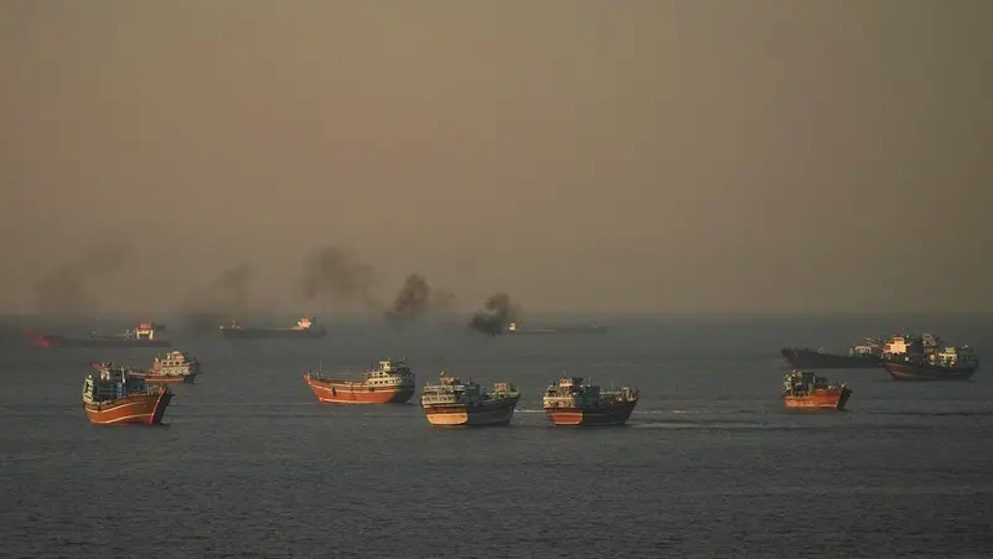
TEHRAN/ABU DHABI – Iran on Saturday forcefully pushed back against U.S. President Donald Trump’s suggestion that he would soon declare the strategic Strait of Hormuz a U.S. territory, asserting that the vital waterway which Tehran effectively sealed off at the onset of the Middle East war “will remain Iranian.”
The exchange marks the latest verbal volley in a protracted standoff over the strait, a chokepoint for roughly one-fifth of the world’s oil and liquefied natural gas (LNG) exports. Its closure has roiled global energy markets and intensified political pressure on the White House ahead of November’s midterm elections.
“Closed and Opened Under Iran’s Command”
Speaking at a political rally in New York state on Friday, Trump told cheering supporters that after the U.S. defeats Iran, “pretty soon I’ll be declaring the Hormuz Strait a territory of the United States.” He added, “It’s true.”
However, an unnamed White House official later clarified that the president was joking, according to The Wall Street Journal. The clarification did little to quell Iranian indignation.
“The Strait of Hormuz has been Iranian, is Iranian, and will remain Iranian,” Iran’s Deputy Foreign Minister Kazem Gharibabadi posted on X (formerly Twitter). “This strait will only be closed and opened under Iran’s command.”
Tehran’s Conditions for Reopening
Last week, a top Iranian official, Mohammad Bagher Zolghadr, outlined a stringent list of prerequisites for reopening the waterway. These include:
-
An end to “war and aggression against Iran and its allies in Lebanon, Palestine, Yemen, and Iraq.”
-
The lifting of crippling U.S. economic sanctions.
-
The release of frozen Iranian assets abroad.
-
Compensation for wartime damages sustained by Iran.
The demands underscore Tehran’s intention to leverage control of the strait not just as a military asset, but as a diplomatic bargaining chip to reverse the economic stranglehold imposed by Washington.
Ongoing Naval Attacks and Accusations
As diplomatic efforts stall, attacks in and around the Strait of Hormuz have continued, underscoring the persistent threat to regional shipping.
The United Arab Emirates’ state-owned oil giant, ADNOC, reported on Saturday that one of its vessels came under attack the previous night. Abu Dhabi’s foreign ministry swiftly blamed Tehran, accusing Iran’s Revolutionary Guards of engaging in “acts of piracy” in the strait. This follows a similar incident on Friday, in which the Gulf nation attributed attacks on two other ADNOC-linked vessels to Iranian forces.
These maritime assaults contributed to the collapse of a brief April ceasefire between the U.S. and Iran. A subsequent June agreement between Washington and Tehran envisioned as a stepping stone toward permanent negotiations had stipulated that Iran and Oman would jointly hash out future arrangements for the strait, in consultation with other Gulf nations and “in line with applicable international law.”
Economic and Political Fallout
Before the war erupted in late February, the Strait of Hormuz facilitated the transit of approximately 20% of global oil and LNG exports. Its blockade has since triggered repeated price surges, stoking inflation and creating a political vulnerability for President Trump as the midterm elections approach.
U.S. Vice President JD Vance acknowledged this week that Washington’s top priority in the conflict is keeping energy prices low for American consumers, ranking that above preventing Iran from acquiring a nuclear weapon a notable shift in stated priorities.
In a parallel development, Tehran signaled last week that it had reached an understanding with Oman on a proposed route for ships to transit the strait, and that both nations were finalizing arrangements to jointly manage the waterway a move that would effectively sideline U.S. oversight.
Reciprocal Blockades
In response to Iran’s closure of Hormuz, the U.S. has imposed its own retaliatory naval blockade of Iranian ports, aiming to cripple the country’s non-oil trade and further isolate its economy.
“We have the blockade. No ships get through unless we want them to,” Trump reiterated to his rally audience on Friday, framing the U.S. naval posture as one of strength.
With both sides entrenched and military skirmishes ongoing, the Strait of Hormuz remains a flashpoint where economic survival, national pride, and geopolitical leverage converge with no clear off-ramp in sight.
Our Pashto-Dari Website

Support Dawat Media Center
If there were ever a time to join us, it is now. Every contribution, however big or small, powers our journalism and sustains our future. Support the Dawat Media Center from as little as $/€10 – it only takes a minute. If you can, please consider supporting us with a regular amount each month. Thank you
DNB Bank AC # 0530 2294668
Account for international payments: NO15 0530 2294 668
Vipps: #557320

Comments are closed.