
Maryam Nawaz Says Punjab Faces Greater Terror Threat From Neighboring Provinces Than Foreign Borders

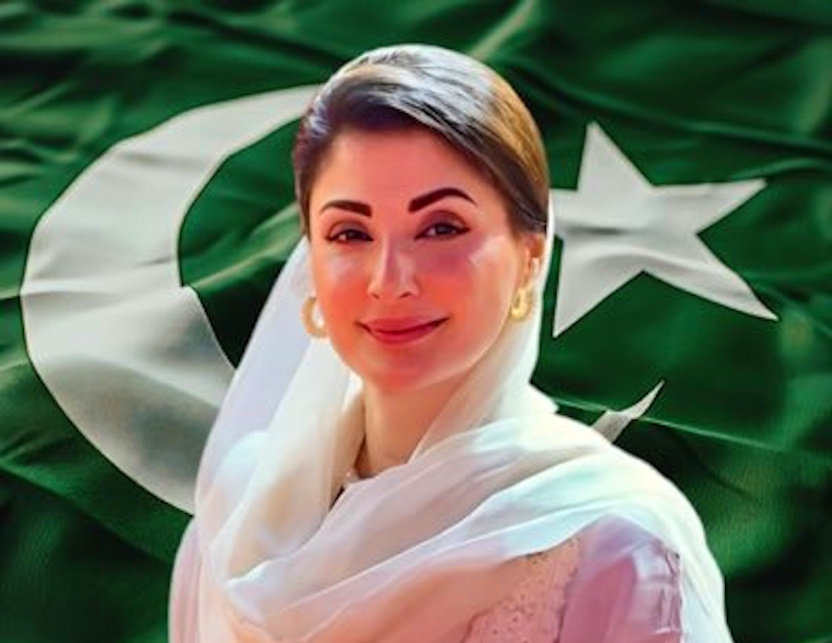
Lahore, Pakistan – Punjab Chief Minister Maryam Nawaz has stated that Pakistan’s most populous province now faces a more acute security threat from its neighboring provinces particularly Khyber Pakhtunkhwa (KP) and Balochistan than from any foreign adversary. Her remarks, delivered at a high-level security briefing in Lahore on Saturday, September 5, have ignited a fierce political firestorm, with opposition leaders from the affected regions accusing her of deflecting responsibility and belittling their sacrifices.
Speaking before senior military and civil officials, Maryam Nawaz asserted that terrorism does not primarily enter Punjab through Pakistan’s international borders—such as the eastern frontier with India or the western Afghan border but rather seeps in via porous provincial boundaries. “Our greatest security challenges today originate from within the country, not from outside it,” she said, adding that Punjab’s nearly 130 million residents remain vulnerable to militant infiltration from KP and Balochistan, where insurgent and sectarian violence has escalated dramatically over the past three years.
Her comments come amid a troubling surge in terrorist activity across Pakistan. According to data from the Pakistan Institute for Conflict and Security Studies (PICSS), militant attacks in 2025 rose by over 40 percent compared to the previous year, with KP and Balochistan accounting for roughly 85 percent of all fatalities. Groups such as the Tehreek-e-Taliban Pakistan (TTP), the Islamic State Khorasan Province (IS-K), and various Baloch separatist factions have intensified their operations, often targeting security forces, infrastructure, and civilian populations. Maryam Nawaz emphasized that Punjab’s law-enforcement agencies have been placed on “extreme alert” and are coordinating closely with federal intelligence bodies to preempt cross-provincial militant movements.
However, the chief minister’s framing of the threat quickly drew sharp rebukes from political leaders in the very regions she named. Senior Pakistan Tehreek-e-Insaf (PTI) leader and former National Assembly speaker Asad Qaiser condemned the statement as “insulting and divisive,” pointing out that Khyber Pakhtunkhwa has borne the brunt of the war on terror for nearly two decades. “The people and police of KP have paid the highest price in blood over 80,000 civilians and security personnel have lost their lives since 2001. To suggest that Punjab is the victim here is not only factually wrong but deeply ungrateful,” Qaiser said during a press conference in Peshawar.
Former lawmaker Mohsin Dawar, a prominent Pashtun rights activist, also criticized Maryam Nawaz, arguing that the militancy now spilling into Punjab is not a spontaneous phenomenon but the direct consequence of decades of flawed state policy. “This is the harvest of seeds sown by military adventurism, misguided counterterrorism strategies, and the neglect of marginalized border communities,” Dawar stated. He accused Pakistan’s political and military establishment of treating KP and Balochistan as buffer zones rather than as integral parts of the nation, adding that the suffering of local populations has long been ignored in favor of short-term security fixes.
The exchange underscores a deepening political rift over how to interpret and address Pakistan’s deteriorating internal security landscape. While the federal government has repeatedly called for a unified national counterterrorism framework, provincial leaders increasingly view the crisis through regional lenses, often trading blame rather than forging consensus. Security analysts warn that such finger-pointing risks undermining the very coordination needed to combat a threat that is becoming more diffuse and decentralized.
“Terrorism is no longer confined to the tribal districts or the Baloch hills,” said retired Brigadier Asad Munir, a defense analyst based in Islamabad. “It has metastasized into urban centers and agricultural heartlands, including Punjab. But treating it as an import from other provinces is a dangerous oversimplification. The roots are systemic political disenfranchisement, economic disparity, and a fragmented justice system.”
Maryam Nawaz’s remarks also arrive at a sensitive political juncture, as Pakistan prepares for provincial elections later this year and grapples with a prolonged economic crisis. Critics have suggested that her emphasis on external (provincial) threats may be an attempt to deflect attention from Punjab’s own internal governance challenges, including rising street crime, sectarian tensions, and reports of militant sleeper cells within major cities like Lahore and Rawalpindi.
For now, the debate highlights a sobering reality: Pakistan’s counterterrorism efforts, though bolstered by renewed military operations and intelligence-sharing agreements, remain hampered by inter-provincial distrust and a lack of cohesive political will. As militant attacks continue to claim lives across all four provinces, the question is no longer whether terrorism is a national problem, but whether the nation can unite to confront it—before the lines on the map become fault lines of fracture.
Our Pashto-Dari Website

Support Dawat Media Center
If there were ever a time to join us, it is now. Every contribution, however big or small, powers our journalism and sustains our future. Support the Dawat Media Center from as little as $/€10 – it only takes a minute. If you can, please consider supporting us with a regular amount each month. Thank you
DNB Bank AC # 0530 2294668
Account for international payments: NO15 0530 2294 668
Vipps: #557320

Comments are closed.