

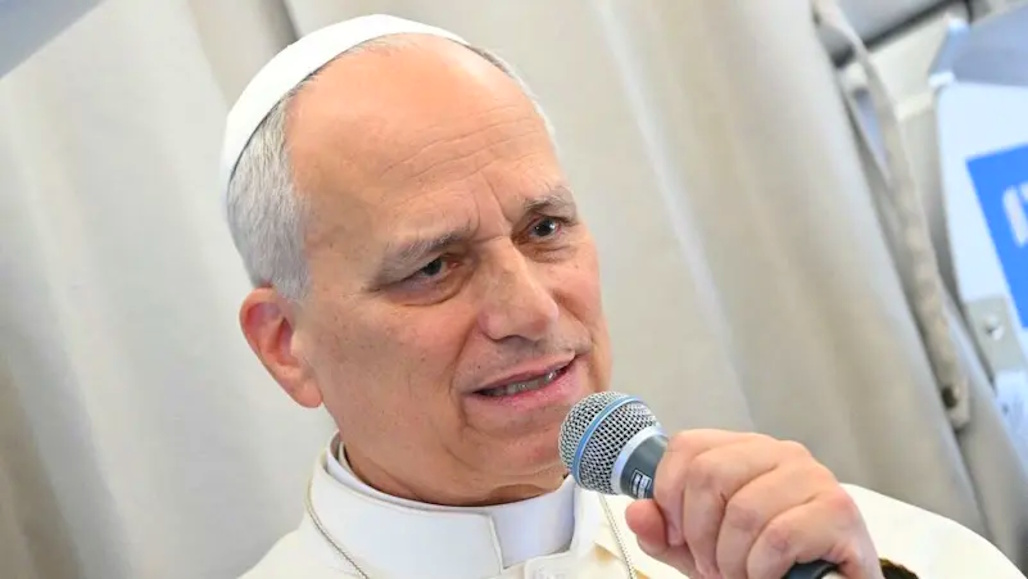
VATICAN CITY – In a stark diplomatic address on Friday, Pope Leo issued a forceful warning that fundamental freedoms are eroding in Western democracies, criticizing what he termed a “rapidly shrinking” space for dissent and the rise of coercive ideological trends.
Speaking to the corps of ambassadors accredited to the Holy See, the first U.S.-born pontiff framed the issue as a critical defense of conscience and human dignity. He expressed particular concern that under the banner of inclusivity and progress, new societal norms are marginalizing those with traditional or religious convictions.
“It is painful to see how, especially in the West, the space for genuine freedom of expression is rapidly shrinking,” Pope Leo stated. “A new Orwellian-style language is developing which, in an attempt to be increasingly inclusive, ends up excluding and silencing those who do not conform to the ideologies that are fueling it.”
The Pope’s critique extended beyond abstract principles to specific, contentious applications. He strongly advocated for a robust right to conscientious objection, naming three key areas:
-
For medical professionals who refuse to perform abortions or euthanasia based on ethical or religious beliefs.
-
For citizens who, due to conscience, refuse military service.
-
For parents whose role as primary educators is challenged by state curricula they find objectionable, an addition broadening the scope of his argument.
His remarks placed him at the center of ongoing cultural debates across Europe and North America concerning the limits of free speech, the definition of human rights, and the role of religion in the public square. Vatican observers note that Pope Leo’s unique perspective as a pontiff from a major Western power lends particular weight to his internal critique of the liberal democratic order.
The address, part of his annual “State of the World” speech to the diplomatic community, also touched on global conflicts, climate change, and economic injustice. However, his pointed comments on Western cultural politics drew immediate attention, signaling this as a cornerstone issue of his pontificate.
Critics are likely to argue that the Pope’s defense of conscientious objection could sanction discrimination and undermine equal access to services. Supporters, however, will hail his stance as a necessary defense of pluralism and a bulwark against what he described as “ideological colonization” threatening core freedoms.
Our Pashto-Dari Website

Support Dawat Media Center
If there were ever a time to join us, it is now. Every contribution, however big or small, powers our journalism and sustains our future. Support the Dawat Media Center from as little as $/€10 – it only takes a minute. If you can, please consider supporting us with a regular amount each month. Thank you
DNB Bank AC # 0530 2294668
Account for international payments: NO15 0530 2294 668
Vipps: #557320

Comments are closed.