

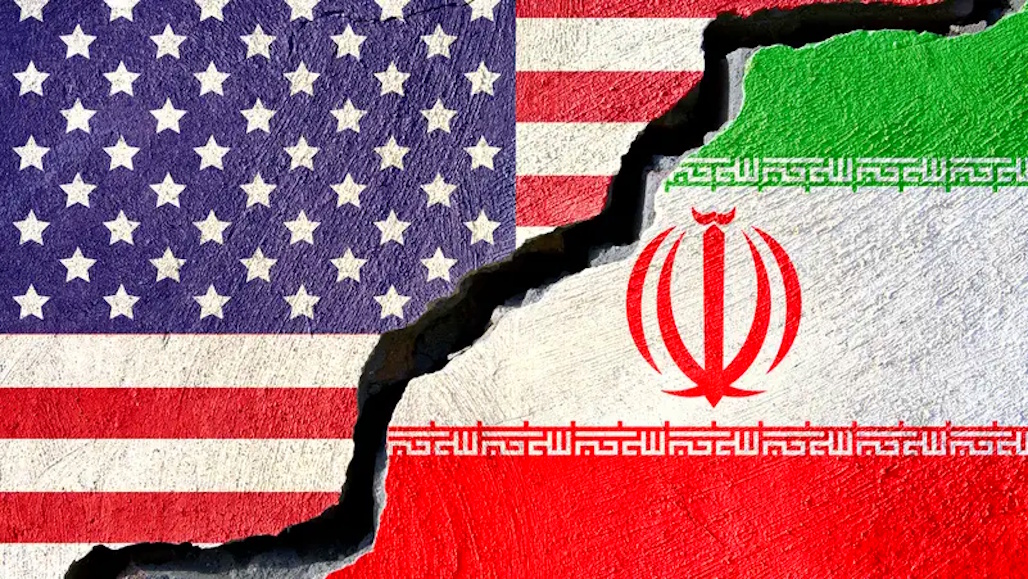
The U.S. military carried out its 13th consecutive night of airstrikes against Iranian targets on Thursday, July 23, as confrontations over vital maritime chokepoints intensify. The sustained campaign now entering its fourth week comes amid soaring global tensions and follows fresh attacks by Yemen’s Iran-backed Houthi rebels on two Saudi oil tankers in the Red Sea, a development that pushed international crude prices above $100 a barrel for the first time since a short-lived peace agreement collapsed last month.
The Latest Strikes and Regional Fallout
U.S. Central Command confirmed that the latest wave of attacks concluded shortly before 5 a.m. local time, targeting military infrastructure, missile launch sites, and drone storage facilities across multiple Iranian provinces. Iranian state media reported explosions near the strategic Strait of Hormuz in Qeshm and Bandar Abbas, where at least two people were injured, as well as in the southwestern cities of Andimeshk, Omidiyeh, and Firuzabad. Casualty figures remain unverified, though Iran’s health ministry has updated its overall death toll from the renewed U.S. bombing campaign which began on June 27 to 55 killed and 629 wounded.
The Pentagon described the strikes as part of a broader effort to “further degrade Iran’s ability to threaten civilian mariners and commercial vessels transiting regional waters.” With the U.S. Navy repositioning assets to regain full control over the Strait of Hormuz—through which roughly one-fifth of the world’s oil and gas transited in peacetime American commanders are seeking to restore the flow of international shipping while signaling that Tehran’s proxies will not be allowed to operate with impunity.
Houthi Threats and a “Double Whammy” on Oil Routes
The latest U.S. strikes were triggered in part by an escalation from Yemen’s Houthi movement, which claimed responsibility for attacking two Saudi-flagged tankers the Encelia and the Layla in the Red Sea. According to the Houthi-run SABA news agency, both vessels sustained fires, though no casualties have been reported. The United Kingdom Maritime Trade Operations Center said it received a report of a tanker being struck by “an unknown projectile” roughly 130 kilometers (80 miles) southwest of Al Shuqaiq, Saudi Arabia.
This marks the first Houthi assault on commercial shipping since the group announced a blockade of Saudi-linked vessels transiting the Bab el-Mandeb Strait earlier this week. The rebels framed the move as retaliation for the Saudi-led coalition’s blockade on Yemen and a recent airstrike on the international airport in the rebel-held capital, Sanaa. Bab el-Mandeb, the narrow waterway at the southern tip of the Arabian Peninsula, connects the Red Sea to the Gulf of Aden and facilitates approximately 12% of global trade including a quarter of all container traffic moving between Europe and Asia via Egypt’s Suez Canal.
The dual disruption has dealt a “double whammy” to global energy markets, according to maritime data firm Lloyd’s List Intelligence. Saudi Arabia had already diverted millions of barrels per day of crude exports from the Persian Gulf to its Red Sea terminal at Yanbu via an overland pipeline, circumventing the Strait of Hormuz. However, the Houthi threat now “raises serious questions on the viability of this alternative route,” Lloyd’s analysts warned during an online webinar on Thursday.
Economic Shockwaves and Political Rhetoric
The price of Brent crude oil spiked more than 6% on Thursday, reaching approximately $100 a barrel the highest level since May, when the U.S. and Iran reached a preliminary peace agreement that has since unraveled. The economic fallout has rippled through global stock markets, with investors bracing for prolonged supply disruptions and inflationary pressures.
President Donald Trump escalated the war of words on social media, threatening “major military punishment” against the Houthis if their attacks persist. “If they do this again, the U.S. will hold Iran responsible, in that the Houthis are a surrogate and/or proxy of Iran, and major military punishment will be inflicted upon Iran and, of course, the Houthis, themselves,” Trump wrote. He also declared that sanctioned Iranian funds currently in U.S. possession would be used to cover damages to ships and cargo affected by the conflict, though he did not specify the legal mechanism for such a move, calling it “the fair and equitable thing to do.”
Iranian Foreign Minister Abbas Araghchi fired back, asserting that Tehran would adopt an “eye for an eye” policy in response to U.S. strikes on its infrastructure. U.S. Secretary of State Marco Rubio retorted that Trump’s policy is “a head for an eye,” adding, “The price will continue to get higher every single night until they come to their senses.” Rubio made the remarks while traveling in the Philippines for a regional summit.
Diplomatic Efforts and Domestic Opposition
Amid the escalating rhetoric, Iraqi Prime Minister Ali al-Zaidi whose country maintains close ties with both Washington and Tehran arrived in Tehran on Thursday to appeal for peace and dialogue. His office confirmed that al-Zaidi pledged not to allow Iraqi territory to be used for attacks on Iran, and he met with Trump earlier this month in Washington in a bid to de-escalate tensions.
United Nations Secretary-General António Guterres warned the UN Security Council that the region is being pulled “into an ever-widening circle of confrontation,” with one crisis feeding another and every escalation triggering the next. “Diplomacy is the only way forward,” Guterres said, calling for strengthened mediation efforts including potential Pakistani involvement to end the war.
At home, the conflict remains unpopular among Americans, a sentiment reflected in Thursday’s narrow passage of a non-binding resolution in the U.S. House of Representatives to halt military action against Iran. Though a handful of Republicans crossed party lines to support the measure, the vote was largely symbolic and is unlikely to constrain the administration’s military campaign.
Wider Regional Ramifications
Iran has responded to U.S. airstrikes by targeting energy infrastructure and desalination plants that provide drinking water to parched neighboring Gulf states, raising concerns about humanitarian crises and further regional destabilization. Meanwhile, the Houthis have threatened to shut down additional key trade routes, compounding the strain on a world economy already reeling from the closure of the Strait of Hormuz.
As both sides dig in, the prospect of a wider conflagration looms. The U.S. has restored a naval blockade of Iranian ports and redirected roughly a dozen commercial vessels while disabling one since the blockade resumed, according to Central Command. Iran, for its part, maintains that it has the right to manage traffic and potentially charge fees in the Strait of Hormuz, which was open to all toll-free before the war.
With no diplomatic breakthrough in sight and military pressure mounting on all fronts, the coming days will be critical in determining whether the region slides further into open conflict or whether last-minute negotiations can pull it back from the brink.
Our Pashto-Dari Website

Support Dawat Media Center
If there were ever a time to join us, it is now. Every contribution, however big or small, powers our journalism and sustains our future. Support the Dawat Media Center from as little as $/€10 – it only takes a minute. If you can, please consider supporting us with a regular amount each month. Thank you
DNB Bank AC # 0530 2294668
Account for international payments: NO15 0530 2294 668
Vipps: #557320

Comments are closed.