
Red Cross Official Warns Against Abandoning Afghanistan as Humanitarian Crisis Deepens

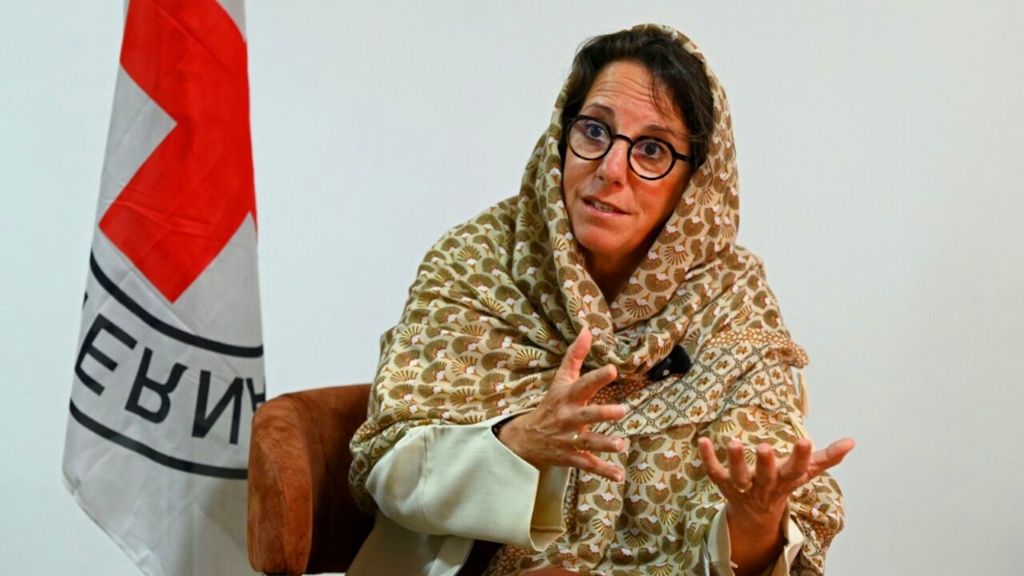
As global attention shifts to other conflicts and crises, a senior official from the International Committee of the Red Cross (ICRC) has issued a stark plea: the international community must not turn its back on Afghanistan. Despite the country sliding down the foreign policy agenda, the humanitarian needs of its people remain “extreme” and are growing more acute by the day.
Yasmine Praz Dessimoz, the ICRC’s Director of Operations, gave an interview to AFP during a week-long visit to Kabul, where she described a population “struggling to survive with significant humanitarian needs.” Afghanistan’s healthcare system, already fragile after decades of war, is now buckling under the weight of funding shortages, economic collapse, and a worsening nutrition crisis.
Malnutrition on a Massive Scale
The United Nations children’s agency, UNICEF, warned last week that one million Afghan children are currently facing life-threatening malnutrition, while 3.7 million others are suffering from acute malnutrition a condition that can lead to permanent physical and cognitive damage if left untreated. In a devastating knock-on effect, the UN has confirmed that a sharp decline in international aid has forced the closure of roughly 100 clinics across the country that specifically treated malnourished children. For countless families in remote or conflict-affected areas, these clinics were the only lifeline.
ICRC Forced to Scale Back
Afghanistan remains one of the ICRC’s five largest operations globally, but even that status has not shielded it from budget reductions. Praz Dessimoz acknowledged that funding cuts have compelled the organization to make “difficult decisions” about which activities to sustain. Currently, the ICRC supports 46 clinics and seven rehabilitation centers nationwide, offering primary healthcare, physical rehabilitation, and prosthetics particularly for those wounded in ongoing clashes or injured by landmines and unexploded ordnance left over from decades of warfare.
One area of intensified focus is the Durand Line, the border region between Afghanistan and Pakistan, where fighting flared up last October and continued into the spring. That violence has displaced thousands of Afghan families and left hundreds of civilians dead or wounded. The ICRC says its unique ability to engage with authorities on both sides of the frontier has allowed it to deliver critical aid to affected communities, but the need far outstrips available resources.
Concerns Over Women’s Rights and Healthcare Access
Beyond the immediate physical toll, Praz Dessimoz raised deep concerns about the restrictions imposed by the Islamic Emirate authorities on women and girls. Since returning to power in August 2021, the government has barred girls from attending school beyond the primary level and restricted women from entering many professions policies that have drawn widespread international condemnation.
While the ICRC has so far been able to retain its female staff in health-support roles, Praz Dessimoz warned of dire long-term consequences if the education ban persists. “The major concern is what is next? Because if the new generation is not educated, then there won’t be any replacement,” she said. She emphasized that female health workers are not just a matter of equity but of practical necessity: in Afghanistan’s conservative society, many women will only seek or accept medical care from other women. “They are needed in order to deliver care and to be close to a woman,” she stressed.
Diplomatic Engagement, Not Isolation
During her visit, Praz Dessimoz met with key figures in the Islamic Emirate government, including Deputy Prime Minister Abdul Salam Hanafi and Foreign Minister Amir Khan Muttaqi. She underscored the importance of maintaining open channels of dialogue, even with an administration that remains internationally isolated. “What is important is to be able to engage, to be able to have a dialogue with them,” she told AFP.
The Islamic Emirate has yet to receive formal recognition from any major power, with Russia being the only country to have officially acknowledged it as Afghanistan’s legitimate government. That diplomatic vacuum has complicated aid delivery and hampered long-term development planning, but Praz Dessimoz argued that humanitarian principles must transcend politics.
A Call for Sustained Attention
“Afghan people need national and international support,” Praz Dessimoz said bluntly. Her appeal comes at a time when global donor fatigue is palpable, and Ukraine, Gaza, Sudan, and other crises compete for limited foreign aid budgets. Yet she warned that abandoning Afghanistan now would not only reverse fragile gains made over the past two decades but also risk a complete collapse of basic services, triggering further displacement, regional instability, and a new wave of migration.
As winter approaches and food prices remain high, the window for meaningful intervention is narrowing. The Red Cross official’s message is clear: Afghanistan may no longer be in the headlines, but for millions of Afghans especially its children and women the fight for survival is far from over.
Our Pashto-Dari Website

Support Dawat Media Center
If there were ever a time to join us, it is now. Every contribution, however big or small, powers our journalism and sustains our future. Support the Dawat Media Center from as little as $/€10 – it only takes a minute. If you can, please consider supporting us with a regular amount each month. Thank you
DNB Bank AC # 0530 2294668
Account for international payments: NO15 0530 2294 668
Vipps: #557320

Comments are closed.