
Federal Judge Deals Blow to Trump Administration, Rules Travel Ban Cannot Block Afghan Refugees’ Family Reunification

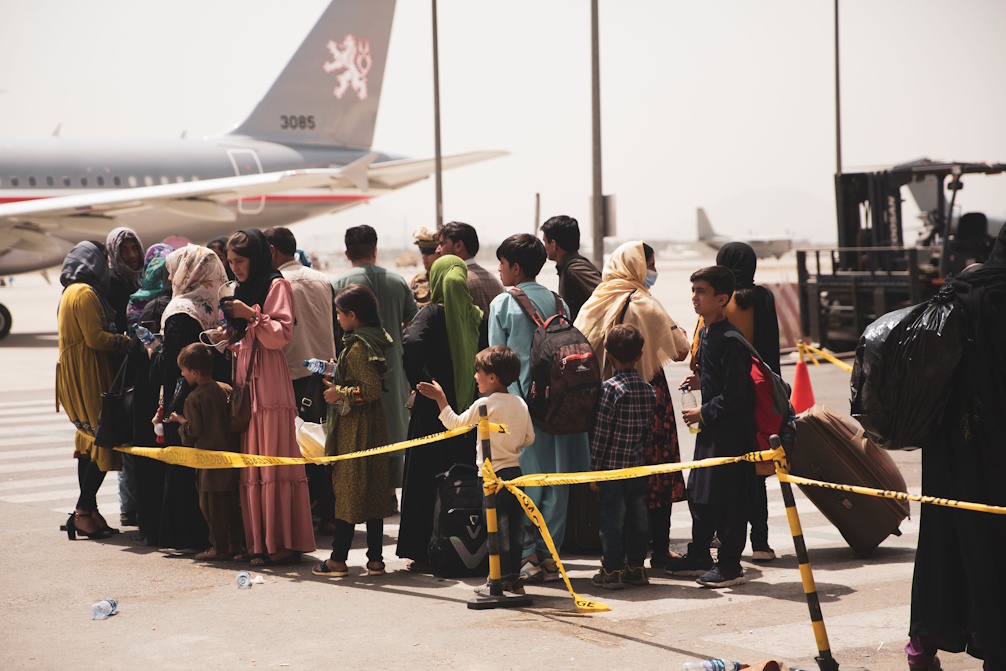
In a significant legal setback for the Trump administration, a U.S. federal judge has ruled that the government unlawfully applied sweeping Afghan travel restrictions to the spouses and children of seven Afghan nationals who had already been granted asylum in the United States. The decision, which blocks the administration from using the ban to derail approved family-reunification cases, could finally allow these families to move forward after years of excruciating separation.
U.S. District Judge Anthony J. Trenga, of the Eastern District of Virginia, issued the ruling in a consolidated case brought by seven Afghan families whose asylum status had been formally approved. Crucially, their relatives abroad spouses and minor children had also cleared a major administrative hurdle: the approval of their I-730 “follow-to-join” petitions by U.S. Citizenship and Immigration Services (USCIS). Court records confirm that all relevant petitions were greenlit before the State Department invoked the presidential proclamations to block the relatives’ final entry, effectively pulling the rug out from under the families at the eleventh hour.
The Legal Challenge: Proclamations vs. Protections
The lawsuit directly challenges the application of Presidential Proclamations 10949 and 10998, which broadly restrict the entry of Afghan nationals into the United States. However, both proclamations contain explicit caveats: they state that they do not apply to individuals granted asylum and do not limit an individual’s ability to seek asylum. The plaintiffs argued and Judge Trenga agreed that the State Department’s blanket refusal to process their approved derivative cases flagrantly contradicted this language.
This is not the first time Judge Trenga has pushed back against the government’s stance. In a preliminary May 2026 ruling, he had already rejected the administration’s motion to dismiss the lawsuit, finding that the State Department’s broad application of the proclamations was subject to judicial review and that the derivative family members were, in effect, seeking asylum in their own right.
A Categorical Policy, Not Individualized Justice
At the heart of the court’s latest ruling is a sharp rebuke of the government’s administrative process. Judge Trenga found that the State Department had adopted a categorical policy denying or indefinitely delaying these cases en masse rather than making individualized assessments, as required by law. The judge also determined that the plaintiffs had plausibly established procedural due-process claims, arguing that the administration undermined the legally established follow-to-join framework without providing adequate notice or a fair opportunity to be heard.
Under the I-730 process, asylees in the U.S. are statutorily entitled to petition for their spouses and unmarried children under 21 to join them. In these seven cases, the approved petitions had been transferred to U.S. embassies for final consular processing. But at that final stage after the families had already waited months or even years the State Department invoked the travel restrictions to deny visas or freeze applications, leaving petitioners in agonizing limbo.
What the Ruling Does and Does Not Do
The decision is undeniably a victory for the seven plaintiff families, offering a clear judicial pathway to complete their stalled reunifications. However, its broader implications are more nuanced. The ruling does not overturn the overarching Afghan travel ban itself. Proclamation 10998, which took effect in January 2026, continues to suspend entry for most Afghan nationals and notably removed several categorical exceptions that had existed under its predecessor, tightening the noose on Afghan immigration.
Instead, the court’s decision carves out a vital exception: it affirms that the ban cannot be mechanically applied to nullify already-approved derivative-asylum cases. This distinction is critical, as it reinforces the principle that executive orders on immigration, however broad, do not override existing statutory rights granted by Congress through the Immigration and Nationality Act.
A Microcosm of a Larger Tug-of-War
This case vividly illustrates the enduring tension between the Trump administration’s national-security-driven entry restrictions and the humanitarian protections enshrined in U.S. asylum law. The administration has consistently defended the travel bans as necessary counterterrorism measures, arguing that Afghanistan’s volatile security environment makes thorough vetting difficult. Conversely, the Afghan families and their advocates contend that categorically applying the ban to approved derivative cases not only defies the law but also betrays the very allies who were granted asylum after fleeing the Taliban’s return to power.
For the families directly affected, Tuesday’s ruling offers a long-sought glimmer of hope a potential end to a painful chapter of displacement and separation. Yet the practical relief hinges entirely on the State Department’s compliance with the judge’s order. It remains unclear whether the government will immediately begin processing the visas, appeal the decision to the Fourth Circuit Court of Appeals, or seek a stay pending further legal review.
Looking Ahead: A Precedent in the Making?
While the decision is legally limited to the specific claims and circumstances of the seven families before the court, its reasoning could have a persuasive impact on how U.S. agencies handle other Afghan follow-to-join cases caught in the crosshairs of the travel restrictions. Immigration attorneys are already scrutinizing the ruling for arguments that could be applied to similarly situated families, potentially expanding its de facto reach.
For now, the case remains a pivotal moment in the ongoing legal battle over executive immigration power a battle that pits the president’s authority over borders against the due-process rights of those who have already been granted refuge. As the legal maneuvering continues, thousands of Afghan families separated by the ban will be watching closely to see if this judicial win becomes a lifeline or a lone exception.
Our Pashto-Dari Website

Support Dawat Media Center
If there were ever a time to join us, it is now. Every contribution, however big or small, powers our journalism and sustains our future. Support the Dawat Media Center from as little as $/€10 – it only takes a minute. If you can, please consider supporting us with a regular amount each month. Thank you
DNB Bank AC # 0530 2294668
Account for international payments: NO15 0530 2294 668
Vipps: #557320

Comments are closed.