
Washington Rejects Investment in Afghanistan’s Mineral Sector, Citing Taliban Policies

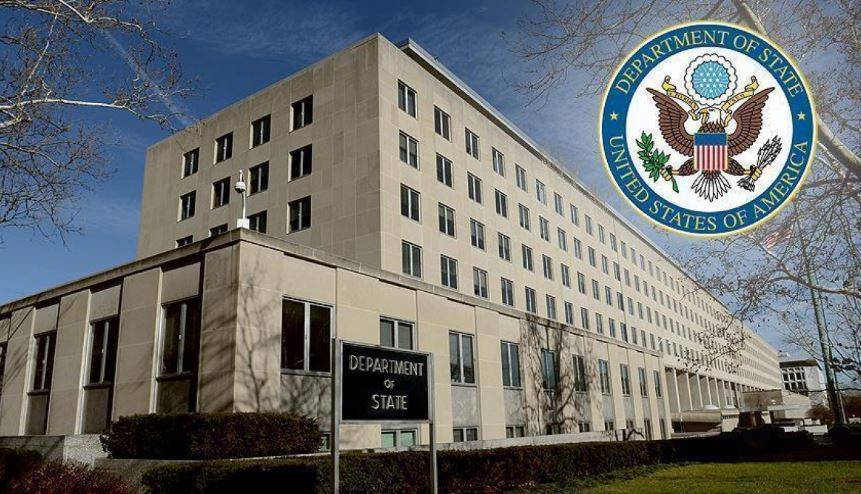
The U.S. State Department has formally rejected a proposal for American investment in Afghanistan’s mineral sector, stating that Washington has no intention of engaging with the Taliban-led administration. The decision underscores the persistent diplomatic chasm between the two sides, more than four years after the Taliban’s return to power.
According to a Voice of America report published on September 2, a State Department spokesperson made clear that the United States would not cooperate with the Taliban on the development of Afghanistan’s vast natural resources. The official argued that any U.S. investment in Afghanistan’s mining industry under the current regime would risk legitimizing and financially supporting the Taliban’s repressive governance, particularly its restrictions on women, minorities, and political dissent.
Taliban’s Outreach Meets Cold Response
The rejection came shortly after senior Taliban officials signaled openness to U.S. economic involvement. Amir Khan Muttaqi, the Taliban’s foreign minister, had earlier told the Financial Times that his government welcomed American investment in mining, infrastructure, agriculture, and trade. He urged both sides to move beyond their two-decade-long conflict and focus on future cooperation.
“Relations should not be assessed solely on the basis of past hostilities,” Muttaqi said, striking a conciliatory tone rarely heard from Taliban leadership in recent years.
Echoing that sentiment, Taliban spokesperson Zabihullah Mujahid reiterated the group’s desire for diplomatic and economic ties with the United States. At a news conference in Kabul on September 2, Mujahid said the Taliban’s foreign ministry was making “serious” efforts to expand relations not only with Washington but also with other nations, citing U.S. global influence as a key reason for engagement.
“Closer ties with the United States would benefit Afghanistan,” Mujahid said, adding that the outreach was ongoing and had been a priority since the group took power.
A $1 Trillion Prize and a Geopolitical Puzzle
Afghanistan’s mineral wealth has long been a subject of international interest. Surveys conducted during the former republic estimated the country’s reserves including lithium, cobalt, and niobium to be worth at least $1 trillion. These resources are critical for global supply chains in electronics, batteries, and renewable energy technologies, making Afghanistan a potential linchpin in future energy transitions.
However, the Taliban’s isolation on the world stage has prevented any large-scale foreign investment. While countries like China and Russia have shown interest in Afghan mining projects, U.S. firms remain barred from participation, and Western sanctions continue to limit financial transactions with the regime.
American Hostages Remain a Sticking Point
Beyond ideological differences, one of the most sensitive obstacles to normalization is the fate of American citizens detained or missing in Afghanistan. The State Department continues to warn U.S. citizens against travel to Afghanistan, citing risks of wrongful detention, hostage-taking, and terrorism.
The case of Mahmood Shah Habibi has become a focal point of U.S. concern. Habibi, an Afghan-American dual national and former head of Afghanistan’s Civil Aviation Authority, disappeared in Kabul on August 10, 2022. According to the FBI, he was taken by Taliban intelligence officials, along with his driver and 29 employees of a telecommunications company. Most of those detained were later released, but Habibi and another individual remain unaccounted for.
The FBI has offered a reward of up to $5 million for information leading to Habibi’s recovery and return. The Taliban has repeatedly denied holding him, with Mujahid stating that the group does not know his whereabouts a claim met with skepticism by U.S. officials and human rights advocates.
A Difficult Path to Normalization
The Taliban’s campaign for stronger ties with Washington reveals a fundamental contradiction: the group seeks political and economic engagement while failing to resolve outstanding cases of missing U.S. citizens. For Washington, accountability on these cases remains a precondition for any meaningful diplomatic thaw.
Analysts suggest that progress toward normalization will require not only rhetorical outreach from the Taliban but also tangible actions such as transparency on detainees, assurances against terrorist groups operating on Afghan soil, and credible steps toward inclusive governance.
Russia’s Recognition Adds a New Dynamic
The diplomatic landscape shifted in July 2025, when Russia became the first country to formally recognize the Taliban government. That move has been widely seen as a bid to expand Moscow’s influence in Central Asia, but it has not prompted a wave of similar recognitions. The United States and most other Western governments continue to withhold formal recognition, insisting on compliance with international norms and human rights standards.
Conclusion
While Afghanistan’s mineral wealth offers a potential pathway to economic recovery, the U.S. rejection of investment proposals reflects deep-seated political and humanitarian concerns. Until the Taliban addresses outstanding security and human rights issues particularly the fate of detained or missing Americans the prospects for U.S.-Taliban engagement remain dim. For now, the minerals beneath Afghanistan’s soil will likely remain untouched by American firms, a symbol not of resource potential, but of the enduring rift between Kabul and Washington.
Our Pashto-Dari Website

Support Dawat Media Center
If there were ever a time to join us, it is now. Every contribution, however big or small, powers our journalism and sustains our future. Support the Dawat Media Center from as little as $/€10 – it only takes a minute. If you can, please consider supporting us with a regular amount each month. Thank you
DNB Bank AC # 0530 2294668
Account for international payments: NO15 0530 2294 668
Vipps: #557320

Comments are closed.