
Diversion Under Fire: Kamdesh, Airstrikes, and the Externalization of Pakistan’s Internal Crisis
Ahmad Fawad Arsala


The Kamdesh episode does not stand alone. It is part of a broader pattern, one that becomes unmistakable when placed alongside Pakistan’s expanding campaign of cross-border airstrikes inside Afghanistan. Together, they reveal a consistent strategy. Internal insecurity rises inside Pakistan, and the response is projected outward through both covert and overt means.
Kamdesh exposed the covert side. The airstrikes expose the overt side.
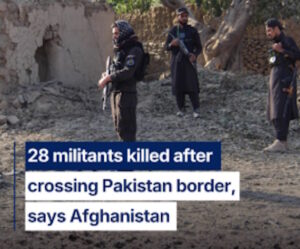
In Kamdesh, Afghan forces killed and captured large numbers of fighters who had crossed from Pakistan, with Kabul explicitly alleging organized support, facilitation, and deployment from across the border. These were not independent militants. They were part of a structured attempt to generate instability inside Afghanistan using recruited manpower.
But when that model failed on the ground, the escalation did not stop. It shifted form.
Within days, Pakistan carried out airstrikes in multiple Afghan provinces, including Kunar and Helmand. These strikes were justified by Islamabad as “intelligence-based” operations targeting militant hideouts. Yet Afghan authorities and international observers reported civilian casualties, including women and children, with at least nine to ten deaths confirmed.
This dual-track approach matters.
On one track, irregular fighters are inserted across the border to create instability. On the other, airpower is used to reinforce the narrative that the threat originates from Afghanistan. The two are not contradictory. They are complementary.
The logic is straightforward. If internal attacks inside Pakistan intensify, the state requires a visible external cause. That cause must be demonstrated, not merely asserted. Airstrikes provide that demonstration. They create an image of retaliation, of preemptive defense, of action against an external enemy.
But the sequence tells a different story.
Militant violence inside Pakistan has surged, prompting accusations that Afghan territory is being used as a base for attacks. Instead of resolving these internal dynamics, Pakistan escalates across the border. The strikes are presented as necessity. The narrative is framed as self-defense. Yet the outcome repeatedly includes civilian casualties and rising regional tension.
This is not containment. It is displacement.
The historical pattern reinforces this conclusion. Pakistan has conducted multiple rounds of airstrikes inside Afghanistan over the years, often following spikes in internal violence. These operations are consistently described as targeted, precise, and intelligence-driven. At the same time, Afghan officials and independent observers repeatedly report civilian deaths and destruction of non-military structures.
The gap between claim and outcome is persistent.
What Kamdesh adds to this pattern is exposure. When fighters are captured alive in large numbers, the narrative becomes harder to control. Testimonies emerge. Recruitment pipelines become visible. The use of vulnerable populations, including displaced Afghans, becomes part of the operational picture.
And that is where the contradiction sharpens.
In 2009, during the earlier Battle of Kamdesh, insurgents who attacked U.S. and Afghan positions were ideologically driven. They were cohesive, motivated, and capable of sustaining coordinated assault. Their effectiveness was not accidental. It was rooted in belief, structure, and long-term organization.
In 2026, the model has degraded.
The fighters used in the recent Kamdesh incursion lacked that ideological foundation. Reports indicate many were recruited under false promises, moved across borders, briefly trained, and then deployed. When confronted, they did not hold. They collapsed. They were killed, captured, or dispersed.
This difference explains the outcome. But it also explains the escalation that followed.
When proxy forces fail to produce the desired effect, airpower becomes the substitute. It is faster, more visible, and easier to frame politically. A failed covert operation can be buried. An airstrike cannot. It sends a signal, both domestically and internationally.
The signal, however, is not strength. It is pressure.
Pakistan today faces an internal security environment that is deteriorating across multiple fronts. Militant attacks are increasing in frequency and intensity. The state’s ability to manage these threats internally is under strain. Under these conditions, externalization becomes a tool of narrative management.
Blame shifts outward. Action shifts across borders. Accountability shifts away from internal structures.
But this approach carries costs.
Each airstrike deepens mistrust. Each civilian casualty undermines legitimacy. Each failed proxy operation exposes the underlying mechanism. Over time, the gap between narrative and reality widens to the point where it can no longer be sustained.
Kamdesh is a case in point.
A covert operation failed. Fighters were captured. The structure behind them became visible. Within days, overt military action followed in the form of airstrikes. The sequence is not coincidental. It is systemic.
A state cannot stabilize itself by exporting instability. Nor can it indefinitely mask internal crises by projecting them outward. The reliance on airpower to compensate for failing proxy mechanisms is not a solution. It is an indicator of strategic exhaustion.
Kamdesh and the subsequent airstrikes are not separate events. They are two expressions of the same problem.
And that problem is no longer contained within Pakistan’s borders.
Waiting for November Under Sanctions, Hormoz Closure: Boeing 777 Aircraft and Iran’s Shrinking Reach

Support Dawat Media Center
If there were ever a time to join us, it is now. Every contribution, however big or small, powers our journalism and sustains our future. Support the Dawat Media Center from as little as $/€10 – it only takes a minute. If you can, please consider supporting us with a regular amount each month. Thank you
DNB Bank AC # 0530 2294668
Account for international payments: NO15 0530 2294 668
Vipps: #557320

Comments are closed.