
Why Movements and Parties Without Collective Leadership Gather Under One Individual’s Shadow and Collapse Quickly
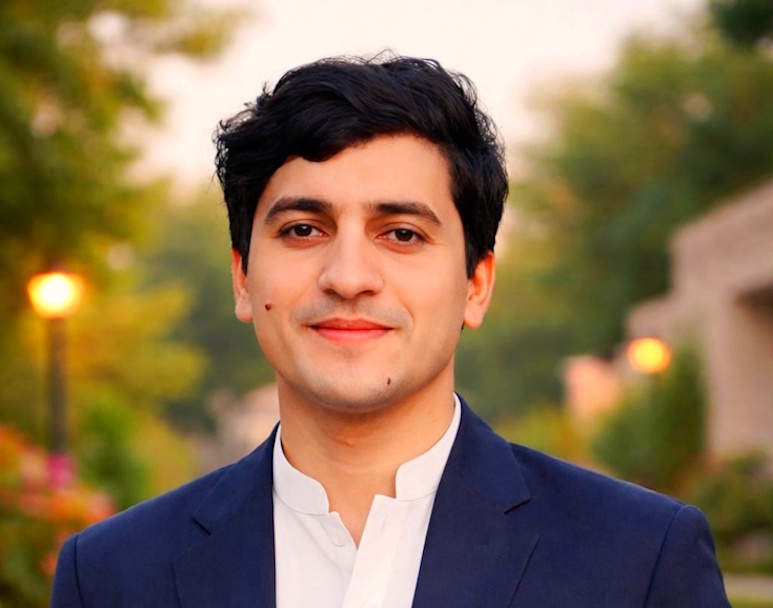
Dr Anwar Dawar

Why Movements and Parties Without Collective Leadership Gather Under One Individual’s Shadow and Collapse Quickly
In modern political history, this has been a recurring pattern: many movements and political parties emerge rapidly, inspire hope among people, reach a peak, and then soon lose their strength and disappear into the pages of history. The most fundamental reason behind this failure is the absence of collective leadership and the fact that the entire structure of the movement or party stands under the shadow of a single individual.
When a movement or party is built around a personality instead of an idea, it carries the seeds of weakness from the very beginning. Ideas can adapt themselves to the changing demands of time, but personalities are limited. A person ages, becomes exhausted, makes mistakes, and may even disappear, but if an idea remains alive, it continues to generate new energy and direction.
Movements and parties that form under the shadow of a single individual usually begin when a charismatic or emotionally compelling person stirs people’s feelings, narrates stories of suffering, and promises change. People, worn down by hardships, quickly connect and join. However, this connection is often not with thought or principles, but with the person. As a result, loyalty shifts from principles to personalities.
When loyalty or struggle is centered on a person, criticism is interpreted as hostility. Anyone who raises questions or presents an alternative view is labeled an opponent of the movement or party. In this way, the doors of intellectual diversity are closed, and the movement gradually turns into a closed system where only the voice of the leader or a few individuals is heard.
Collective leadership operates on the opposite logic. It is a system of consultation, shared decision-making, and distribution of authority. In such a structure, no one holds absolute power. Every decision passes through discussion, and every leader is accountable. This kind of system reduces the likelihood of mistakes and increases the chances of correction.
Movements and parties that lack collective leadership collapse quickly during times of crisis because everything is concentrated in one person. If that person comes under pressure, is imprisoned, defamed, or physically harmed, the entire movement becomes directionless. Members do not know what to do, whom to consult, or which path to follow.
Another major problem is that movements under a single individual’s shadow lack leadership continuity. Future leaders are not trained. Young people are not educated in thought, but rather trained in obedience. As a result, the movement grows old and weak because new energy and enthusiasm are not injected into it. In contrast, movements built on collective leadership continuously develop cadres, prepare young members, establish training systems, and prepare alternative leaders for the future. If one leader leaves, another takes their place because the system and the idea remain alive.
Similarly, movements led by a single individual often fall victim to internal rivalries. Everyone tries to become the closest person to the leader because power is gained not through thought, but through proximity. This leads to factions and groups forming within the movement, ultimately dividing it from within.
Moreover, individual leadership often makes emotional and short-term decisions. Emotions and impulsive decisions are dangerous in politics, which requires patience, long-term thinking, and careful calculation. When a movement is run on emotions, its strategy becomes unstable. Its stance changes repeatedly, and it fails to maintain a consistent narrative.
We can say that the foundation of every sustainable movement and party rests on ideas, principles, institutions, and collective leadership. Individuals come and go, but ideas remain. If societies want their movements to withstand the test of time and achieve their goals, they must move away from personality-centered leadership and adopt collective leadership and politics. True change does not emerge from the voice of one person, but from the shared thinking of thousands of conscious individuals.
How Pashtuns Can Move Beyond Tribal Mindset and Become a United Nation
Our Pashto-Dari Website

Support Dawat Media Center
If there were ever a time to join us, it is now. Every contribution, however big or small, powers our journalism and sustains our future. Support the Dawat Media Center from as little as $/€10 – it only takes a minute. If you can, please consider supporting us with a regular amount each month. Thank you
DNB Bank AC # 0530 2294668
Account for international payments: NO15 0530 2294 668
Vipps: #557320

Comments are closed.