

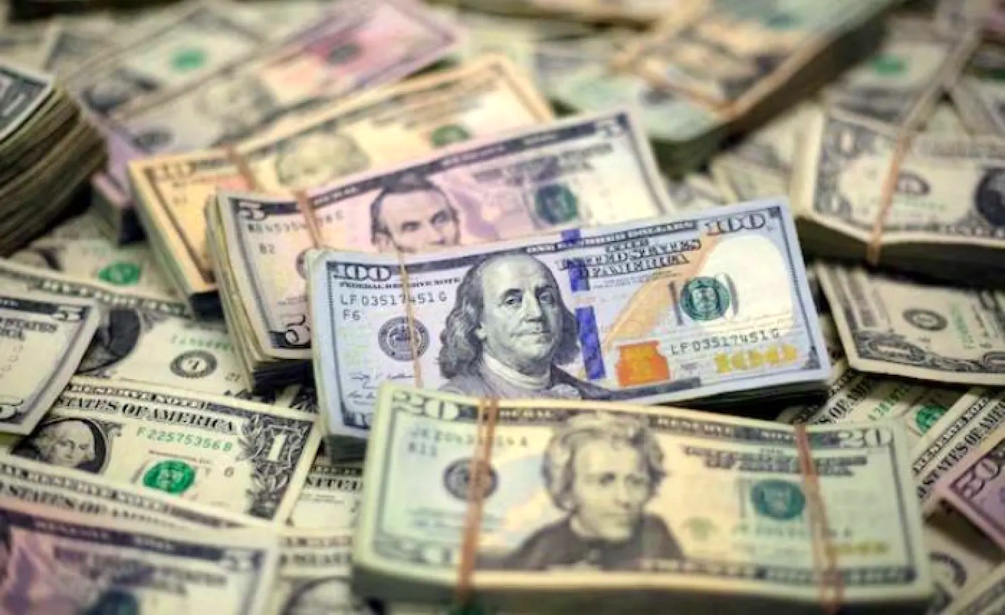
The dollar was on track for its first weekly gain in three weeks on Friday, finding support in broadly muted trading as stalled negotiations between the US and Iran dashed hopes for an imminent de-escalation of Middle East tensions. The greenback’s rebound underscores renewed investor anxiety over supply disruptions and geopolitical instability.
While Lebanon and Israel agreed to extend their ceasefire for three weeks just before its Sunday expiration, other developments have kept markets on edge. Iran recently showcased its strategic leverage over the Strait of Hormuz through which nearly 20% of global oil passes by releasing footage of its commandos storming a large cargo vessel. The provocative display has left the reopening timeline of this critical shipping corridor highly uncertain, helping to sustain elevated oil prices and boosting demand for safe-haven assets like the dollar.
The dollar index, which measures the greenback against a basket of major currencies including the yen and the euro, edged down 0.1% to 98.75 in early European trading but remained on course for a weekly advance of 0.5%. The euro inched 0.1% higher to $1.169, according to Reuters, though gains were capped by lingering concerns over the eurozone’s energy dependence and fragile economic outlook.
Sterling rose 0.1% against the dollar, though stronger-than-expected UK retail sales figures for March did little to move the currency meaningfully. The data suggested resilient consumer spending in the face of high inflation, but analysts noted that the Bank of England’s policy path remains heavily tied to global energy prices and conflict risks.
“If you look at the last week, the major theme is just that there’s no real progression with peace talks. For markets, it’s difficult when there’s no deadline,” said Tommy Von Brömsen, FX strategist at Handelsbanken in Stockholm. “That ambiguity tends to favor the dollar, even if daily moves remain subdued.”
Brent crude futures rose 1.5% to $106.60 a barrel, recovering some of the previous session’s losses. The oil market remains highly sensitive to any headlines out of the Gulf, with traders pricing in a persistent risk premium.
The dollar has drawn consistent safe-haven demand amid the uncertainty. It strengthened noticeably in March as fears over the conflict deepened, but gave back some ground earlier this month when hopes for a diplomatic breakthrough briefly lifted risk sentiment. That optimism has since faded.
“Oil and the dollar are still moving pretty closely together, and with crude creeping back up … I’d say the dollar is still staying fairly firm,” said Sho Suzuki, a market analyst at Matsui Securities.
Meanwhile, the yen steadied after four straight sessions of losses, rising 0.1% to 159.7 per dollar. The currency remains near multi-decade lows, keeping traders alert for possible intervention by Japanese authorities.
Central Bank Bonanza Looms
Traders are now turning their attention to a central-bank-heavy week ahead, with policy decisions due from the Bank of Japan (BOJ), European Central Bank (ECB), Bank of England (BoE), and the Federal Reserve. The quartet of meetings could inject fresh volatility into currency markets, particularly if any signals a shift in tone on inflation or rates.
“The main message from the central banks is that they are so far at least in a kind of ‘wait-and-see’ approach,” said Handelsbanken’s Von Brömsen. He noted that markets will be parsing communication and forward guidance closely, as policymakers grapple not only with higher energy prices but also with potential second-round effects, including broader wage and price pressures.
The ECB is expected to hold its deposit rate steady at its April 30 meeting, but just over half of economists polled by Reuters anticipate a rate hike in June. The central bank is trying to shield the eurozone economy from a war-induced energy shock while preventing inflation from becoming entrenched.
In Japan, core consumer inflation slowed below the BOJ’s 2% target for a second consecutive month in March. However, analysts expect price growth to accelerate back above that threshold in the coming months, as companies increasingly pass on higher fuel costs linked to the Middle East conflict. The BOJ’s two-day policy meeting concludes on Tuesday. Reuters reported this week that the bank is likely to hold off on raising interest rates, given the fading prospects of a near-term end to the war and the resulting uncertainty over Japan’s economic and price outlook. Still, the BOJ is expected to signal its readiness to hike in the future to counter mounting price pressures.
Japanese Finance Minister Satsuki Katayama reiterated her verbal warning on intervention on Friday, stating that authorities can take “decisive” action against speculative moves in the foreign exchange market. Her remarks came a day after she said Japan has a “free hand” to intervene and that past interventions had proved effective.
Elsewhere, the Australian dollar rose 0.1% against the greenback to $0.7135, while New Zealand’s kiwi added 0.1% to $0.5859. Both currencies remain sensitive to global risk appetite and commodity prices.
In cryptocurrencies, bitcoin was little changed at $77,895.85, holding near recent highs as digital assets showed relative stability despite broader geopolitical jitters.
Looking ahead: Next week’s slate of central bank decisions will likely set the tone for currency markets through early May. Any divergence in messaging particularly between the Fed and the ECB could drive renewed dollar strength, while diplomatic developments in the Middle East remain a wildcard for oil and the yen.
Our Pashto-Dari Website

Support Dawat Media Center
If there were ever a time to join us, it is now. Every contribution, however big or small, powers our journalism and sustains our future. Support the Dawat Media Center from as little as $/€10 – it only takes a minute. If you can, please consider supporting us with a regular amount each month. Thank you
DNB Bank AC # 0530 2294668
Account for international payments: NO15 0530 2294 668
Vipps: #557320

Comments are closed.