
Deadly Election Clashes in Pakistan-Administered Kashmir Leave Over 30 Dead as Political and Security Crises Intensify

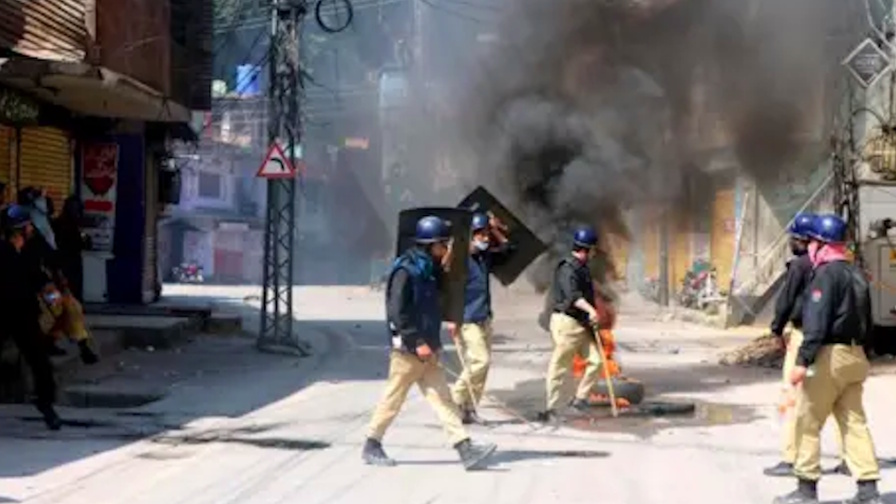
Regional elections in Pakistan-administered Kashmir have descended into deadly violence, with more than 30 people reportedly killed in clashes between protesters and security forces around Rawalakot, according to the banned Joint Awami Action Committee (JAAC). The unrest erupted just days before the second round of voting, underscoring deepening political fissures in the disputed territory.
Reuters reported on July 29 that protests turned violent as demonstrators took to the streets ahead of the next electoral phase. Pakistani authorities confirmed that one security official was killed and five others wounded, while at least three protesters were reported dead in the Mirpur district. However, the JAAC outlawed by Islamabad in June has claimed a significantly higher death toll, alleging that security forces used excessive force to disperse crowds. The government has yet to provide an official casualty count, and independent verification remains difficult due to restricted access and internet disruptions in the region.
The elections, initially planned as a single-round vote on July 27, were restructured into three staggered phases due to escalating security threats. The second round is now scheduled for August 2, with the final round set for August 10. In the first round, Pakistan’s ruling Pakistan Muslim League-Nawaz (PML-N) secured nine of the 13 contested seats in the districts of Mirpur, Kotli, and Bhimber. The opposition Pakistan Tehreek-e-Insaf (PTI) led by imprisoned former Prime Minister Imran Khan boycotted the vote, citing widespread electoral irregularities and alleging that the process was manipulated to favor the ruling party.
The unrest in Kashmir reflects broader grievances that extend far beyond the ballot box. Protesters have long accused Islamabad of political interference, economic neglect, and undermining the region’s limited autonomy. The JAAC, a coalition of political and civil society groups, has campaigned vigorously over issues such as rising inflation, unemployment, poor governance, and the unequal structure of political representation that dilutes Kashmiri voices in national decision-making. According to Reuters, the government’s ban on the group in June only inflamed tensions, triggering waves of protests that disrupted banking operations, transport networks, and internet services across multiple districts.
The election violence unfolds against a backdrop of mounting militant activity elsewhere in Pakistan, particularly in Khyber Pakhtunkhwa province and along the volatile Afghanistan border. On July 29, militants launched a coordinated assault on a police post in the Hangu district of Khyber Pakhtunkhwa, killing five police officers and wounding approximately two dozen others, the Associated Press reported. Police killed four attackers in a subsequent firefight. While no group has immediately claimed responsibility, authorities suspect the involvement of the Pakistani Taliban, known as Tehrik-e-Taliban Pakistan (TTP), which has intensified its operations in recent months.
The Hangu attack came just days after a devastating July 24 assault in the Tank district, where a suicide bomber and heavily armed gunmen targeted a security checkpoint, killing 15 security personnel. Pakistan’s military blamed the TTP for that incident and stated that security forces killed 12 militants in retaliatory operations. The surge in violence has raised alarm over the Pakistani military’s ability to contain a resurgent insurgency, even as the government struggles to maintain order in Kashmir.
Islamabad has repeatedly accused Afghanistan’s Taliban administration of harboring TTP members and allowing them to launch cross-border attacks from Afghan soil. Kabul has consistently rejected these allegations, denying that it provides safe haven to any militant group and insisting that Afghan territory will not be used against Pakistan. The mutual recriminations have strained bilateral relations and complicated regional counterterrorism efforts.
The simultaneous political upheaval in Pakistan-administered Kashmir and the escalating militant campaign in Khyber Pakhtunkhwa present separate yet interconnected challenges for the Pakistani government. While the Kashmir unrest is rooted in local governance and representation issues, the resurgence of the TTP threatens to destabilize the country’s northwestern frontier, potentially diverting military resources and attention away from the disputed territory. With the second round of voting looming and militant attacks on the rise, Islamabad faces a precarious balancing act one that will test its ability to uphold electoral legitimacy, maintain public order, and counter an emboldened insurgency, all while navigating international scrutiny over its handling of both crises.
Our Pashto-Dari Website
Support Dawat Media Center
If there were ever a time to join us, it is now. Every contribution, however big or small, powers our journalism and sustains our future. Support the Dawat Media Center from as little as $/€10 – it only takes a minute. If you can, please consider supporting us with a regular amount each month. Thank you
DNB Bank AC # 0530 2294668
Account for international payments: NO15 0530 2294 668
Vipps: #557320

Comments are closed.