
Hiroshima Marks 81st Anniversary of Atomic Bombing as Mayor Condemns Reliance on Nuclear Deterrence

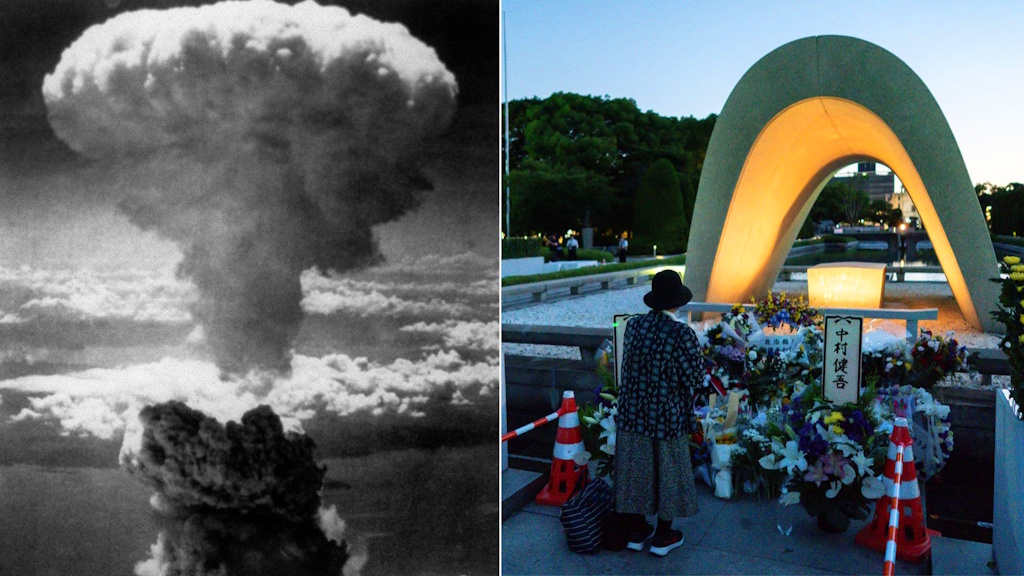
TOKYO — Hiroshima commemorated the 81st anniversary of the U.S. atomic bombing on Thursday, with its mayor issuing a stark warning against the growing global acceptance of nuclear weapons as a legitimate tool of statecraft. Speaking at the annual memorial ceremony, Mayor Kazumi Matsui criticized major powers for escalating conflicts and urged world leaders to abandon the logic that atomic arsenals ensure lasting peace.
“Downplaying the inhumanity of nuclear weapons and accepting the use of force to pursue one’s own prosperity risks cycles of violent retaliation that could ultimately result in another Hiroshima or Nagasaki,” Matsui declared in his peace address at Hiroshima Peace Memorial Park.
His remarks came against a backdrop of heightened international tension, including the ongoing war in Ukraine and rising nuclear rhetoric from several nations. Matsui explicitly pushed back against the realpolitik of deterrence, arguing that too many political leaders still consider it a “realistic approach” and, in doing so, legitimize violence. “This mindset,” he said, “simply pushes a world without nuclear weapons further into the distance.” He called on citizens everywhere to learn from the lessons of the past and to actively resist complacency.
The somber ceremony drew approximately 50,000 attendees, including representatives from around 120 countries and regions among them the United States, Iran, and for the first time in several years, a delegation from Russia. At 8:15 a.m., the exact moment the U.S. B-29 bomber Enola Gay released its payload over the city, a peace bell tolled and the gathered crowd observed a minute of silence, broken only by the hum of cicadas a poignant reminder of the summer morning when the city was obliterated.
A New Prime Minister, an Old Dilemma
The memorial took on added political weight this year, as it marked the first attendance of newly appointed Prime Minister Sanae Takaichi. A conservative hawk with a long history of advocating for a stronger Japanese military, Takaichi has previously called for a review of Japan’s postwar pacifist constraints. In her address, she struck a carefully calibrated tone, pledging to take “a realistic approach” toward a world free of nuclear use, while reaffirming Japan’s commitment to the framework of the Treaty on the Non-Proliferation of Nuclear Weapons (NPT).
However, her wording did little to quell growing unease. Takaichi stated that Japan has maintained its three non-nuclear principles not possessing, not producing, and not permitting the introduction of nuclear weapons into its territory but notably stopped short of explicitly pledging to uphold them indefinitely. This omission has fueled speculation that her administration may seek to revise or reinterpret the principles when it drafts new national security and defense documents later this year. Of particular concern is the third principle, which prohibits the transit or storage of U.S. nuclear weapons on Japanese soil; Takaichi has previously floated the idea of revising this to allow for greater military flexibility.
Japan’s reliance on the U.S. “nuclear umbrella” further complicates its official stance. While Tokyo has consistently called for disarmament, it has also repeatedly sought Washington’s reassurance of its extended deterrence commitments. This dual posture has led to a bitter split with atomic bomb survivors, known as hibakusha, who have long petitioned the government to sign the Treaty on the Prohibition of Nuclear Weapons (TPNW). To their deep disappointment, Japan has refused to join the treaty or even attend its meetings as an observer, citing security concerns and the need to maintain the U.S. alliance.
Fading Voices, Urgent Warnings
For the survivors, the anniversary is not merely historical it is a visceral, daily struggle against fading memory and unfinished work. The bombing of Hiroshima on August 6, 1945, instantly obliterated the city and killed an estimated 140,000 people by the end of that year. A second atomic bomb, dropped on Nagasaki three days later, claimed another 70,000 lives. Japan surrendered on August 15, bringing an end to World War II and its decades-long military aggression across Asia.
Today, the number of registered hibakusha has dwindled to just 91,105 roughly a quarter of their peak population—with an average age now exceeding 86 years. As their ranks thin, survivors and their advocates worry that the visceral horror of that day is being abstracted into a geopolitical footnote. Many of the youngest survivors were infants or toddlers at the time and have only fragmented memories, making the task of oral transmission ever more urgent.
“The horror of nuclear weapons is just one lesson of Hiroshima. Another is the need to build a world in which the threat or use of these weapons becomes unthinkable,” said United Nations Secretary-General António Guterres in a written statement read aloud at the ceremony. He praised the city’s enduring spirit, adding: “Hiroshima stands as an inspiring example of resilience, renewal and hope. Across generations, its people remind us that, even after the darkest moments, we can choose and build a different future.”
Yet for many at the memorial, that future appears increasingly uncertain. As geopolitical fissures widen and arms control treaties erode, the annual ringing of the peace bell feels less like a tribute to the past and more like an alarm for the present. Mayor Matsui’s closing words echoed that sentiment: “We must not repeat the mistakes of history. It is not enough to remember we must act.”
Our Pashto-Dari Website

Support Dawat Media Center
If there were ever a time to join us, it is now. Every contribution, however big or small, powers our journalism and sustains our future. Support the Dawat Media Center from as little as $/€10 – it only takes a minute. If you can, please consider supporting us with a regular amount each month. Thank you
DNB Bank AC # 0530 2294668
Account for international payments: NO15 0530 2294 668
Vipps: #557320

Comments are closed.