
Iranian Kurdish Group Signals Readiness for Ground Operation Inside Iran Amid Regional Turmoil

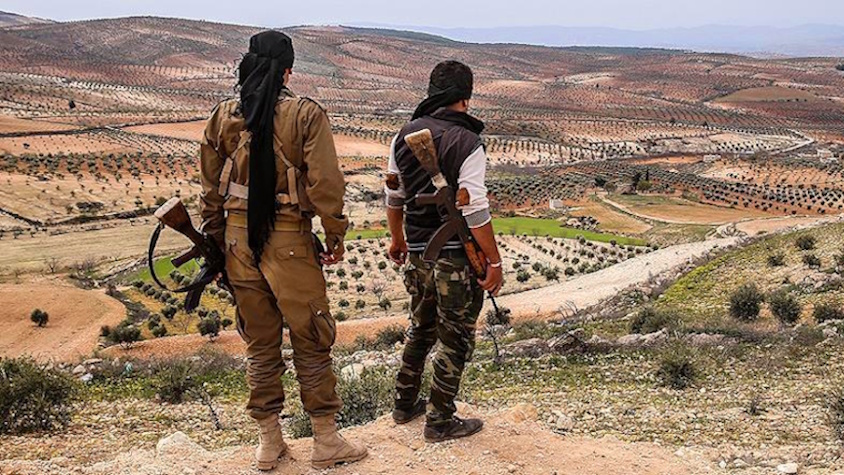
An Iranian Kurdish opposition faction based in the Kurdistan Region of Iraq has announced it is actively weighing the possibility of launching a ground operation into Iranian territory, a move that could dramatically escalate cross-border tensions and further destabilize the region.
Babashikh Hosseini, the secretary-general of the Khabat Organization of Iranian Kurdistan, stated that such an incursion has become “very likely” given the current geopolitical climate. His comments, reported by Al Jazeera, come at a time of heightened volatility across the Middle East, marked by the ongoing Gaza war and increased military activity between Israel and Iran.
Hosseini revealed that during the recent escalation of regional hostilities, the group has been contacted by the United States through various channels. However, he did not specify the nature of these communications or whether they implied any form of support or strategic coordination. He emphasized that while the group has maintained operational preparations for an extended period, it has not yet commenced any offensive military actions inside Iran.
“No final decision has been made,” Hosseini clarified, “but the possibility of launching a ground operation remains high under the present circumstances.”
A History of Cross-Border Conflict
The announcement raises the specter of renewed conflict along Iran’s western borders. For decades, several Iranian Kurdish opposition groups, including the Khabat Organization, the Kurdistan Democratic Party of Iran (KDPI), and Komala, have maintained rear bases and political offices in the mountainous areas of the Kurdistan Region of Iraq. From these positions, they have historically staged low-level insurgencies against the Islamic Republic, advocating for greater Kurdish rights.
Tehran views these groups as a persistent national security threat, accusing them of smuggling weapons, fomenting unrest inside Iran—particularly during anti-government protests—and receiving support from foreign adversaries. In response, Iran’s Islamic Revolutionary Guard Corps (IRGC) has conducted frequent missile and drone strikes against what it describes as “terrorist bases” in northern Iraq. These operations, which have often been condemned by the Iraqi federal government and the Kurdistan Regional Government (KRG), are designed to pressure Iraqi authorities to disarm the groups or push them away from the border.
A Volatile New Context
The potential for a ground operation by the Khabat Organization represents a significant departure from the status quo. Previous flare-ups have primarily involved Iranian strikes on Iraqi territory, not ground incursions from Iraq into Iran. Analysts suggest that the group’s consideration of such a bold move is likely influenced by the perception that Iran is strategically overstretched and distracted by its confrontation with Israel and its proxies in the Levant.
The involvement—or even the suggestion of communication—with the United States adds another layer of complexity. Washington maintains a military presence in Syria and Iraq and has long been at odds with Tehran. While the U.S. has previously provided non-lethal aid to some Syrian Kurdish groups, its relationship with Iranian Kurdish opposition parties has been more ambiguous, often balancing pressure on Iran with the need to maintain stability in Iraq.
Risks of a Wider Conflagration
Any ground incursion by Iranian Kurdish fighters would carry immense risks.
-
Iranian Retaliation: It would almost certainly trigger a massive and disproportionate Iranian military response, not just against the Kurdish positions inside Iran, but also against their bases in Iraq, potentially drawing the KRG and Iraqi federal forces into the conflict.
-
Regional Destabilization: Such an operation could open a new front in the broader Middle East conflict, aligning with the interests of Iran’s enemies by forcing Tehran to fight on another flank. This risks expanding the arc of instability from Gaza and Lebanon to the Iraqi-Iranian border.
-
Civilian Impact: Cross-border shelling and military operations have historically displaced border communities on both sides. A ground war could lead to a new humanitarian crisis in the rugged borderlands.
While the Khabat Organization frames this as an opportunity, experts warn it could be a perilous gamble. For now, the region waits to see if the threat will materialize into action, a decision that could fundamentally alter the security dynamics of the Iran-Iraq border.
Our Pashto-Dari Website

Support Dawat Media Center
If there were ever a time to join us, it is now. Every contribution, however big or small, powers our journalism and sustains our future. Support the Dawat Media Center from as little as $/€10 – it only takes a minute. If you can, please consider supporting us with a regular amount each month. Thank you
DNB Bank AC # 0530 2294668
Account for international payments: NO15 0530 2294 668
Vipps: #557320

Comments are closed.