

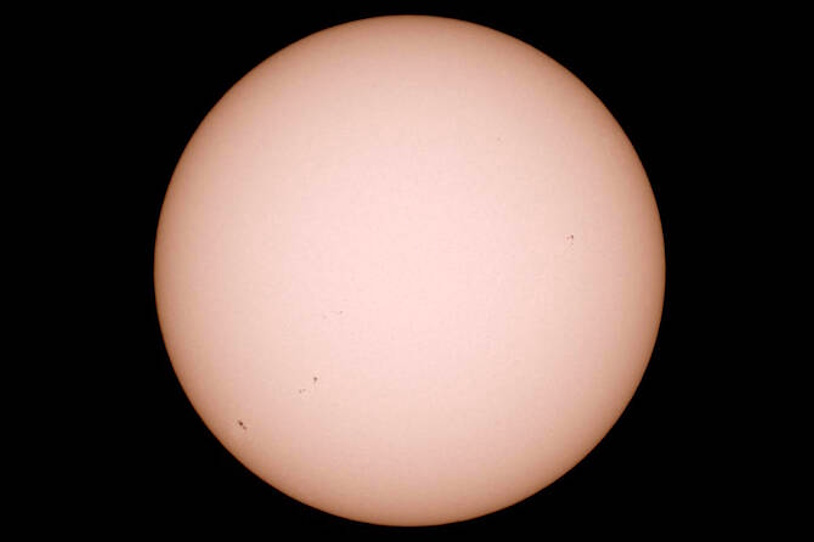
MEDINACELI, Spain – Spaniards scrambled for specialized eyewear on Wednesday as the country prepared for a rare total solar eclipse, while authorities urged the thousands flocking to rural viewing spots to take extreme precautions against any activity that could ignite new wildfires.
Across a broad swath of northern and central Spain, millions will enjoy some of mainland Europe’s clearest views of the celestial event, which is set to begin around sunset. At that moment, the sun, moon, and Earth will align perfectly, briefly plunging parts of the Iberian Peninsula along with slivers of Greenland and Iceland into an eerie daytime darkness.
Totality, the fleeting phase when the moon completely obscures the sun’s brilliant disk, is expected to last less than two and a half minutes. Yet even that brief window has sparked immense excitement and significant concern. Against a backdrop of scorching summer temperatures and persistent wildfire risks, Spanish officials have rolled out a comprehensive public safety campaign, balancing astronomical wonder with environmental vigilance.
A Surge in Visitors and Soaring Demand
The much-anticipated eclipse could draw at least half a million additional visitors, according to Spanish authorities. Hotel bookings along the path of totality—including in the northern cities of A Coruña, Bilbao, and Santiago de Compostela have skyrocketed, with many establishments reporting full occupancy weeks in advance.
In Medinaceli, a picturesque Roman-era hilltop town in northeastern Spain, early-bird skywatchers secured prime grassy viewing spots several hours before the event, while others crowded the main square’s bustling restaurants and terraces. The atmosphere was festive, though tempered by the glaring sun and the dry, crackling vegetation underfoot.
“It must be thrilling to see the darkness come so suddenly and watch the sun’s image simply vanish,” said Agatha Bak, a 40-year-old philosophy professor who had traveled from Madrid with friends at sunrise. “It feels like witnessing something both ancient and profoundly modern at the same time.”
A Brief but Breathtaking Spectacle
The eclipse will achieve its maximum duration over two minutes of totality off the west coast of Iceland. By the time it sweeps across a small patch of Portugal and then enters Spain, totality will have diminished to roughly one minute before ending over the Mediterranean Sea. Despite its brevity, the event has drawn global attention, with astronomers and amateur enthusiasts converging on the region from as far as North America and Asia.
Authorities on High Alert in “Empty Spain”
Spain’s Interior Ministry has established 350 official viewing sites across the country’s sparsely populated interior a region often dubbed “Empty Spain” due to its low demographic density. Another 123 locations have had access restricted or limited due to environmental fragility or logistical challenges that could hamper evacuation efforts in the event of an emergency.
The precautions are far from theoretical. Just weeks ago, the most destructive wildfire in Spanish history scorched 500 square kilometers (193 square miles) in the central province of Ávila, forcing tens of thousands to flee their homes. Several smaller blazes continue to smolder in southern and central regions, a stark reminder of the tinderbox conditions prevailing across much of the country.
To manage the influx, more than 33,500 law enforcement officers will be deployed to observation areas, access roads, and critical infrastructure points, the ministry confirmed.
“High temperatures, the accumulated dryness of vegetation, and the intense pressure on natural areas due to projected travel necessitate extreme preventive measures,” said Interior Minister Fernando Grande-Marlaska in a briefing. “We cannot afford a single misstep.”
Meteorological warnings compound the anxiety. Much of Spain will remain on alert Wednesday as thermometers climb above 35°C (95°F) and vegetation stays bone-dry. The national weather agency, AEMET, has forecast such searing conditions stretching from the northwest to the southeast including many prime eclipse-viewing zones.
Authorities are urging visitors to refrain from lighting any fires, discarding cigarette butts, littering, or parking vehicles on dry grass, as even a stray spark could trigger a catastrophic blaze.
Eclipse Glasses Fly Off Shelves
Meanwhile, the race for safe viewing equipment has reached fever pitch. Specialized eclipse glasses essential for protecting eyesight even when only a sliver of the sun remains visible have become the season’s hottest commodity.
“To look at the sun, you must always use proper protection, and the most suitable protection is eclipse glasses,” stressed Telmo Fernández Castro, director of the Madrid Planetarium. The glasses incorporate special solar filters that block harmful radiation capable of causing permanent retinal damage.
For months, supermarkets, department stores, museums, and planetariums across Spain have been selling or distributing the glasses. But in the final days before the eclipse, many pharmacies and retailers have reported running out of stock entirely.
On Tuesday evening, a long queue formed outside a small photo shop in downtown Madrid, where a handwritten sign taped to the entrance read: “We carry eclipse glasses.” As one woman emerged clutching her purchase, she turned to reassure the anxious line: “He has boxes and boxes of them!”
Iceland Sees Surge in Prices and Visitors
The eclipse fervor is not limited to Spain. In Reykjavík, Iceland’s capital, hotel rooms for Wednesday night were averaging more than $1,000 roughly double the rates from 2025, according to data group Lighthouse Intelligence. It marks the country’s first total solar eclipse since 1954 and the first visible from the capital since 1433, fueling a surge in international interest.
Iceland, home to fewer than 400,000 people, expects up to 20,000 additional overseas visitors during an already bustling peak tourist season. The 70-room Hotel Keflavík in the Reykjanesbaer municipality is fully booked, with guests hoping to catch roughly one minute and 45 seconds of totality weather permitting.
“Eclipse time has, of course, been very demanding, and many people came to us early, like last year,” said hotel owner and manager Steinþór Jónsson. He noted that he hadn’t seen such frenzy since 1986, the year his hotel opened and U.S. President Ronald Reagan and Soviet leader Mikhail Gorbachev held their historic summit in Reykjavík.
“When I opened the hotel, we had Reagan and Gorbachev meeting it was very hectic here,” Jónsson recalled with a smile. “Besides Reagan and Gorbachev, the eclipse is the biggest.”
As the clock ticks toward sunset, all eyes shielded by precious eclipse glasses will turn skyward, hoping for clear skies and an unforgettable moment of cosmic alignment, while below, the land remains parched and watchful.
Our Pashto-Dari Website

Support Dawat Media Center
If there were ever a time to join us, it is now. Every contribution, however big or small, powers our journalism and sustains our future. Support the Dawat Media Center from as little as $/€10 – it only takes a minute. If you can, please consider supporting us with a regular amount each month. Thank you
DNB Bank AC # 0530 2294668
Account for international payments: NO15 0530 2294 668
Vipps: #557320

Comments are closed.