

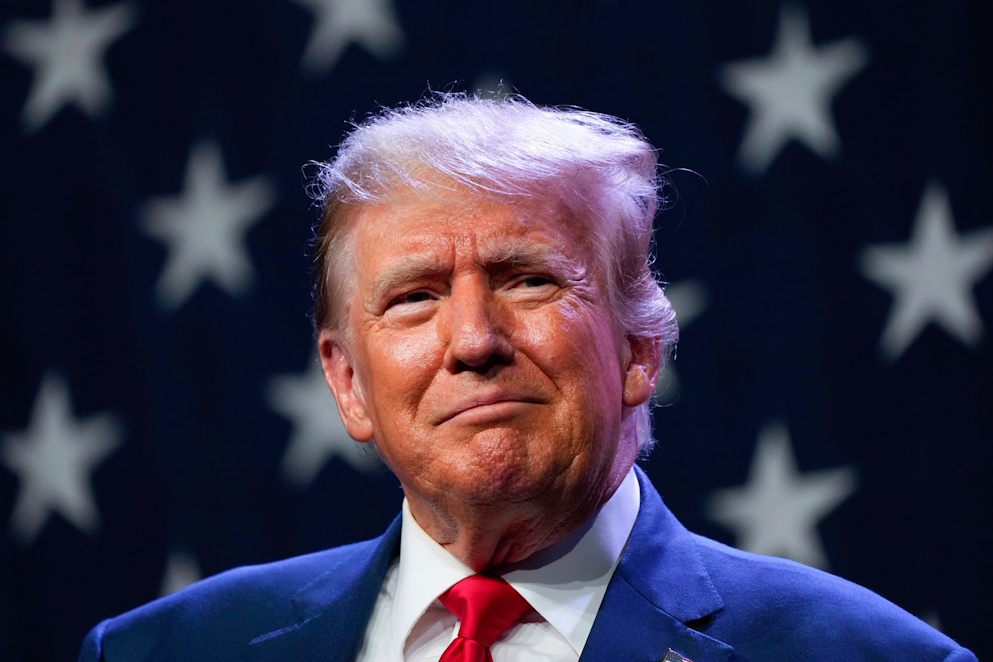
US President Donald Trump has issued a stark warning to Iran, declaring that “the clock is ticking” as diplomatic efforts to end the ongoing conflict appear to have stalled.
In a sharply worded post on his Truth Social platform on Sunday, Trump warned Tehran that it must move quickly toward a peace agreement with Washington or face devastating consequences.
“For Iran, the clock is ticking, and they better get moving, FAST, or there won’t be anything left of them,” Trump wrote. “TIME IS OF THE ESSENCE!”
The statement came amid growing frustration in Washington over the lack of progress in negotiations aimed at ending hostilities between the United States, Israel, and Iran. According to reports, Trump is expected to convene a high-level Situation Room meeting with his top national security advisers on Tuesday to discuss potential military options if diplomacy fails.
Trump-Netanyahu Call Focuses on Iran
The warning followed a phone conversation between Trump and Israeli Prime Minister Benjamin Netanyahu on Sunday, according to Israeli media reports citing Netanyahu’s office.
The two leaders reportedly discussed Iran’s refusal to accept several key US demands and reviewed the possibility of renewed joint military action if talks collapse.
Israeli public broadcaster Kan reported that Trump and Netanyahu explored scenarios involving intensified strikes against Iranian military and nuclear infrastructure.
Earlier in the day, Netanyahu confirmed he was scheduled to speak with Trump and said the conversation would include discussions on Iran, as well as a briefing on Trump’s recent diplomatic trip to China.
Iran Rejects US Terms
Iranian state-linked media said Sunday that Washington had failed to offer any meaningful concessions in response to Tehran’s latest proposals for ending the conflict.
The semi-official Mehr news agency reported that the US response lacked “concrete compromise” and warned that continued inflexibility from Washington would create an “impasse in negotiations.”
Iranian Foreign Ministry spokesman Esmail Baghaei defended Tehran’s proposals, describing them as both “responsible” and “generous.”
According to Iran’s semi-official Tasnim news agency, Tehran’s conditions for peace include:
- An immediate and comprehensive ceasefire on all fronts, including an end to Israeli strikes on Iran-backed Hezbollah positions in Lebanon;
- A complete lifting of the US naval blockade on Iranian ports;
- Binding guarantees against future American or Israeli military attacks;
- Compensation for war-related damage inflicted during the conflict;
- Formal recognition of Iranian sovereignty over the Strait of Hormuz.
Washington’s Demands
Iran’s semi-official Fars news agency reported Sunday that the US has responded with five conditions of its own.
Among them are:
- Limiting Iran to operating only one nuclear facility;
- Transferring its stockpile of highly enriched uranium to US custody;
- Accepting long-term international monitoring of all nuclear activities;
- Restrictions on future missile development;
- Verification measures to ensure compliance.
Trump signaled on Friday that he may be willing to accept a 20-year suspension of Iran’s nuclear program, a notable shift from his previous insistence on the complete dismantling of Tehran’s nuclear infrastructure.
The proposal appears to reflect growing pressure within the White House to secure a diplomatic breakthrough while avoiding another prolonged Middle East war.
Ceasefire Under Strain
The current ceasefire brokered in early April after weeks of intense fighting has largely held, though sporadic exchanges of fire continue.
Trump had previously warned that the truce was on “massive life support” after rejecting what he described as Tehran’s “totally unacceptable” demands.
Shortly before the ceasefire was announced, Trump dramatically warned that “a whole civilization” could perish if Iran refused to negotiate.
Israeli and US forces launched coordinated large-scale airstrikes against Iranian military targets on February 28, targeting strategic facilities across the country.
Strait of Hormuz Crisis Escalates
Iran has continued to assert control over the Strait of Hormuz, effectively restricting commercial passage through the critical waterway.
The strait handles nearly 20 percent of global oil and liquefied natural gas shipments, making it one of the world’s most strategically important maritime routes.
Tehran says its actions are retaliation for US and Israeli attacks, while Washington has accused Iran of using economic coercion to strengthen its negotiating position.
The disruption has triggered sharp increases in global energy prices and renewed fears of broader regional instability.
US Naval Blockade and Pakistan’s Mediation Efforts
The United States has intensified enforcement of a naval blockade on Iranian ports, seeking to pressure Tehran into accepting Washington’s terms.
Meanwhile, Pakistan has continued its role as mediator between the two sides, attempting to revive direct negotiations and prevent a return to full-scale war.
Despite Islamabad’s diplomatic efforts, officials on both sides acknowledge that Washington and Tehran remain far apart on the central issues of nuclear restrictions, regional military activity, and long-term security guarantees.
Military Option Back on the Table
According to Axios, citing two senior US officials, Trump still prefers a negotiated settlement but has grown increasingly skeptical that Iran is negotiating in good faith.
With diplomacy faltering and tensions rising, military action is once again under active consideration.
For now, the world watches as both sides remain locked in a dangerous standoff with the future of the region hanging on whether diplomacy can succeed before time runs out.
Our Pashto-Dari Website

Support Dawat Media Center
If there were ever a time to join us, it is now. Every contribution, however big or small, powers our journalism and sustains our future. Support the Dawat Media Center from as little as $/€10 – it only takes a minute. If you can, please consider supporting us with a regular amount each month. Thank you
DNB Bank AC # 0530 2294668
Account for international payments: NO15 0530 2294 668
Vipps: #557320

Comments are closed.