
Afghan Migrants in Italy Exploited at Work and Stuck in Legal Limbo, Report Finds

Afghan Migrants in Italy Exploited at Work and Stuck in Legal Limbo, Report Finds
Afghan migrants in Italy continue to face persistent barriers to stable employment, social integration, and long-term settlement, despite gaining access to asylum procedures and legal residence documents, according to a new report by the Afghanistan Analysts Network (AAN). The findings paint a complex picture of a population that has grown rapidly over the past decade but remains trapped in a cycle of precarious work, exploitation, and uncertain legal status.
The report, published on October 17 by researcher Fabrizio Foschini, notes that Italy remains an important transit point for Afghans seeking protection or hoping to reach other European countries particularly Germany and Austria. Low wages, insecure work, and limited opportunities for career advancement have discouraged many from settling permanently in Italy, prompting secondary movements that complicate both Italian integration efforts and broader European migration dynamics.
Rapid Population Growth and Shifting Migration Routes
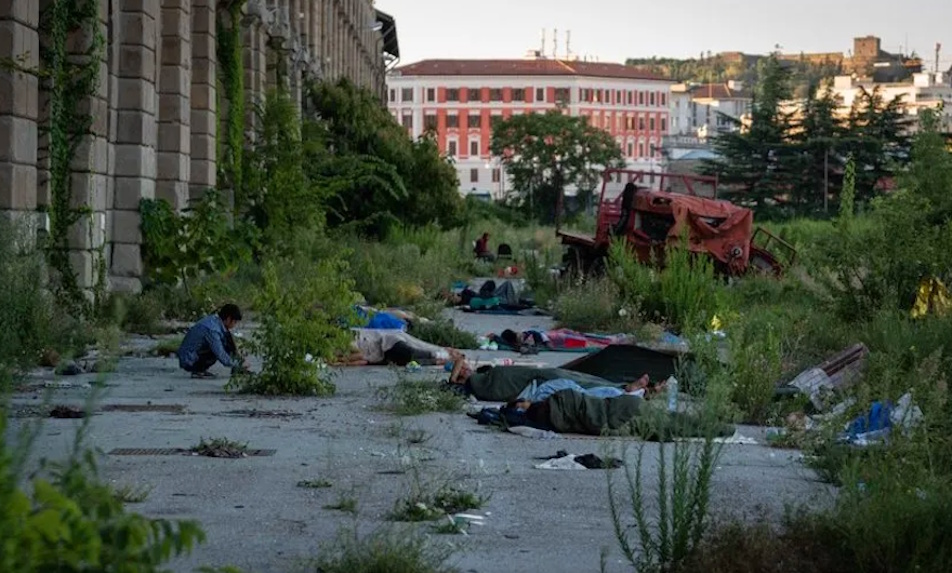
According to figures cited by AAN, the Afghan population living in Italy reached approximately 19,000 in 2025, up from fewer than 4,000 in 2011 a nearly fivefold increase in just over a decade. The northeastern city of Trieste has emerged as a major entry point along the Balkan migration route. Local organizations recorded nearly 30,000 Afghans spending time in the city between 2021 and 2026, either while traveling onward or applying for asylum. The discrepancy between the number of arrivals and the resident Afghan population underscores Italy’s role as a transit corridor rather than a final destination for many.
Labour Market Exploitation and the Caporalato System
Many Afghans who remain in Italy find work in agriculture, tourism, construction, and services. However, the report describes widespread problems involving low pay, informal employment, long working hours, and unsafe conditions. Foschini highlights caporalato a system in which informal labour intermediaries recruit and control workers, sometimes exposing them to exploitation. This practice, deeply rooted in parts of the Italian agricultural economy, leaves migrant workers particularly vulnerable, as they often lack the language skills, legal knowledge, or social networks needed to assert their rights.
Migrants who need to support relatives in Afghanistan may feel pressured to accept poor working conditions rather than risk losing their income. The report emphasizes that obtaining legal residence does not necessarily lead to economic security. Some Afghan workers have left jobs in Italy after finding limited prospects for higher wages or career progression, moving instead to other European Union countries where they hope to earn more or join established family and community networks.
Case Studies: Shipbuilding and Textile Sectors
The report offers specific examples of the challenges Afghan workers face. One case concerns Afghan workers who sought employment in shipbuilding around Monfalcone, near Trieste, but reportedly left after struggling to advance beyond low-paid positions. The shipbuilding industry in the region, dominated by the Fincantieri shipyard, has attracted migrant labour but offers limited upward mobility for foreign workers.
The report also describes difficulties faced by an Afghan tailor seeking work in Prato, a textile centre where many workshops are managed by Chinese business owners. According to Foschini, the tailor was told that employers viewed his refugee status as a possible source of workplace disputes a form of discrimination that reflects broader anxieties among employers about hiring workers with legal vulnerabilities. The Prato case illustrates how legal status, rather than serving as a protective factor, can sometimes become a liability in informal labour markets.
Deadly Attack Highlights Severe Risks
The risks facing migrant workers were underscored by a deadly attack in southern Italy in June 2026. Four farm workers three Afghans and one Pakistani died after a vehicle they were in was set alight in Calabria. Italian news agency ANSA reported that two Pakistani men were arrested over the incident. A surviving Afghan worker alleged that the suspects had forced the workers to work without pay, providing food and accommodation instead. The case highlighted the severe dangers associated with exploitative labour arrangements and drew national attention to the plight of migrant agricultural workers in southern Italy.
Changes to Italy’s Asylum System
The report also points to significant changes in Italy’s asylum system. Although the country had historically granted protection to a high proportion of Afghan applicants, positive decisions fell to 82% in 2025, according to AAN. The figure refers to decisions on Afghan applications in Italy, rather than the recognition rate across Europe, and reflects a tightening of asylum assessments.
New Italian measures introduced alongside the European Union’s Migration and Asylum Pact in June 2026 have also brought accelerated border procedures, with shorter deadlines for certain cases and appeals. AAN says some Afghan applicants in Trieste have been affected by the changes, raising concerns about access to legal advice and the ability to challenge negative decisions. The accelerated procedures, while intended to streamline asylum processing, may inadvertently disadvantage applicants who lack legal representation or face language barriers.
European Context: Afghans Remain Largest Applicant Group
Across Europe, Afghans continue to make substantial numbers of asylum applications. The European Union Agency for Asylum reported that Afghans lodged around 39,000 applications in EU+ countries during the first half of 2026 the highest total among nationalities. The agency also cautions that recognition rates vary between countries and depend on national practices and individual cases, meaning that an Afghan applicant’s chances of receiving protection can vary significantly depending on which EU country processes their claim.
Conclusion: Protection Documents Are Only the First Step
AAN concludes that Italy is likely to remain both a destination and a transit point for Afghans. For many, however, obtaining protection documents is only the first step: finding secure work, escaping exploitation, and building a stable life remain significant challenges. The report’s findings suggest that legal status alone is insufficient to guarantee economic security or social integration, and that more robust labour protections, language training, and integration support are needed to ensure that Afghan migrants can build sustainable futures in Italy. Without such measures, the cycle of precarious work, secondary migration, and vulnerability to exploitation is likely to persist.
Our Pashto-Dari Website

Support Dawat Media Center
If there were ever a time to join us, it is now. Every contribution, however big or small, powers our journalism and sustains our future. Support the Dawat Media Center from as little as $/€10 – it only takes a minute. If you can, please consider supporting us with a regular amount each month. Thank you
DNB Bank AC # 0530 2294668
Account for international payments: NO15 0530 2294 668
Vipps: #557320

Comments are closed.