

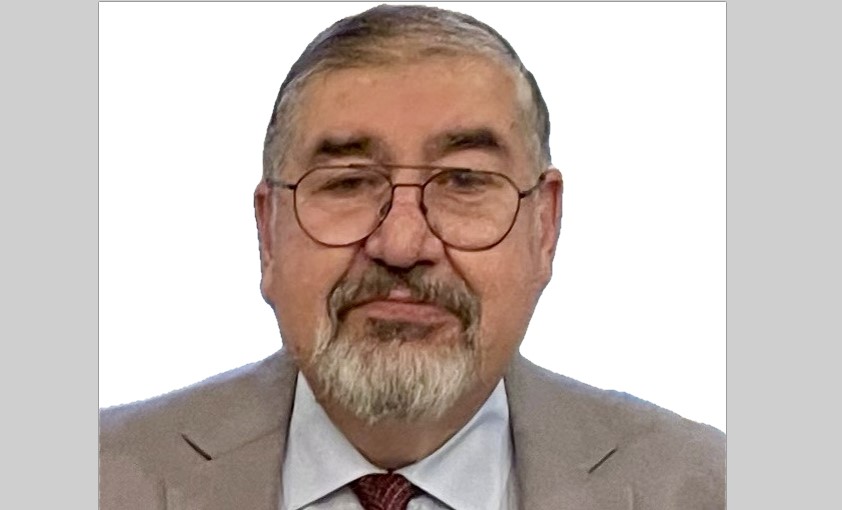
In the dislocation that followed August 2021, Afghanistan’s exiled elite faced a defining question: how to serve a country they could no longer physically inhabit. The answers have varied, but few contrasts are as stark, or as consequential, as that between Aziz Polad and Lt. Gen. Sami Sadat. Their divergence is not simply personal. It reflects two competing paradigms for Afghanistan’s future: one rooted in intellectual sovereignty and historical reconstruction, the other entangled in militarization and, increasingly, external manipulation.
Aziz Polad has taken the more demanding and strategically disciplined path. Through his Pashtun digital legacy initiative and his historical work, including Polad: Forged in the Furnace of Time, he has committed himself to an often overlooked battlefield: the preservation of truth. In an era saturated with disinformation, state-sponsored narrative engineering, and social media distortion, Polad’s work is not cultural nostalgia. It is counter disinformation infrastructure. It is an effort to systematically document Afghan history before it is overwritten by political agendas, including those emanating from outside the country.
Crucially, Polad’s book goes beyond memoir. It offers a vivid, ground level account of life shaped by decades of war, but more importantly, it exposes with striking clarity the systematic corruption that defined much of the twenty year so called republic. Through a day by day narrative of institutional decay, it captures not only the mechanics of collapse but the psychology of it. The reader sees the state not as an abstract failure, but as a lived experience of dysfunction, where mid level officials operated in an environment of chronic uncertainty, political interference, and diminishing legitimacy. The final collapse is not portrayed as sudden. It emerges as the predictable outcome of accumulated corruption, weak leadership, and a hollowed out administrative structure. Equally powerful is the sense of hopelessness that permeates the account, a quiet but pervasive recognition among officials that the system they served was eroding from within.
This is not merely documentation. It is diagnostic. It identifies internal vulnerabilities that external actors have historically exploited. By recording these realities with specificity and evidence, Polad is reinforcing a form of intellectual sovereignty that denies others the ability to selectively reinterpret Afghanistan’s recent past.
Lt. Gen. Sami Sadat’s trajectory moves in the opposite direction. His advocacy for renewed armed resistance, often framed through the legitimate and emotionally resonant issue of women’s education, demands far more scrutiny than it has received. The denial of education to Afghan girls is indefensible. It is a national injustice that must be corrected. But the invocation of this cause as a justification for war raises a critical strategic question: is this a genuine pathway to reform, or a politically convenient mobilization narrative masking deeper geopolitical alignments?
War in Afghanistan is never an abstract concept. It is measured in bodies, in blood, and in irreversible human loss. Even in limited recent cross border escalations, dozens of civilians have been killed and hundreds injured within days of fighting, many of them women and children . Broader historical data is even more damning. In a single year of the previous war, more than 10,000 civilians were either killed or wounded , and across the conflict since 2009, tens of thousands of civilians have died and many more have been maimed, displaced, or permanently scarred . These are not statistics. They represent shattered families, amputated lives, orphaned children, and a society repeatedly forced to rebuild from trauma.
Recent reports continue to underscore this reality. Airstrikes and cross border attacks have killed civilians in villages and left scores wounded, reinforcing that in any renewed conflict it is not decision makers but ordinary Afghans who absorb the ضربه . This is the predictable anatomy of war in Afghanistan. It does not produce targeted outcomes. It produces indiscriminate suffering.
To advocate for the re ignition of such a cycle without a credible, internally sustainable political framework is not strategic leadership. It is escalation with known human consequences.
More concerning is the growing body of credible reporting indicating that Sadat’s militarized posture may not be independently conceived. Allegations of planning, logistical support, and funding linked to Pakistan are not peripheral claims. They strike at the core issue of agency. Pakistan’s historical record in Afghanistan is well established. It has consistently sought to shape Afghan outcomes to serve its own strategic depth doctrine, often at the expense of Afghan stability.
In this context, the possibility that a renewed insurgent posture is being cultivated or facilitated from across the border cannot be dismissed as coincidence. It aligns too closely with Pakistan’s structural incentives. Faced with intensifying internal pressures in Khyber Pakhtunkhwa and Balochistan, and persistent tensions in Kashmir, Islamabad has repeatedly externalized instability as a strategic release mechanism. Afghanistan has historically borne the cost of this policy.
The question, therefore, is unavoidable: whose blood will pay for this war?
If the objective were genuinely the advancement of Afghan society, particularly women’s rights, the strategy would prioritize pressure mechanisms that preserve internal stability while expanding space for reform. Armed conflict does the opposite. It destroys schools, displaces families, and militarizes daily life. In every previous Afghan war, it is precisely those it claims to defend, women and children, who suffer the most.
Polad’s approach, by contrast, operates on a different timeline but with far greater structural impact. It strengthens Afghanistan from within its intellectual core. It equips future generations with a coherent narrative, a documented past, and a foundation upon which legitimate political evolution can occur. It denies external actors the ability to rewrite Afghan identity to suit their interests.
Sadat’s path, especially if entangled with external sponsorship, risks doing the opposite. It risks reopening Afghanistan as a geopolitical battlefield where regional powers pursue their conflicts through Afghan territory. It risks subordinating Afghan priorities to non Afghan strategic calculations. Most critically, it risks repeating a pattern that has defined Afghanistan’s modern tragedy: wars initiated in the name of liberation that ultimately deepen dependency and fragmentation.
This is not a debate about intent alone. It is a question of outcomes, incentives, and historical patterns. Afghanistan does not suffer from a shortage of armed actors willing to fight. It suffers from the cumulative consequences of too many wars initiated without strategic autonomy.
In exile, clarity matters more than rhetoric. Aziz Polad is building something that constrains external manipulation and strengthens long term sovereignty. Sami Sadat, whether knowingly or otherwise, appears to be advancing a course that risks once again turning Afghan lives into expendable currency in a larger geopolitical game.
One path preserves a nation. The other risks measuring it, once again, in blood.
Blaming India, Blaming Afghanistan, Avoiding Itself: Pakistan’s Old Game
Our Pashto-Dari Website

Support Dawat Media Center
If there were ever a time to join us, it is now. Every contribution, however big or small, powers our journalism and sustains our future. Support the Dawat Media Center from as little as $/€10 – it only takes a minute. If you can, please consider supporting us with a regular amount each month. Thank you
DNB Bank AC # 0530 2294668
Account for international payments: NO15 0530 2294 668
Vipps: #557320

Comments are closed.