
Turkey Detains Over 25,000 Afghan Migrants in First Eight Months of 2026 Amid Broader Crackdown

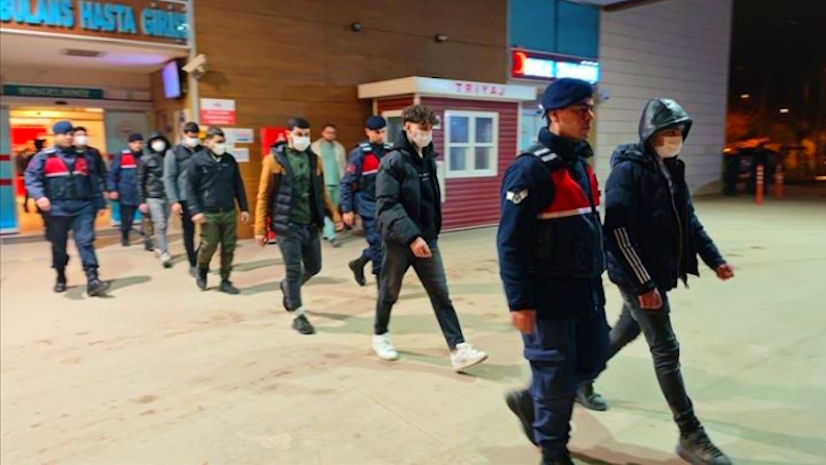
Turkish authorities detained 25,314 Afghan nationals between January and August 2026, according to official data released by the country’s Directorate General of Migration Management. The figure makes Afghans the largest single nationality among nearly 95,000 undocumented migrants apprehended across Turkey during that period.
The statistics underscore the scale of Ankara’s ongoing nationwide operations against irregular migration and human smuggling networks. Afghan migrants were followed in detention numbers by nationals from Syria, Uzbekistan, Turkmenistan, Iran, Morocco, Iraq, Egypt, Sudan, and Yemen reflecting Turkey’s position as a major transit and destination country for migrants from South Asia, the Middle East, and Africa.
Enforcement Intensifies Amid Domestic Pressure
The migration authority stated that all those detained were residing in Turkey without valid residence permits or legal documentation. However, the agency did not specify how many of the apprehended individuals have since been deported, remain in administrative detention, or are currently navigating asylum or immigration proceedings.
The latest figures highlight a sharp escalation in Turkey’s enforcement measures, which have expanded significantly through increased police raids, routine identity checks, and reinforced border patrols. In parallel, Turkish authorities reported that 8,342 individuals were detained during the same eight-month period on suspicion of involvement in human trafficking or migrant smuggling a sign that authorities are targeting not only migrants but also the networks that facilitate their movement.
Operations have been particularly frequent near land border crossings with Iran and Greece, along major transit routes through western Anatolia, and in metropolitan areas such as Istanbul, İzmir, and Ankara. The Turkish Coast Guard has also been actively intercepting vessels carrying migrants across the Aegean Sea, many of whom are Afghan nationals attempting to reach Europe.
Afghan Returnees Face Uncertain Future
The United Nations has previously reported that more than 13,000 Afghan migrants were deported from Turkey during the first five months of 2026 alone. International organizations, including the UN Refugee Agency (UNHCR) and Human Rights Watch, have repeatedly expressed concern over the conditions awaiting those sent back to Afghanistan.
Since the Taliban’s return to power in August 2021, Afghanistan has faced a severe humanitarian crisis, with widespread food insecurity, economic collapse, and the systematic erosion of women’s and minority rights. Many deported Afghans some of whom had spent years in Turkey or had family ties there face displacement, unemployment, and limited access to basic services upon return. Others may be at heightened risk of persecution, particularly those who worked with foreign forces, civil society, or media during the previous government.
Turkey’s Shifting Migration Policy
Turkey hosts one of the largest migrant populations in the world, with nearly 4 million registered refugees and asylum-seekers, the majority of whom are Syrians. However, in recent years, the government has adopted a more restrictive posture, driven in part by rising public discontent over the presence of undocumented migrants and their perceived impact on housing, employment, and social services.
Migration enforcement has become a central theme in Turkish domestic politics, especially ahead of local and national elections, where border security and refugee policy frequently dominate public discourse. President Recep Tayyip Erdoğan’s administration has repeatedly pledged to curb irregular crossings and accelerate returns, while also seeking cooperation with the European Union and neighboring countries to manage migration flows.
At the same time, Ankara has faced criticism from human rights groups for mass detentions, inadequate access to legal representation, and allegations of collective expulsions, which may violate international non-refoulement obligations. The Turkish government maintains that all procedures are conducted in line with national and international law, and that the priority is to maintain public order and combat exploitation by smuggling rings.
Looking Ahead
As Turkey continues to balance security concerns with humanitarian responsibilities, the fate of tens of thousands of Afghan migrants remains uncertain. With the Taliban government yet to be recognized internationally and Afghanistan’s economy in freefall, the prospect of large-scale voluntary returns appears unlikely in the near term. Meanwhile, Turkish authorities show no sign of easing enforcement, suggesting that detention and deportation numbers will likely rise further in the remaining months of 2026.
The international community is closely watching how Turkey navigates this delicate balance particularly as the country remains a key partner for the EU on migration control, and a major donor and host for humanitarian aid programs in the region.
Our Pashto-Dari Website

Support Dawat Media Center
If there were ever a time to join us, it is now. Every contribution, however big or small, powers our journalism and sustains our future. Support the Dawat Media Center from as little as $/€10 – it only takes a minute. If you can, please consider supporting us with a regular amount each month. Thank you
DNB Bank AC # 0530 2294668
Account for international payments: NO15 0530 2294 668
Vipps: #557320

Comments are closed.