
Pakistan on the Brink of a Bangladesh-Style Crisis? Munir’s Reported Plan to Redraw Provincial Boundaries Revives Fears of a 1971 Repeat

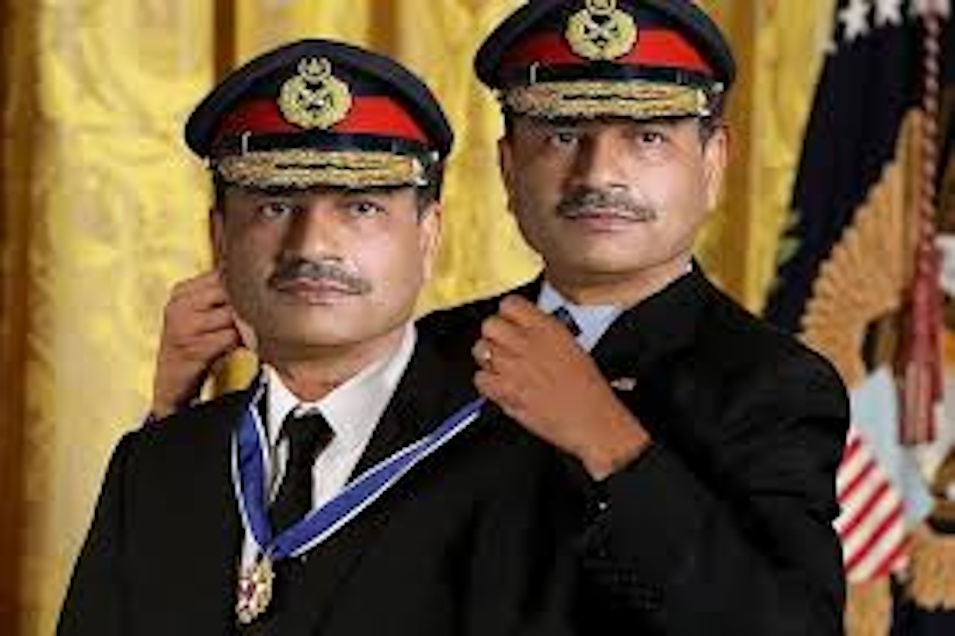
Pakistan on the Brink of a Bangladesh-Style Crisis? Munir’s Reported Plan to Redraw Provincial Boundaries Revives Fears of a 1971 Repeat
Pakistan is facing renewed questions about its federal structure, provincial autonomy and the military’s expanding influence over civilian politics following reports that Army Chief Field Marshal Asim Munir is considering a sweeping reorganisation of the country’s administrative map. The reported proposal could divide Pakistan’s four provinces into 12 to 15 smaller provinces, while another figure cited in the broader debate suggests a far more extensive restructuring into as many as 160 administrative units.
The proposal, reported by The Economist on October 8, has reignited a sensitive debate over whether smaller administrative units could improve governance or instead weaken established provincial power centres and consolidate authority around Pakistan’s powerful military establishment.
For a country shaped by the traumatic loss of its eastern wing in 1971, the question carries particular political significance. Pakistan’s disintegration that year followed years of political exclusion, economic grievances, disputes over federal power and the military’s violent suppression of Bengali demands for autonomy. The ensuing war culminated in the independence of Bangladesh.
The circumstances facing Pakistan today are different. Nevertheless, persistent regional grievances, political polarisation, militant violence and the imbalance between civilian and military authority have raised questions about the long-term stability of the federation. The comparison with 1971 is not a prediction that Pakistan will break apart again, but a reminder of the risks that emerge when demands for representation and autonomy are met with centralisation and coercion.
A proposed administrative overhaul with far-reaching political consequences
Pakistan’s four provinces Punjab, Sindh, Khyber Pakhtunkhwa and Balochistan remain the principal pillars of its federal political system. Their boundaries are more than administrative divisions: they are tied to linguistic identities, historical experiences, electoral constituencies and longstanding debates about the distribution of political and economic power.
According to the reported proposal, Munir has argued that Pakistan’s existing provinces are too large to be administered effectively. Advocates of smaller provinces could argue that a more decentralised structure would bring government closer to citizens, improve service delivery, reduce regional disparities and make local authorities more accountable.
Yet the political implications could be considerably more complicated. Critics warn that dividing the provinces could fragment established electoral coalitions, weaken influential provincial parties and alter the balance between Islamabad and regional governments.
Punjab, Pakistan’s most populous province, has long been a major electoral base of the Pakistan Muslim League-Nawaz (PML-N). The Pakistan Peoples Party (PPP), meanwhile, has traditionally maintained its strongest political position in Sindh. Both provinces possess considerable political influence, and their governments can serve as important centres of power within the federation.
A redrawing of provincial boundaries could reshape those political arrangements. Whether that would strengthen representation or undermine established provincial autonomy would depend on the boundaries chosen, the powers granted to the new units, their fiscal arrangements and the political process through which reform was implemented.
The key issue, therefore, is not simply the number of provinces Pakistan might have. It is who would control the process, how the new units would be governed and whether the restructuring would distribute power more fairly or concentrate it further at the centre.
Why the military’s role is central to the debate
The proposal has emerged amid continuing concerns about the relationship between Pakistan’s armed forces and its civilian political institutions. The military has exercised substantial influence over national decision-making for decades, including through periods of direct rule and its enduring role in security and foreign policy.
Munir’s reported interest in restructuring the federation has consequently prompted questions about whether an administrative reform could also serve a broader political purpose.
If smaller provinces were created without meaningful guarantees of fiscal independence, elected representation and constitutional protection, their governments could find themselves more dependent on the federal centre. Critics fear that such an arrangement could weaken provincial leaders’ ability to challenge decisions made in Islamabad or oppose the military establishment’s priorities.
That outcome is not inevitable. Smaller provinces can function effectively in democratic federal systems when they possess genuine authority, adequate resources and accountable institutions. The danger arises when administrative decentralisation is accompanied by political centralisation when more local units are created, but the power to make consequential decisions remains concentrated in a few hands.
The distinction is especially important in Pakistan, where disputes over civilian authority, electoral legitimacy and the armed forces’ political role have repeatedly shaped national politics.
Former prime minister Imran Khan remains imprisoned, and his Pakistan Tehreek-e-Insaf (PTI) party continues to oppose the federal government. The continuing confrontation between PTI and the governing coalition has added to the country’s broader political polarisation.
In this environment, any proposal that could alter electoral representation, provincial authority or the distribution of political power is likely to be interpreted through the wider struggle between the military establishment, the federal government and opposition forces.
Khyber Pakhtunkhwa: insecurity, political confrontation and demands for accountability
Khyber Pakhtunkhwa presents one of the most immediate challenges to Pakistan’s internal stability. The Pashtun-majority province has experienced a resurgence of militant violence, particularly attacks attributed to the Tehreek-e-Taliban Pakistan (TTP), alongside security operations and persistent public concern about the state’s ability to protect civilians.
The province’s crisis combines security concerns with questions about governance, accountability and the relationship between local communities and federal authorities. Residents in affected areas have raised concerns about militant attacks, displacement, civilian casualties and the consequences of prolonged insecurity.
However, the political character of Khyber Pakhtunkhwa’s grievances should not be conflated with the separatist movement in Balochistan. Although demands for greater provincial authority and criticism of security policies exist in the province, separatism is not its defining political demand.
PTI’s electoral strength in Khyber Pakhtunkhwa has also made relations between the provincial government and Islamabad particularly sensitive. Political disputes over the province’s governance can become intertwined with broader disagreements about federal authority and the military’s role in national politics.
Any attempt to reorganise Khyber Pakhtunkhwa without broad consultation could therefore deepen distrust. If residents perceive administrative reform as a mechanism for weakening an elected provincial government rather than improving public services, the initiative could intensify existing political tensions.
Conversely, a reform process that protects local representation, strengthens elected institutions and addresses security-related grievances could offer opportunities for more responsive governance. Its legitimacy would depend on whether affected communities had a meaningful voice in shaping the outcome.
Balochistan: a deeper conflict over autonomy, resources and state authority
Balochistan presents a different and, in important respects, more deeply rooted challenge to Pakistan’s federal structure.
The province has experienced recurring insurgencies driven by a combination of nationalist aspirations, demands for political autonomy, disputes over natural resources and longstanding allegations of abuses by state security institutions. Separatist organisations seek independence, while other political groups advocate greater provincial authority and a fairer distribution of resources within Pakistan.
Balochistan is strategically important and rich in natural resources, including natural gas and minerals. Yet many residents and political representatives have argued that local communities have not received an equitable share of the benefits generated by the province’s resources and strategic position.
Allegations of enforced disappearances, extrajudicial violence and excessive force have further damaged trust between sections of the population and the state. Pakistani authorities have cited security threats and militant attacks in defending their operations, while rights groups and Baloch activists have called for accountability, transparency and greater protection for civilians.
The insurgency cannot be reduced to a single grievance, nor should separatist groups be treated as representative of all Baloch people. Nevertheless, the persistence of armed resistance alongside demands for political and economic reform illustrates the depth of the challenge.
A restructuring of Balochistan’s administrative boundaries could therefore carry particularly high risks. If new units were established without addressing questions of resource ownership, political representation and security-sector accountability, administrative changes alone would be unlikely to resolve the underlying conflict.
There is also a fundamental difference between dividing a province to improve public administration and dividing it in ways that are perceived as weakening a region’s collective political voice. In Balochistan, where mistrust of the central state is already significant, the perceived intentions behind any reorganisation could be as consequential as its formal design.
The lessons of 1971: political exclusion can undermine national unity
The comparison with Bangladesh inevitably brings Pakistan’s history into the present debate.
At the time of independence in 1947, Pakistan consisted of two geographically separated wings: West Pakistan and East Pakistan, with India between them. Despite East Pakistan’s demographic importance, Bengali political and cultural demands were repeatedly marginalised. Disputes over language, economic distribution, political representation and the structure of the state deepened the divide.
The 1970 general election produced a decisive victory for Sheikh Mujibur Rahman’s Awami League, which won a majority of seats in Pakistan’s National Assembly. The failure to transfer power to the elected majority intensified the constitutional crisis. In March 1971, the Pakistani military launched a brutal crackdown in East Pakistan, triggering widespread violence, mass displacement and a war that ended with Bangladesh’s independence in December.
The lesson is not that every regional dispute leads to secession. Rather, the crisis demonstrated how the denial of democratic representation, the use of military force against political demands and the erosion of trust between a central government and a region can make a constitutional settlement increasingly difficult.
Pakistan today is not a replica of the country that existed before 1971. Its political geography, institutions, security environment and regional conflicts are different. Khyber Pakhtunkhwa and Balochistan also have distinct political histories and grievances that cannot simply be mapped onto the experience of East Pakistan.
Nevertheless, the historical parallel raises a legitimate question: can a federation remain cohesive if its constituent regions believe that their political authority is being systematically weakened or that their concerns are addressed primarily through coercion?
The answer will depend on the state’s willingness to protect democratic representation, negotiate disagreements and uphold constitutional rights.
Bangladesh’s recent upheaval is a separate warning, not a blueprint
The reference to Bangladesh also invites comparison with its more recent political turmoil. In 2024, a student-led protest movement escalated into a nationwide uprising, culminating in the removal of Prime Minister Sheikh Hasina from power and a major political transition.
That episode had its own immediate causes, including disputes over public-sector job quotas, allegations of repression and wider frustration with the political system. It was not a repetition of the 1971 independence struggle, nor does it establish a direct path for Pakistan.
The more relevant comparison concerns public confidence in institutions. When political opposition is constrained, protests are met with excessive force and citizens lose faith in established mechanisms for accountability, a seemingly contained dispute can develop into a wider crisis of legitimacy.
Pakistan’s circumstances differ substantially, but the broader warning remains applicable: political stability cannot be secured through administrative restructuring or security measures alone if the underlying causes of public dissatisfaction remain unresolved.
Constitutional obstacles could prove decisive
Even if the reported proposal receives serious consideration, transforming Pakistan’s provincial map would be legally and politically difficult.
Article 239(4) of Pakistan’s Constitution requires a constitutional amendment affecting the limits of a province to be passed by a two-thirds majority of the total membership of the affected provincial assembly, in addition to the required parliamentary approval under the constitutional amendment process.
This requirement makes provincial boundary changes especially contentious. Any attempt to divide Punjab, Sindh, Khyber Pakhtunkhwa or Balochistan would need to navigate both national political negotiations and the constitutional protections afforded to the affected province.
Sindh, in particular, has a long history of resistance to proposals that could divide the province. Such opposition reflects not only party politics but also concerns about territorial identity, linguistic representation and the distribution of resources.
Political parties could disagree over the location of new boundaries, the status of provincial capitals, the allocation of public assets and debts, the distribution of revenues, and the division of authority between existing and proposed institutions. New provinces would also require administrative infrastructure, elected legislatures and workable systems of taxation and public expenditure.
The proposed figure of 160 units raises a separate question of definition. Administrative districts, divisions and provinces are not constitutionally equivalent. A plan to create numerous administrative units would not necessarily entail the creation of the same number of provinces or the same degree of constitutional change.
Distinguishing between these possibilities is essential to understanding the scale of the reported proposal and its likely political consequences.
Would smaller provinces improve governance?
There is a legitimate case for reviewing Pakistan’s administrative structure. Large provinces can struggle to deliver services evenly across geographically distant or economically unequal regions. Smaller units may improve access to government, create more focused development priorities and make local officials easier to hold accountable.
But the number of provinces is not, by itself, a reliable measure of administrative effectiveness. Smaller units may also create additional bureaucratic costs, duplicate government departments, intensify disputes over revenue and increase competition for scarce resources.
The effects would depend on the design of the reform. A credible proposal would need to explain how new provincial governments would be funded, how public services would be distributed, how local minorities would be protected and how the new institutions would remain accountable to voters.
It would also need to demonstrate that the benefits would reach ordinary citizens rather than merely redistribute influence among political elites.
Most importantly, reform should not be used as a substitute for addressing the reasons some regions feel alienated from the state. Improved administrative efficiency cannot, on its own, resolve allegations of enforced disappearances, disputes over resource ownership, militant violence or demands for meaningful political representation.
A federation under pressure
Pakistan’s political and security challenges are interconnected, but they are not identical. Punjab and Sindh are central to the country’s electoral balance, while Khyber Pakhtunkhwa faces an acute militant-security crisis and Balochistan confronts a longstanding insurgency intertwined with questions of autonomy, resources and state conduct.
A nationwide restructuring could affect each region differently. A reform that appears to improve representation in one province might be perceived as political manipulation in another. The consequences would depend on local histories, public consent and the degree of authority retained by elected provincial institutions.
The central concern is therefore not simply whether Pakistan should have four provinces, 12 to 15 provinces or a different number of administrative units. It is whether any change would strengthen the federal compact or weaken the institutions through which regional interests are represented.
For Pakistan, the most constructive path would involve transparent public consultation, negotiations with provincial governments, constitutional compliance and credible guarantees of political and fiscal autonomy. Addressing security concerns would also require more than military operations: effective civilian governance, accountability for abuses and avenues for peaceful political participation are essential to rebuilding public trust.
Conclusion: a warning about centralisation, not an inevitable repeat of 1971
The reported proposal to redraw Pakistan’s administrative map has opened a debate that reaches well beyond bureaucratic efficiency. At stake are the distribution of political power, the future of provincial autonomy and the relationship between the military establishment and elected civilian institutions.
If smaller provinces are created through a transparent constitutional process and given genuine powers, they could help improve governance and representation. If restructuring is imposed from above or perceived as an attempt to weaken political rivals and regional institutions, it could instead deepen distrust and intensify existing grievances.
The experience of 1971 demonstrates that national unity cannot be sustained indefinitely by force when fundamental questions of representation and political legitimacy remain unresolved. Bangladesh’s more recent upheaval offers a separate reminder that public confidence in institutions can deteriorate rapidly when citizens believe that peaceful demands for change are being ignored or suppressed.
Pakistan is not destined to follow either trajectory. The outcome will depend on political choices, constitutional safeguards, the conduct of state institutions and the willingness of federal and provincial leaders to negotiate their differences.
Ultimately, the most important test of any proposed restructuring will be whether it brings the state closer to its citizens while protecting their democratic rights or creates a more fragmented administrative system under an even more centralised concentration of power.
Our Pashto-Dari Website

Support Dawat Media Center
If there were ever a time to join us, it is now. Every contribution, however big or small, powers our journalism and sustains our future. Support the Dawat Media Center from as little as $/€10 – it only takes a minute. If you can, please consider supporting us with a regular amount each month. Thank you
DNB Bank AC # 0530 2294668
Account for international payments: NO15 0530 2294 668
Vipps: #557320

Comments are closed.