
Trump Halts Strikes on Iran as Diplomatic Window Opens, Demands Rapid Nuclear and Maritime Deal

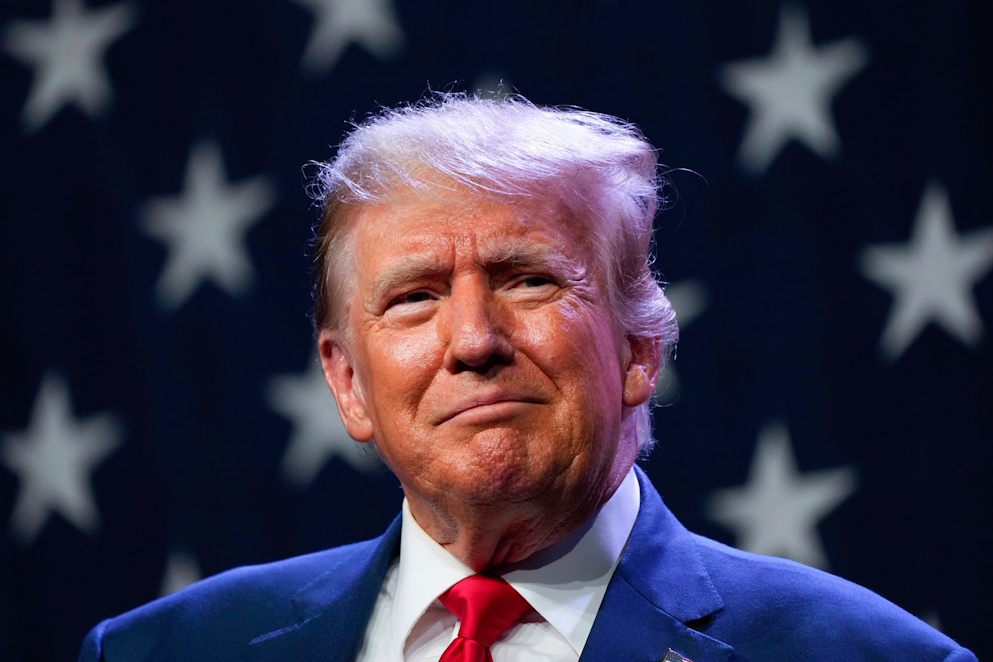
Washington D.C. – In a sudden reversal of escalating military rhetoric, President Donald Trump announced early Sunday that the United States and Israel have agreed to suspend planned strikes against Iran, contingent upon the swift conclusion of a comprehensive diplomatic agreement.
The announcement comes after a week of mounting tension, during which President Trump threatened to hit Iran “very hard” and reportedly weighed renewed heavy bombardments, potentially targeting critical energy infrastructure. Fears of a full-scale regional conflagration had spiked, with intelligence sources suggesting that joint US-Israeli strikes possibly involving oil refineries and power plants were being prepared for as early as this weekend.
However, in a post on his Truth Social platform, Trump revealed a shift in course. “The United States is locked and loaded and ready to go against the Islamic Republic of Iran,” he wrote. “But Tehran and other Middle Eastern countries have asked me to hold off on fresh strikes. Based on this request, I have agreed, for the future benefit of the WORLD and, likewise, the survival of a successful and prosperous Iran, to cancel the attack, subject to being able to rapidly make a DEAL.”
The President laid out clear non-negotiable prerequisites for any agreement, demanding the “Immediate, Complete and Total OPENING OF THE HORMUZ STRAIT, and an end to Iran’s nuclear threat.” He confirmed Israel’s alignment with this commitment, concluding with an imperative: “Get to work, everybody, and get it DONE.”
A Conflict at a Crossroads
The backdrop to this diplomatic overture is a war now in its sixth month, ignited on February 28 when the United States and Israel launched coordinated strikes on Tehran. Despite a previous, short-lived ceasefire that included similar terms for reopening the Strait of Hormuz, the deal collapsed, and Iran has since tightened its stranglehold on the strategic waterway. Recent weeks have witnessed a resumption of mutual attacks, erasing the brief period of calm and sending global oil prices which had dipped during the truce back on an upward trajectory.
The timing is politically sensitive. With US midterm elections just three months away, the ongoing conflict poses a significant challenge for President Trump and his Republican Party. A prolonged war or a spike in energy costs could galvanize opposition and sway undecided voters, adding domestic pressure to the international calculus.
Global Warnings and Maritime Tensions
The threat of escalation was palpable over the weekend. On Saturday, US embassies across the Middle East issued urgent warnings to citizens, cautioning against “unforeseen escalation” and advising them to prepare for possible evacuation. While CBS News reported that US and Israeli forces were finalizing plans for joint strikes, no new attacks were recorded overnight Friday to Saturday.
Yet, the region remains volatile. On Wednesday, a drone struck a US-owned gas vessel moored in an Egyptian port, igniting a fire. Egyptian authorities are investigating, though no group has claimed responsibility. Separately, a British maritime agency reported on Saturday that an “unknown projectile” struck a tanker off the coast of Oman, further underscoring the precarious security environment.
Iran has effectively maintained control over navigation through the Strait of Hormuz since the war began, demanding permits and transit fees from passing vessels. Maritime trade tracking firm Kpler reported on Friday that traffic through the strait has dropped “sharply,” a development that threatens to choke global energy supplies and destabilize economies reliant on Gulf oil.
Diplomatic Maneuvering and Regional Pressure
President Trump’s decision to pause attacks appears to have been influenced by requests from Gulf states, who fear the economic and security fallout of a wider war. In a phone call on Sunday, Saudi Crown Prince Mohammed bin Salman and President Trump discussed regional developments and their international implications. According to the Saudi Press Agency (SPA), the Crown Prince “stressed the need to prioritize dialogue to reduce escalation and the importance of making every possible effort to achieve calm that paves the way for diplomatic solutions, preserves the region’s security and stability, and prevents a wider conflict whose repercussions would affect regional and international security and stability.”
The two leaders also reviewed bilateral cooperation and ways to strengthen their strategic partnership.
Tehran’s Calculated Shift
US Secretary of State Marco Rubio told Fox News earlier this week that the United States had “wiped out” much of Iran’s defenses, leaving Tehran in a weakened position. He noted that Iran is “now willing and in some cases seem eager to do a deal on denuclearization, to do a deal on the straits.” However, Rubio struck a cautious note, acknowledging that Iran retains the capacity to “still do damage.”
The coming days will test whether diplomatic channels can outpace military triggers. For now, the world watches and waits as the clock ticks toward a deal that could reshape the Middle East’s future, or a breakdown that could plunge it deeper into chaos.
Our Pashto-Dari Website

Support Dawat Media Center
If there were ever a time to join us, it is now. Every contribution, however big or small, powers our journalism and sustains our future. Support the Dawat Media Center from as little as $/€10 – it only takes a minute. If you can, please consider supporting us with a regular amount each month. Thank you
DNB Bank AC # 0530 2294668
Account for international payments: NO15 0530 2294 668
Vipps: #557320

Comments are closed.