

Australia has not yet paid compensation to any Afghan victims under a scheme established after a military inquiry found credible information of unlawful killings and mistreatment by Australian special forces, despite more than 100 claims having been lodged.
In an investigation published on October 17, The Saturday Paper reported that more than 100 claims had been submitted under the Afghanistan Inquiry Compensation Scheme, but dozens were deemed ineligible or rejected, and no applicant had received compensation at the time of reporting.
The scheme was established under regulations that took effect on July 19, 2024. It followed the Brereton Report, an Australian military inquiry into alleged misconduct by Australian special forces in Afghanistan between 2005 and 2016. The inquiry found credible information concerning 23 incidents involving the alleged unlawful killing of 39 people by, or involving, Australian Defence Force personnel. It also identified credible information about the alleged mistreatment of two individuals. The findings concerned allegations of unlawful conduct rather than criminal convictions against every person implicated.
The report recommended that compensation be considered for victims and their families without waiting for criminal proceedings to establish individual liability. Under the scheme, eligible claims can involve unlawful assault, property damage or the death of a family member. Compensation may include financial payments, other forms of assistance, or a formal apology or acknowledgment.
Afghan survivor’s claim rejected
According to The Saturday Paper, official correspondence shows that at least six claims had been referred to former New South Wales Supreme Court judge Ruth McColl, the scheme’s compensation advocate, since August 2025. None had resulted in a payment at the time of the report.
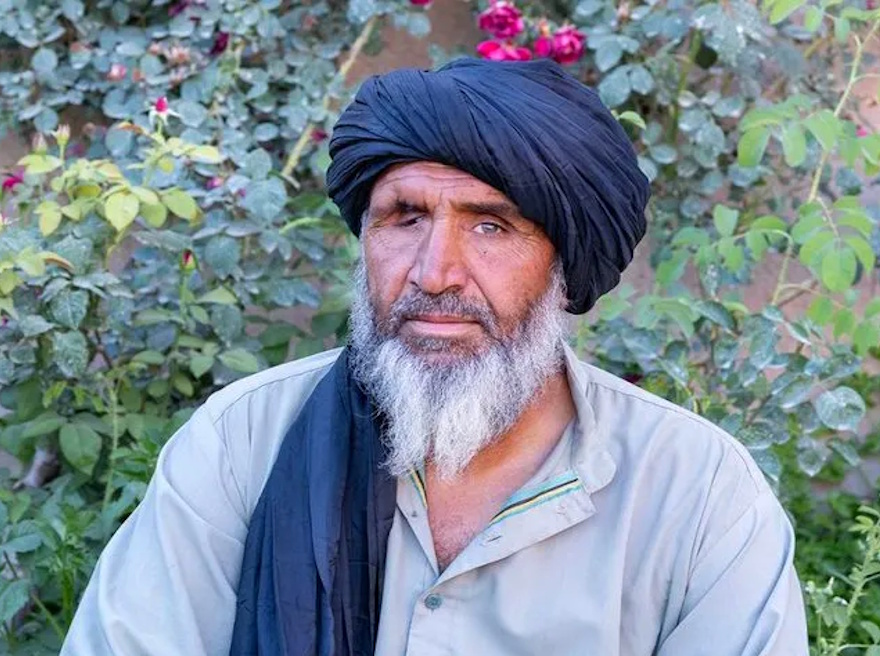
One applicant, Ghulam Jailani, said he lost an eye and suffered several gunshot wounds to his chest during an Australian military operation in Uruzgan province in 2006. He and other local residents alleged that Australian soldiers fired on villagers during the operation. Jailani’s compensation claim was rejected because the incident was not included in the Brereton Report, according to the account published by The Saturday Paper. The letter notifying him of the decision reportedly did not dispute his account of the incident but said his case did not meet the scheme’s eligibility criteria.
The case has raised concerns about whether the scheme can address the experiences of Afghans who say they were harmed by Australian forces but whose incidents were not included in the inquiry’s findings.
The families of Ali Jan, Ahmadullah and Mohammad Isa are also among those awaiting decisions on compensation claims, the report said. Their cases have been linked to allegations involving former Australian special forces soldier Ben Roberts-Smith, who was arrested in April 2026 and charged with five counts of war-crime murder. Roberts-Smith has denied the allegations.
Kimberley Motley, an international human rights lawyer representing some Afghan applicants, including Ali Jan’s family, criticised the claims process as slow and lacking transparency, according to the report.
More than 100 applications, 45 deemed ineligible
Figures cited by The Saturday Paper from Australia’s Defence Department show that 105 online applications were lodged between the scheme’s website launch in November 2024 and June 29, 2026. Of those, 45 were deemed ineligible.
A central criticism is that the scheme is restricted to matters in which the Brereton inquiry found credible information of alleged unlawful conduct. Lawyers and advocates say this may leave out people who report serious harm but whose cases were not documented in the inquiry.
Australia’s Defence Department says the scheme is separate from criminal investigations and does not require criminal liability to be established before compensation can be considered. However, the reported lack of payments has raised questions about how quickly the process can deliver redress to Afghan survivors and families, and whether its eligibility rules are narrow enough to exclude victims whose accounts fall outside the inquiry’s documented findings.
The slow pace of the scheme has also prompted broader scrutiny of Australia’s commitment to accountability for alleged war crimes in Afghanistan. Advocates argue that without timely compensation and a transparent process, the scheme risks falling short of its stated purpose of providing redress to victims and their families, many of whom have waited years for acknowledgment of the harm they say they suffered.
Our Pashto-Dari Website

Support Dawat Media Center
If there were ever a time to join us, it is now. Every contribution, however big or small, powers our journalism and sustains our future. Support the Dawat Media Center from as little as $/€10 – it only takes a minute. If you can, please consider supporting us with a regular amount each month. Thank you
DNB Bank AC # 0530 2294668
Account for international payments: NO15 0530 2294 668
Vipps: #557320

Comments are closed.