
US Intelligence Assessment: Military Strikes Unlikely to Shift Iran’s Core Negotiating Stance

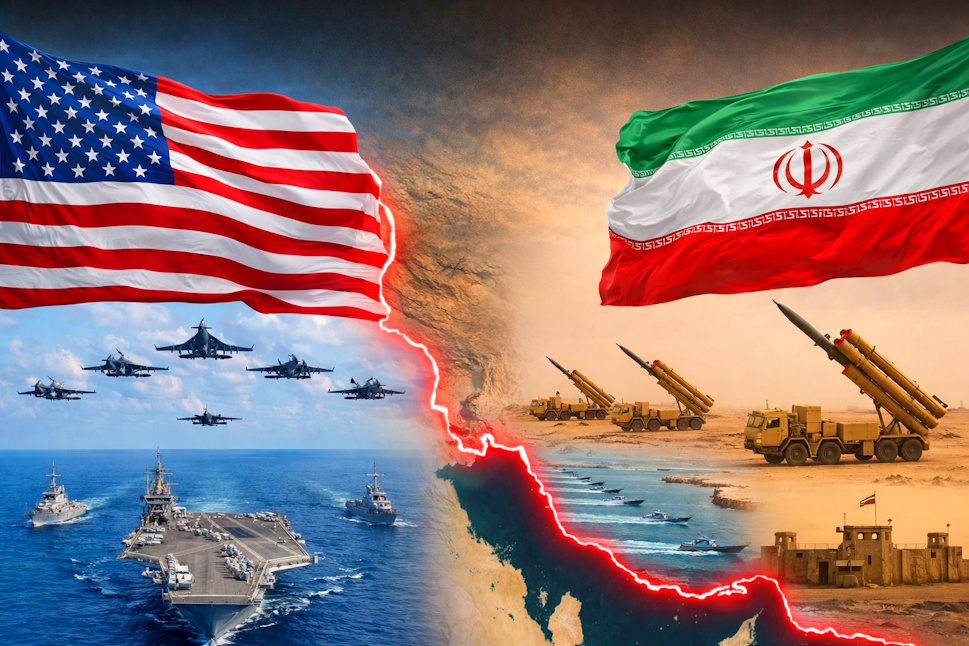
A newly completed U.S. intelligence assessment has concluded that ongoing American military strikes are unlikely to compel Tehran to soften its negotiating position, according to current and former U.S. officials familiar with the findings. The analysis, which paints a sobering picture of the current stalemate, suggests that Iran’s leadership remains resolute in the face of external pressure, viewing regime survival as paramount above all tactical concessions.
The classified report, which has been briefed to senior members of the Trump administration, also warns that the United States and Iran are effectively trapped in a precarious, indefinite limbo neither fully at war nor at peace. This uneasy equilibrium, officials told The Washington Post, is rendered increasingly dangerous by the rising lethality of the two nations’ tit-for-tat military exchanges across the Middle East. The current and former officials spoke on condition of anonymity due to the sensitivity of the intelligence.
A Strategic Dilemma for the President
The findings appear to underscore a profound strategic dilemma for President Donald Trump, who alongside Israeli Prime Minister Benjamin Netanyahu initiated the current campaign of military pressure in late February. While the administration has framed the strikes as a necessary response to Iranian aggression, the intelligence community now assesses that the strategy of ever-expanding attacks has yielded a military stalemate rather than a decisive shift in Iranian behavior.
With the conflict deeply unpopular among the American public, further escalation particularly the potential introduction of U.S. ground troops carries significant political risks for the president. Such a move would offer no guaranteed military success, analysts note, while potentially entangling the United States in a protracted and costly regional conflict.
Diplomatic Signals Amid Hostilities
Despite the military friction, both Washington and Tehran have signaled an openness to fresh negotiations, though no substantive progress has been reported. Secretary of State Marco Rubio reiterated that the U.S. remains receptive to a diplomatic resolution, adding that elements within Iran’s government have also expressed interest in dialogue. However, he pointed to hardline factions as the primary obstacle.
“They continue to send signals that they want to talk, that they want to negotiate but their behavior is what we’re responding to,” Rubio told reporters on Sunday evening before departing for the Philippines. “And their behavior is launching missiles and drones at ships, including tonight.”
CIA Analysis: Regime Resilience and Economic Endurance
The latest intelligence product, drafted primarily by the CIA, emphasizes the Tehran regime’s remarkable staying power. Despite the loss of numerous top military commanders and a significant portion of its missile and air-defense systems to U.S. and Israeli strikes, Iranian leadership has demonstrated an ability to absorb punishment without fracturing.
This resilience is further underscored by a separate CIA analysis from May, which estimated that Iran could withstand a full U.S. naval blockade for at least three to four months before experiencing severe economic collapse. That timeline, officials note, gives Tehran a substantial buffer to endure pressure while continuing its asymmetric operations through regional proxies.
Current and former intelligence officials stress that such assessments are not intended as concrete predictions of the future. Rather, they serve as dynamic snapshots based on human espionage, technical surveillance, and open-source data that outline current trajectories and likely near-term trends.
Expert Skepticism: “That Assessment Is Almost Certainly Incorrect”
Jonathan Panikoff, former deputy U.S. national intelligence officer for the Near East and now a senior director at the Atlantic Council, expressed deep skepticism about the administration’s underlying theory of victory. “The Trump administration appears to believe that if it keeps hitting Iran harder militarily, Tehran eventually will become more flexible,” Panikoff said. “That assessment is almost certainly incorrect.”
Panikoff pointed to decades of Iranian behavior, noting that the regime’s primary objective has always been its own survival a goal that often overrides concern for the welfare of its citizens or the health of its economy. “I’m struggling because I don’t think there’s a lot of great options for the United States,” he added, while expressing doubt that Trump would authorize a ground invasion. Instead, Panikoff predicted a pattern of “significant flare-ups, followed by periods of calm, and then renewed fighting” a cyclical conflict with no clear endgame.
Internal Tensions Within Tehran
U.S. officials also report growing friction within Iran’s governing circles. They describe an increasingly visible divide between pragmatists whom Washington views as potential negotiating partners and hardliners within the Islamic Revolutionary Guard Corps (IRGC) and the clerical establishment, whose political and military influence has swelled amid the crisis.
Secretary Rubio acknowledged this internal dynamic, noting that the U.S. has received direct signals from Iranian government figures who support a diplomatic agreement. However, he conceded that “there’s a tension” with hardliners who appear vehemently opposed to any compromise. This fracture, while potentially exploitable, also complicates any U.S. effort to secure a lasting deal, as hardliners retain the capacity to sabotage negotiations through proxy attacks or inflammatory rhetoric.
Conclusion: A Path Forward?
As the conflict grinds on with no diplomatic breakthrough in sight, the intelligence community’s sober assessment leaves the administration with few clear options. Military pressure alone appears unlikely to break Iran’s will, while escalation risks domestic backlash and regional conflagration. For now, the United States and Iran remain locked in a dangerous holding pattern one where each new strike raises the stakes, yet neither side seems willing or able to chart a credible path toward de-escalation.
Our Pashto-Dari Website
Support Dawat Media Center
If there were ever a time to join us, it is now. Every contribution, however big or small, powers our journalism and sustains our future. Support the Dawat Media Center from as little as $/€10 – it only takes a minute. If you can, please consider supporting us with a regular amount each month. Thank you
DNB Bank AC # 0530 2294668
Account for international payments: NO15 0530 2294 668
Vipps: #557320

Comments are closed.