

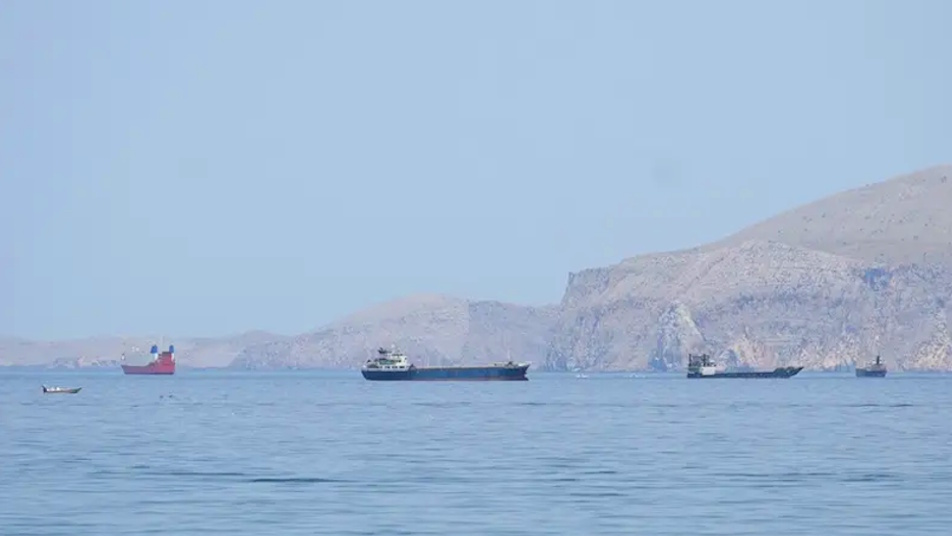
US Military Action Targets IRGC Positions
United States forces conducted airstrikes against two Iranian rocket launchers on Larak Island on Sunday after detecting that Iranian Revolutionary Guard Corps (IRGC) personnel were preparing to launch rockets equipped with sea mines into the strategic Strait of Hormuz, a US official confirmed to Al Arabiya English.
The operation marks the first US military action against Iran since late July, signaling Washington’s continued willingness to use force despite a recent strategic shift toward economic pressure and sanctions as primary tools of coercion.
According to the US official, American Central Command (CENTCOM) had completed clearing sea mines from international shipping lanes in the strait just last week. “US forces are monitoring the area closely and remain prepared to protect the free flow of commerce through this essential waterway,” the official added, emphasizing America’s commitment to maintaining maritime security in one of the world’s most critical oil transit chokepoints.
Iranian Response and Casualties
The IRGC confirmed the attack through Iran’s state broadcaster IRIB, stating that the US assault on Larak Island resulted in the deaths and injuries of “several Iranian fighters and civilians.” While the IRGC did not provide precise casualty figures, it issued a strongly worded statement vowing that the attack would be met with “response and punishment” from Tehran.
IRGC spokesperson Sardar Mohebi, speaking through Iran’s Fars News Agency, characterized the US action as “a strategic and fatal mistake” for which Washington would face consequences “in both the economic and military arenas.” The IRGC’s statement specifically referred to the attackers as the “American-Zionist enemy,” framing the conflict in terms of broader regional resistance.
Iran’s Supreme Leader Mojtaba Khamenei issued a written statement urging Muslim heads of state to “recognise their real enemy, understand its plans and confront it,” calling for unified opposition to what Tehran views as Western aggression.
Context of Escalating Conflict
The strikes occurred as the US-Israel war on Iran enters its seventh month, having crossed the six-month mark since hostilities intensified. The conflict began with coordinated US and Israeli attacks on Iran on February 28, which prompted Iranian retaliatory strikes against Israel and neighboring countries. The fighting has since expanded, with US-Israeli strikes on Iran and Israeli attacks on Lebanon collectively killing thousands and displacing millions of civilians. Eighteen US service members have lost their lives in the conflict.
The war has effectively blockaded the Strait of Hormuz, through which approximately one-fifth of globally consumed oil barrels transited before the conflict. This disruption has sent shockwaves through international energy markets, contributing to sustained high prices that have fueled inflation in the United States and elsewhere.
Shifting US Strategy
Sunday’s military action comes as the Trump administration pivots from its intensive bombing campaign to a financial pressure strategy aimed at isolating Iran economically. Last week, US officials announced a push to impose secondary sanctions on countries and companies that continue doing business with Tehran, attempting to choke off Iran’s access to international finance and trade.
However, Pentagon chief Pete Hegseth has cautioned that the US remains prepared to employ military force when necessary, and the Larak Island strikes demonstrate that Washington has not abandoned the military option. US officials have been publicly emphasizing what they describe as Iran’s diminishing control over the Strait of Hormuz, arguing that the country faces economic collapse due to sanctions and the military blockade against its ports.
Iran’s Defiance and Regional Posture
Tehran has maintained a defiant stance throughout the conflict, with Iranian leadership stressing that the country is prepared for a protracted confrontation. On Saturday, Iran’s Foreign Minister Abbas Araghchi dismissed US claims of successfully moving significant oil volumes through the strait, accusing Washington of manipulating energy markets for political gain.
“Our intelligence shows major efforts to game energy markets,” Araghchi wrote on X (formerly Twitter). “US Govt elements use gullible media to influence prices for personal gain and keep [Trump] mired in a losing war. Israel-aligned actors also promote war with rosy assessments. U.S. consumers feel the real bottom line.”
Despite Washington’s assertions of progress in reopening the waterway, attacks on ships in the Strait of Hormuz have been reported almost daily, and Iran continues to insist that the strait remains closed to international shipping. The persistent volatility has kept oil prices elevated, with the average US gallon of petrol still exceeding $4 significantly higher than the sub-$3 prices prevailing before the war began in late February.
Domestic and Economic Implications
The skyrocketing energy prices have become a significant political liability for President Trump’s administration, fueling inflationary pressures that could impact the Republican Party’s prospects in the November midterm elections. With voters feeling the pinch at the pump, maintaining control of Congress has become more challenging for Republicans.
Iran has previously responded to similar US attacks by launching missiles and drones at military bases hosting American troops in neighboring countries, raising concerns about potential retaliation that could expand the conflict further. The situation remains highly volatile, with both sides demonstrating willingness to escalate while also pursuing different strategic approaches to the confrontation.
Conclusion
The Larak Island strikes represent a calculated US response to what Washington characterized as an imminent maritime threat, while simultaneously serving as a reminder of America’s military capability as it transitions to a sanctions-focused strategy. Whether Tehran will respond with direct military action or pursue other forms of retaliation remains uncertain, but the incident underscores the fragile nature of the current stalemate and the potential for renewed escalation in a conflict that has already exacted a heavy toll across the region.
The international community continues to watch closely as the world’s most critical oil shipping lane remains contested, energy markets remain volatile, and the human cost of the conflict continues to mount with no clear end in sight.
Our Pashto-Dari Website

Support Dawat Media Center
If there were ever a time to join us, it is now. Every contribution, however big or small, powers our journalism and sustains our future. Support the Dawat Media Center from as little as $/€10 – it only takes a minute. If you can, please consider supporting us with a regular amount each month. Thank you
DNB Bank AC # 0530 2294668
Account for international payments: NO15 0530 2294 668
Vipps: #557320

Comments are closed.