

A Nation Under Dual Pressure
Six months into the war launched by the United States and Israel, Iran’s economy is buckling under the weight of intensified American sanctions and a naval blockade. Iranian leaders have for the first time begun to publicly acknowledge the severity of the crisis. Supreme Leader Ayatollah Mojtaba Khamenei—who has not appeared in public since being injured in the initial February 28 attack that killed his father, former Supreme Leader Ayatollah Ali Khamenei—has called on the government to urgently address “the chain of economic and livelihood challenges.” President Masoud Pezeshkian, meanwhile, has revealed that foreign trade has shrunk by nearly one-third due to U.S. sanctions and the blockade of Iranian ports.
Yet despite these stark admissions, Tehran signaled no retreat on Saturday. In an official statement carried by state media, the government vowed to withstand American pressure, pursue a dual-track strategy of diplomacy and defence, and maintain what it described as “control” over the Strait of Hormuz—the strategic chokepoint through which roughly 20% of the world’s seaborne oil and liquefied natural gas (LNG) passes. That control gives Iran significant leverage, as any disruption to shipping through the strait could send global energy prices soaring and destabilize already fragile international markets.
Sanctions Bite Deeper as U.S. Launches “Economic D-Day”
The Trump administration has framed its latest offensive as an “economic D-Day” a coordinated campaign to sever Iran’s financial lifelines. Washington has warned countries worldwide to cut business ties with Tehran or face secondary sanctions, though the U.S. Treasury Department has so far stopped short of imposing penalties on major Iranian trade partners such as China and India. Analysts suggest this hesitation reflects fears that full enforcement could trigger retaliatory measures, disrupt global supply chains, and even accelerate de-dollarization among emerging economies.
Nevertheless, the Treasury has taken concrete steps against smaller but symbolic targets. It imposed sanctions on Egypt’s Banque Misr for conducting business with Tehran, and proposed a rule that would cut off the bank’s branches in the United Arab Emirates from dollar-denominated transactions. Egypt’s central bank responded by stating that it and the foreign ministry were in contact with U.S. officials, adding that the measure was limited to Banque Misr UAE’s U.S. dollar dealings with correspondent banks only. Banque Misr itself said on Saturday it was reviewing the Treasury notice, while insisting that its UAE branch continued to provide full banking services to its customers.
In a parallel move, the U.S. also sanctioned an entity based in Hong Kong and an individual linked to Iran’s Bank Melli, according to a notice posted on the Treasury Department’s website. These actions are part of a broader strategy to constrict Iran’s access to international finance, targeting not only state-owned institutions but also the network of front companies and intermediaries that have long facilitated Tehran’s trade in oil and petrochemicals.
Inflation, Unemployment, and a Shrinking Trade Lifeline
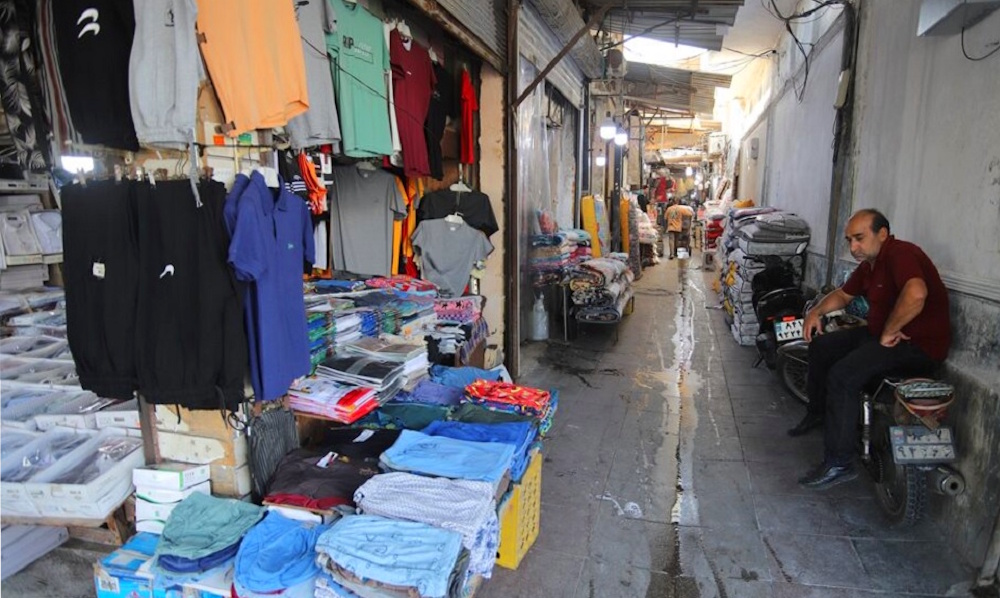
The cumulative effect of these sanctions has been devastating. Iran’s annual inflation rate hit 66% last month one of the highest in the world eroding household purchasing power and pushing millions closer to poverty. The rial has plunged to record lows against the dollar, and basic goods such as bread, medicine, and cooking oil are increasingly scarce or prohibitively expensive. In his written statement, Supreme Leader Khamenei urged the government to tackle not only inflation but also unemployment, price volatility, and mismanagement in the markets for goods and services.
President Pezeshkian, in an interview with state media, confirmed that Iranian exports and imports have slumped by nearly 35% because of U.S. sanctions and the naval blockade. He noted, however, that Iran managed to sell about 90 million barrels of oil during a short-lived memorandum of understanding (MoU) signed with the U.S. in June a period when Washington temporarily permitted Iranian oil sales. That brief window of relief, while modest, demonstrated that Iran still possesses significant export capacity if given even limited access to global markets.
Later on Saturday, Pezeshkian called on state television for a revival of the interim deal, which was signed on June 17 but quickly unravelled amid disagreements over its terms particularly regarding the status of the Strait of Hormuz. “We can solve our problems and regain our privileges with the memorandum of understanding,” he said, referring to a document that had offered Iran, among other things, immediate relief from U.S. sanctions and the release of its frozen assets held abroad. However, analysts remain sceptical, noting that Washington has shown little appetite for renewed concessions while Tehran continues to assert military control over the strait.
Diplomacy and Defence: A Dual-Track Strategy
While the economic situation deteriorates, Iran has not abandoned diplomatic channels. On Thursday, Qatari Prime Minister Sheikh Mohammed bin Abdulrahman Al Thani met with Iranian leaders in Tehran, seeking to revive efforts to end the war. He emphasised the importance of returning to the pre-war status of open shipping through the Strait of Hormuz a position that aligns with U.S. and Gulf interests. Iranian Foreign Minister Abbas Araqchi described the talks as “creative,” though no breakthrough was announced.
In its Saturday statement, the Iranian government framed diplomacy and defence as “two complementary, coordinated and inseparable wings” for protecting the country’s national interests, security, and territorial integrity. It pledged to pursue both tracks in a balanced manner. This rhetorical commitment to diplomacy, however, stands in tension with Iran’s ongoing military posturing. The Revolutionary Guards’ navy has repeatedly denied U.S. claims that American forces have cleared sea mines from the strait, calling such statements “an obvious lie” and reiterating that the waterway remains closed to ships without Iranian permission.
Regional and Global Stakes
The Strait of Hormuz is not merely a regional concern; it is a global artery. Before the war, it carried 20% of the world’s oil and LNG, making any instability there a direct threat to energy security for Europe, Asia, and beyond. The U.S. military has maintained a significant naval presence in the area, and commanders have warned that any prolonged closure could trigger a global recession. Yet Iran’s Revolutionary Guards have shown they are willing to test those limits, conducting seizures of commercial vessels and deploying fast-attack craft in recent weeks.
Qatar a U.S. ally and Gulf neighbour to Iran along with Pakistan, helped broker the June MoU, and both nations continue to urge restraint. However, with Trump’s administration doubling down on economic warfare and Iran’s leadership unwilling to cede its strategic leverage, the prospects for a negotiated settlement appear dim. The war, now in its sixth month, has settled into a grinding stalemate fought not only with missiles and drones but also with tankers, banknotes, and barrels of oil.
Conclusion: A People Bearing the Cost
Behind the geopolitical manoeuvring, it is ordinary Iranians who bear the heaviest burden. Inflation, unemployment, and shortages have turned daily life into a struggle for survival. Hospitals report critical shortages of imported medicines, and many families have been forced to cut meals or pull children out of school. While Tehran projects resilience and vows to reduce dependence on the dollar through domestic production and trade with non-Western partners, the immediate outlook remains grim.
As the United States tightens its grip and Iran digs in, the world watches warily. The Strait of Hormuz remains a flashpoint, the negotiations remain frozen, and the Iranian people remain caught between sanctions and statecraft a vulnerable fulcrum in a conflict that shows no sign of resolution.
Our Pashto-Dari Website

Support Dawat Media Center
If there were ever a time to join us, it is now. Every contribution, however big or small, powers our journalism and sustains our future. Support the Dawat Media Center from as little as $/€10 – it only takes a minute. If you can, please consider supporting us with a regular amount each month. Thank you
DNB Bank AC # 0530 2294668
Account for international payments: NO15 0530 2294 668
Vipps: #557320

Comments are closed.