

The European Union has reaffirmed its commitment to maternal and newborn healthcare in Afghanistan, while issuing a stark warning that the country remains among those with the world’s highest maternal mortality rates a crisis deepened by decades of instability, economic collapse, and a shrinking humanitarian footprint.
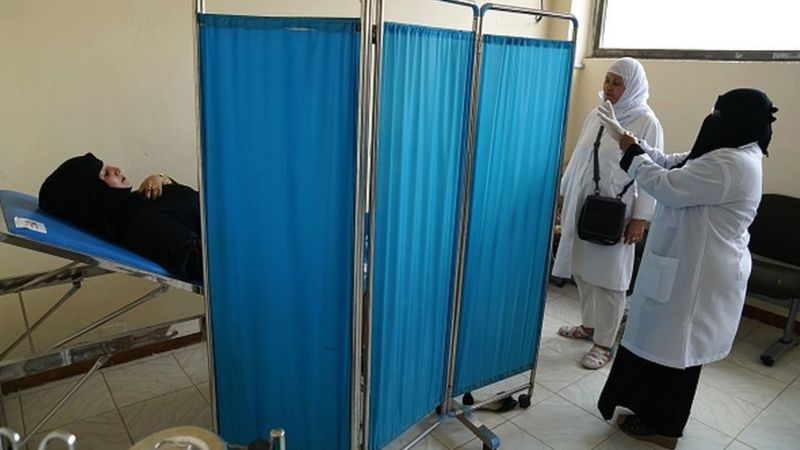
In a post on X on Sunday, the EU said its representatives, together with the United Nations Population Fund (UNFPA), visited a midwife-led maternity care center in Logar province. The facility, financially supported by the bloc, provides essential reproductive health services through trained midwives, including safe childbirth support, prenatal checkups, and postpartum care for both mothers and newborns.
The EU stressed that access to skilled health workers, quality antenatal services, safe delivery environments, and postnatal follow-up remains critical to preventing the vast majority of maternal and neonatal deaths which are often caused by hemorrhaging, infections, hypertensive disorders, or complications from unsafe deliveries. Many of these conditions are treatable or preventable with timely intervention, yet remain fatal in areas where healthcare is out of reach.
Afghanistan’s maternal health crisis is rooted in a complex web of challenges: four decades of war have devastated infrastructure, chronic poverty limits families’ ability to pay for transport or treatment, and a severe shortage of female health professionals exacerbated by restrictions on women’s education and employment—leaves millions of women without care. Rural and remote provinces are the hardest hit, with some areas having fewer than one midwife per 1,000 people, and pregnant women often traveling hours or even days to reach the nearest clinic.
Since the Taliban’s return to power in 2021, Afghanistan’s healthcare system has been pushed to the brink. A sharp decline in international development aid, coupled with the freezing of assets and banking restrictions, has forced many nongovernmental organizations to scale back or shut down programs. At the same time, humanitarian needs have skyrocketed, with over two-thirds of the population now in need of assistance. Aid agencies have repeatedly warned that continued funding shortfalls could force the closure of mobile health teams, maternity wards, and community health posts directly endangering the lives of thousands of women and children each month.
International health bodies, including the World Health Organization (WHO) and UNFPA, have called for sustained, predictable investment in maternal and reproductive healthcare. They emphasize that training and deploying skilled birth attendants, ensuring emergency obstetric and neonatal care (EmONC) is available around the clock, and maintaining supply chains for essential medicines and blood transfusions are non-negotiable priorities. They have also urged donors to separate humanitarian aid from political considerations, arguing that healthcare is a lifeline, not a bargaining chip.
The European Union remains one of Afghanistan’s largest humanitarian donors, channeling support through UN agencies and international NGOs to sustain maternal health services, reproductive health clinics, and training programs for medical workers particularly midwives, who are often the first and only point of care for women in rural areas. Since 2021, the EU has allocated hundreds of millions of euros in humanitarian funding to Afghanistan, with a significant portion directed toward health and nutrition.
Historically, Afghanistan has recorded some of the highest maternal mortality ratios in the world estimated at around 620 deaths per 100,000 live births in recent years, though some remote regions may see figures far higher. By comparison, the global average is roughly 211 per 100,000. Most of these deaths are driven by preventable complications, and health experts agree that scaling up access to skilled care at birth could cut maternal deaths by more than two-thirds.
Yet without a durable political settlement and a reversal of policies that restrict women’s movement and employment, the outlook remains grim. The EU and its partners have stressed that any lasting improvement in maternal health will require not only financial support but also guaranteed safe access for female health workers, community engagement to overcome cultural barriers, and renewed commitment from all stakeholders to prioritize the most vulnerable.
As Afghanistan approaches another harsh winter when roads become impassable and malnutrition spikes the window to save lives is narrowing. The EU’s message is clear: the world cannot afford to look away, and the cost of inaction will be measured in the lives of mothers and newborns whose futures depend on care that remains tragically out of reach.
Our Pashto-Dari Website
Support Dawat Media Center
If there were ever a time to join us, it is now. Every contribution, however big or small, powers our journalism and sustains our future. Support the Dawat Media Center from as little as $/€10 – it only takes a minute. If you can, please consider supporting us with a regular amount each month. Thank you
DNB Bank AC # 0530 2294668
Account for international payments: NO15 0530 2294 668
Vipps: #557320

Comments are closed.