

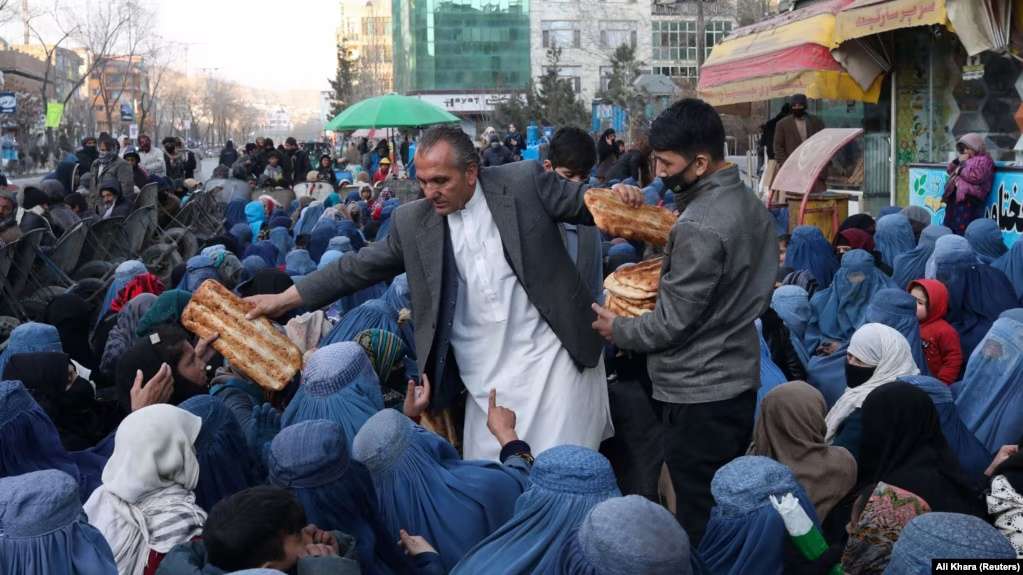
Afghanistan has been ranked among the countries most severely affected by hunger, according to the latest Global Food Crises 2026 report released by UN agencies, the European Union, and humanitarian partners.
The report places Afghanistan fifth worldwide in terms of acute food insecurity, highlighting the scale and persistence of the country’s humanitarian crisis. An estimated 17.4 million people roughly 36 percent of the population are currently facing high levels of acute hunger. Within this group, about 4.7 million people are classified in emergency or famine-like conditions, where immediate assistance is critical to prevent widespread loss of life.
Only a handful of countries including Nigeria, the Democratic Republic of the Congo, Sudan, and Yemen report higher levels of acute hunger, underscoring Afghanistan’s position among the most vulnerable populations globally. Several other countries are also experiencing severe food insecurity, though at slightly lower levels.
At the global level, the report paints an increasingly alarming picture. Approximately 266 million people across 47 countries experienced acute food insecurity in 2025. This represents a dramatic increase compared to 2016, nearly doubling in scale and pointing to a deepening and prolonged global crisis rather than a temporary emergency.
The findings, compiled with contributions from agencies such as the Food and Agriculture Organization, emphasize that hunger is becoming a structural and persistent issue. It is no longer confined to isolated shocks but is driven by overlapping and reinforcing pressures.
Key factors behind rising food insecurity include ongoing armed conflict, climate-related shocks such as droughts and floods, and widespread economic instability. These drivers often intersect, compounding vulnerabilities in both low-income and crisis-affected countries.
In Afghanistan, these global pressures are intensified by country-specific challenges. Years of economic decline, high unemployment, recurring drought conditions, and a sharp reduction in international aid have significantly weakened households’ ability to access food. As a result, millions of Afghans remain heavily reliant on humanitarian assistance to meet their basic needs.
Humanitarian organizations warn that the situation could deteriorate further without sustained funding and improved access for aid delivery. Prolonged hunger is expected to have serious long-term consequences, particularly for children, including malnutrition, impaired development, and reduced future opportunities. It also threatens livelihoods and could further undermine the country’s fragile social and economic stability.
The report ultimately underscores the urgency of coordinated international action to address both immediate needs and the underlying drivers of food insecurity, in Afghanistan and beyond.
Our Pashto-Dari Website

Support Dawat Media Center
If there were ever a time to join us, it is now. Every contribution, however big or small, powers our journalism and sustains our future. Support the Dawat Media Center from as little as $/€10 – it only takes a minute. If you can, please consider supporting us with a regular amount each month. Thank you
DNB Bank AC # 0530 2294668
Account for international payments: NO15 0530 2294 668
Vipps: #557320

Comments are closed.