
Uzbekistan Intercepts First Known Drone-Based Drug Smuggle from Afghanistan, Seizes Opium

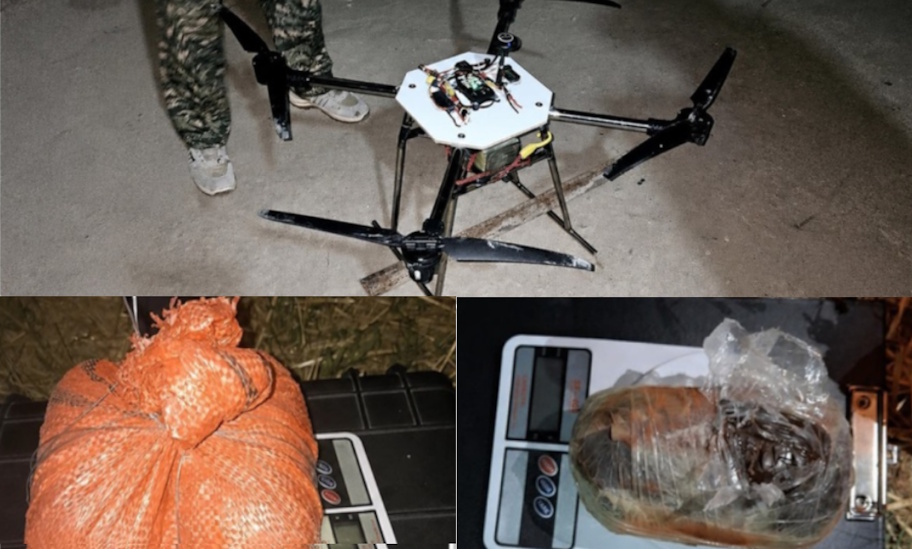
In what authorities are calling a regional first, Uzbekistan’s State Security Service has thwarted a cross-border narcotics smuggling attempt that utilized an unmanned aerial vehicle—marking the first publicly documented case of drone-facilitated drug trafficking along the country’s shared frontier with Afghanistan.
The operation was intercepted late last week in the southern Surkhandarya region, near the strategic Amu Darya River, which forms a natural boundary between the two nations. According to a statement released by the security service on Sunday, border guards and police units spotted the drone in mid-flight and prevented it from crossing into Uzbek airspace. Attached to the aircraft, investigators found approximately 2.03 kilograms (roughly 4.5 pounds) of raw opium, which was promptly seized. A criminal investigation has since been launched, though authorities have not disclosed whether any arrests have been made.
Officials alleged that the drone was piloted by unidentified Afghan nationals, but they offered no further details regarding the suspects’ identities, locations, or whether any ground-based accomplices are being pursued. The lack of transparency around the perpetrators has raised questions about the operational reach of trafficking networks and their ability to coordinate cross-border flights with impunity.
This incident underscores a rapid evolution in smuggling tactics along Central Asia’s southern underbelly. Historically, illicit drugs have moved through porous mountain passes and river crossings via pack animals, vehicles, or on foot. The use of drones which are cheap, relatively quiet, and difficult to detect with conventional radar—represents a new and troubling vector for traffickers seeking to bypass ground patrols, checkpoints, and riverine surveillance. Regional governments, including Uzbekistan, have been racing to upgrade their counter-drone capabilities, but the technological asymmetry between state forces and criminal networks remains a persistent challenge.
The foiled drone shipment comes amid a broader Uzbek crackdown on drug trafficking, with authorities reporting a string of significant seizures over the past several months. In April, three individuals were detained on suspicion of transporting more than 10 kilograms of illegal substances. In May, nearly 600 kilograms of narcotics were confiscated in the border city of Termez a key trading hub on the Amu Darya. Further operations in June, spanning Surkhandarya and the central Samarkand province, yielded an additional 37 kilograms of drugs, according to official figures. Collectively, these busts signal an intensifying flow of contraband, even as Afghanistan’s domestic opium production has plummeted.
Afghanistan has long been the world’s leading source of opiates, with much of its heroin and morphine transiting through Tajikistan, Turkmenistan, and Uzbekistan en route to Russian and European markets. However, that supply chain has undergone a seismic shift since the Taliban administration imposed a nationwide ban on poppy cultivation in April 2022. The prohibition, enforced with varying degrees of rigor, has drastically reduced the area under opium poppy cultivation.
According to the United Nations Office on Drugs and Crime (UNODC) in its 2026 World Drug Report, Afghanistan’s poppy fields shrank from approximately 232,000 hectares in 2022 to just 10,200 hectares in 2025 a staggering reduction of roughly 95%. The collapse in production has disrupted traditional trafficking routes and left many rural farmers without a livelihood, but it has not eliminated the drug trade altogether.
The UNODC has warned that massive stockpiles of opium accumulated during previous harvests remain stockpiled within Afghanistan and neighboring countries, providing a buffer that could sustain trafficking for years. At the same time, trafficking organizations are adapting with alarming speed shifting toward synthetic drugs like methamphetamine and Captagon, which require no farmland and can be produced in makeshift laboratories. These synthetic compounds are easier to conceal, more potent per gram, and increasingly in demand across the Middle East and Asia. The convergence of old stockpiles, new trafficking technologies (including drones), and the rise of synthetics presents a “triple threat” to regional security, the UNODC cautioned.
For Uzbekistan, the drone interception is both a tactical victory and a harbinger of future challenges. While the country has invested heavily in modernizing its border defenses including thermal imaging, motion sensors, and mobile patrol units the growing sophistication of smuggling networks demands constant adaptation. The Tashkent government has also sought closer intelligence-sharing arrangements with its Central Asian neighbors and with international partners, though the volatile situation in Afghanistan complicates cross-border cooperation.
As the Taliban authorities continue to enforce their poppy ban while contending with economic collapse and internal dissent, the flow of drugs may shift further toward synthetic production and more inventive smuggling methods. Uzbekistan’s latest seizure serves as a stark reminder that, even as one door closes on traditional narcotics farming, another window this one flown by remote control has cracked open.
Our Pashto-Dari Website

Support Dawat Media Center
If there were ever a time to join us, it is now. Every contribution, however big or small, powers our journalism and sustains our future. Support the Dawat Media Center from as little as $/€10 – it only takes a minute. If you can, please consider supporting us with a regular amount each month. Thank you
DNB Bank AC # 0530 2294668
Account for international payments: NO15 0530 2294 668
Vipps: #557320

Comments are closed.