
WFP Warns 14 Million Afghans Face Critical Hunger Crisis as Funding Shortfalls Deepen

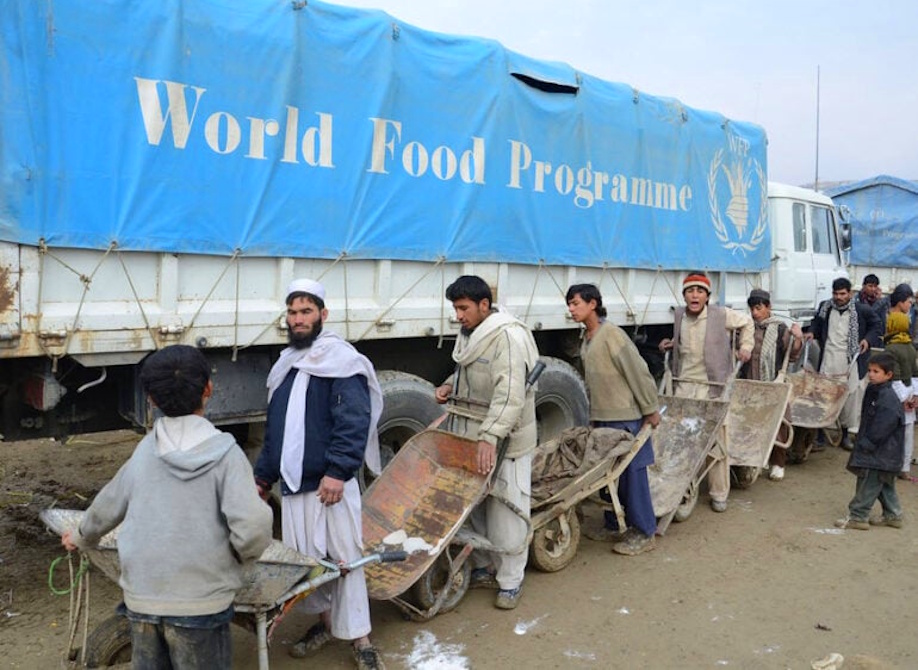
KABUL – The United Nations World Food Programme (WFP) has issued a stark warning that Afghanistan’s already dire hunger crisis is accelerating, with an estimated 14 million people nearly one-third of the population now facing acute food insecurity. The agency cautions that severe funding shortages have crippled relief operations, leaving the vast majority of those in need without access to life-saving food assistance.
In its latest situational report, the WFP revealed that only one in nine Afghans requiring urgent food support is currently receiving it a coverage gap that the agency describes as “unprecedented” in the country’s recent history. The widening chasm between soaring humanitarian needs and dwindling international contributions threatens to push millions closer to starvation, particularly as winter approaches.
A Nation on the Brink: Acute Hunger and Child Malnutrition Surge
According to the WFP, one in three Afghans is now experiencing acute hunger, a condition that forces families to skip meals, sell assets, or resort to desperate coping measures such as child labor or early marriage. The most alarming data, however, centers on child malnutrition: 12 out of Afghanistan’s 34 provinces have recorded critical levels of severe acute malnutrition (SAM) the deadliest form of hunger.
Children under the age of two are disproportionately affected, accounting for 80 percent of the most severe malnutrition cases. At this developmental stage, the lack of adequate nutrients can cause irreversible stunting, cognitive impairment, and weakened immune systems, leaving survivors with lifelong disabilities and diminished potential.
The agency also noted that only one in seven women and children suffering from acute malnutrition currently has access to treatment, due to the closure or scaling back of nutrition clinics across the country.
The Perfect Storm: Economic Collapse, Trade Disruptions, and Mass Returns
The WFP attributes the deepening crisis to a confluence of interconnected factors:
-
Economic freefall and unemployment: Afghanistan’s economy has contracted sharply since 2021, with the collapse of the banking system, loss of development aid, and the decimation of private sector activity. Unemployment and underemployment remain above 40 percent in many regions, eroding household purchasing power.
-
Soaring food prices: Disruptions to regional trade routes exacerbated by border tensions with Pakistan and instability in the Middle East have driven up the cost of basic staples by 20 to 30 percent over the past year, making wheat flour, cooking oil, and pulses unaffordable for low-income families.
-
Mass returns and deportations: Since September 2023, nearly six million Afghans have returned or been forcibly deported from neighboring Iran and Pakistan. This sudden influx has overwhelmed local labor markets, depressed wages, and stretched already fragile public services. Many returnees arrive destitute, having sold their possessions to pay for the journey, and now live in makeshift shelters with no access to food, water, or healthcare.
John Ayliffe, WFP Country Director in Afghanistan, underscored the severity of the situation: “Afghanistan simply does not have the economic capacity to absorb millions of returnees. There are no jobs, no safety nets, and no basic infrastructure to support them. Families are arriving with nothing, and they are competing for scarce work with communities that are already barely surviving.”
Funding Crisis: A $900 Million Gap Threatens Life-Saving Operations
The WFP’s emergency food and nutrition programs for 2026 require approximately $900 million** to operate at full scale. However, with current funding commitments falling far short, the agency urgently needs at least **$500 million before the end of 2025—just to maintain core operations through the harsh winter months, when many remote communities become completely cut off by snow.
The funding shortfall has already forced the suspension of specialized nutritious foods such as ready-to-use therapeutic food (RUTF) and fortified supplements—used to prevent malnutrition in children and pregnant women. Since May 2025, these preventative nutrition programs have been halted nationwide, exposing millions of young children to the risk of acute malnutrition.
The WFP, in partnership with UNICEF, continues to provide treatment for severe cases, but with only a fraction of the required resources, health workers are forced to triage patients, turning away moderate cases that will inevitably deteriorate into emergencies without intervention.
Humanitarian Crisis in Perspective
Afghanistan remains one of the world’s largest and most complex humanitarian emergencies. Years of armed conflict, compounded by climate shocks—including devastating floods and prolonged droughts have decimated agricultural production and rural livelihoods. Meanwhile, the near-total collapse of public health and education systems has left women and girls especially vulnerable, with restrictions on their mobility and access to work further entrenching poverty.
The WFP warns that without immediate and sustained international support, the coming months will witness a catastrophic escalation in hunger and child mortality.
“We are watching a tragedy unfold in slow motion,” said Ayliffe. “The international community must not look away. If we fail to act now, we will see a generation of Afghan children whose futures are permanently damaged not by war, but by hunger. The cost of inaction is infinitely higher than the cost of intervention.”
Call to Action
The WFP has renewed its appeal to donor governments, private sector partners, and humanitarian organizations to step up contributions. While the agency acknowledges the strain on global resources due to concurrent crises, it emphasizes that Afghanistan’s needs are among the most acute and underfunded in the world.
For millions of Afghan families, the difference between survival and starvation hangs in the balance and the window to act is closing fast.
Our Pashto-Dari Website

Support Dawat Media Center
If there were ever a time to join us, it is now. Every contribution, however big or small, powers our journalism and sustains our future. Support the Dawat Media Center from as little as $/€10 – it only takes a minute. If you can, please consider supporting us with a regular amount each month. Thank you
DNB Bank AC # 0530 2294668
Account for international payments: NO15 0530 2294 668
Vipps: #557320

Comments are closed.