

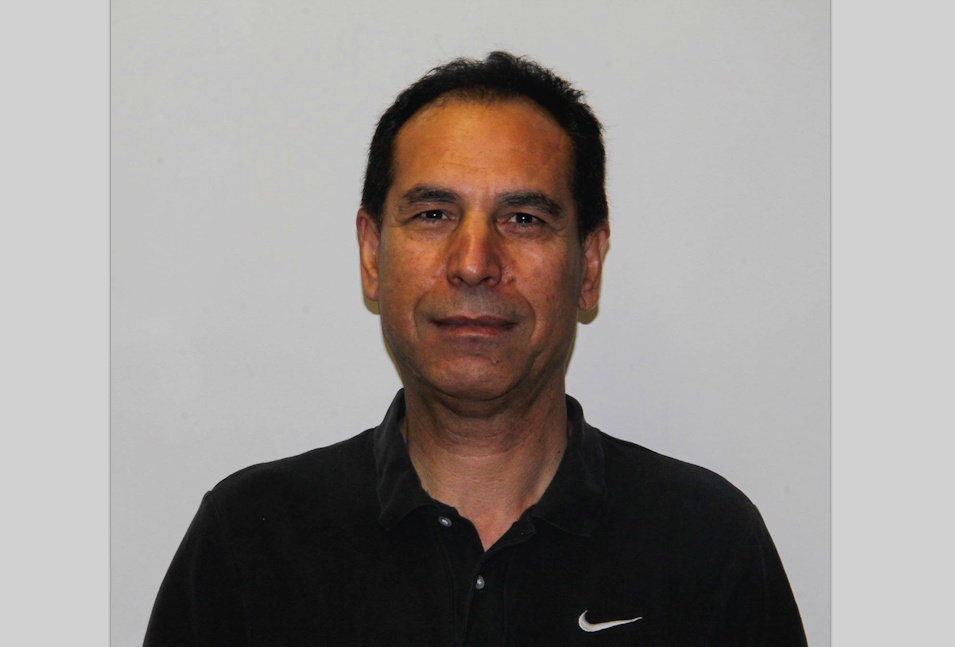
An introduction to the Pashto Language:( From my book, Essential Pashto Grammar, and Phrases)
Let me start my presentation with a quotation from the preface to First Pakhto Book by George W.Gilbertson, he writes:
“His is not the race to be despised and crushed by brute-force, although, perchance this is the only force of which he has conscious knowledge. Rather should we unremittingly strive towards knowing the man as he is, by learning his language; towards making ourselves familiar with him and his surroundings; towards eradicating, slowly but surely, his ignorance and his waywardness, by a treatment, stern, but well-considered, just, and in harmony with the religious beliefs, traditions, and customs of his country; withal towards a policy of clemency, encouragement, and protection; of paternal approbation; not of discouragement and extermination.”
The majority of Afghans are Pashto speakers, but a dialect of Farsi called Dari the other official language of Afghanistan is more widely spoken in the urban centres and among the educated. In Pakistan at least 30 million people speak Pashto and yet it remains only a provincial language spoken in Baluchistan and North West Frontier Province as well as FATA.
The Ethnic Origin of Pashto:
The ethnic origin of those who speak Pashto had been somewhat of a mystery to researchers in the past. In recent years, however, linguistic reconstruction methods have shed more light on their origin. While some Pashtuns claim a Jewish heritage and believe their language is related to Hebrew, a Semitic language, this theory is no longer credible. In fact, Pashto has been traced to Avestan, an ancient Indo-Iranian language, thereby establishing its Aryan or An-European heritage.
The Pashto lexicon clearly testifies to its Iranian origins. It contains words that can be traced to Proto-Iranian, as well as borrowed words acquired from more than a half a dozen languages over a couple of millennia. Even the origin of the name for the Pashtuns can be traced to its Iranian roots. It is interesting to note that a large part of the Pashto lexicon can be traced to word-forms found in the Avesta, the Zoroastrian Holy Book
In comparison to the other major language of Afghanistan, known as Dari, although both are Indo-Iranian, Pashto is a south-eastern Iranian language whereas Dari is a south-western Iranian language. The eastern and western Iranian groups of languages splintered off from each other at least 2,500 years ago. Initially, they broke up into two main branches of Iranian, the southwestern branch (Old Persian) and the North-eastern branch (Avestan), as the result of eastward migrations.
Starting around 700 B.C., successive waves of splintered Middle Iranian languages of the Eastern Iranian family, such as Khwarezmian, Sogdian, Bactrian, and Saka, rooted themselves in Central Asia. In 249 B.C. the Saka were pushed across the Oxus River into Bacteria. This was repeated once again when the Yueh-chin pushed them from Bacteria to the area of the Helmand River. There the Saka occupied an area called Sakistan (modern Sistan) and founded a kingdom that stretched as far as the Persian Gulf. A short time later, in 124B.C, Sakistan was reconquered and became a part of the Parthian Empire.
The Saka nobility became satraps and furnished troops in areas that include modern Peshawar, Jalalabad, and Kandahar. It was probably this ethnic and linguistic thrust that established a new language that we now call Pashto. In the series of Easter-Aryan languages, Pashto has its special and independent place between Persian and Hindi, serving as a link between the two. This has been confirmed by many Western scholars such as Dr.Tromp (German) Mr.Clab Root (German) Professor Dorn, Alphanstine, and others.
Most modern scholars maintain that Pashto speakers originally lived in the Suleiman mountain ranges, east of Kandahar and that they were centered around what is now present-day Quetta. They later moved in and around the cities of Kandahar and Ghazni, expanding westward towards Herat. In the 15th century, eastern tribes moved eastward conquering the regions around Peshawar and proceeded as far as Swat.
Many Pashtun/Afghan dynasties have moved originally from Afghanistan and ruled in India for centuries where they have settled and lived their lives, such as the Lodis, the Ghoris and the Soris to name a few. A manuscript dated 1729 and called the Pata Khazana or “The Hidden Treasure “ presents an anthology of Pashto Poetry from the 8th to the18th century A.D., but little is known about the people or the language before the 15th century A.D., except the Pashtuns were known as a “hard and fierce people by nature. “ Since that time, however, they have certainly left their mark in Central Asia and the sub-continent of India.
George W.Gilbertson further adds:
“He (a Pathan) is withal a proud man, prone to meet scorn with scorn, and ever ready to return blow for blow. That we cannot address him in his own language, and deal with him directly without the help of middlemen, he attributes to either of two reasons, incapacity to learn his language, or indifference to him, his people, and his affairs”.
Pashto or the vernacular language of the majority Afghans; drew the attention of those in the services of East India Company as early as in the first half of the nineteenth century. Among the first arrivals to learn Pashto was the European missionaries who came to spread the message of the Bible in this part of the world. Later, on a much greater scale, the British civil and military officials learned Pashto for administrative purposes to achieve self-sufficiency in interacting with Pathans, Pashtuns or Pakhtun as they are often called, and to acquire knowledge of the people who speak it.
.
The British are considered to be among the first Westerners who have undertaken work on the Pashto language. Dr. Henry Walter Bellew, a surgeon in the Bengal Army, wrote the first book by any British on Pashto grammar, and was published by the Baptist Mission Press-Calcutta in 1854,
The credit for undertaking the most comprehensive work on Pashto language, accomplished by any author during the colonial period, goes to Henry George Raverty who was a military lieutenant of the Bombay Army. Raverty published his first Pashto book on grammar in 1855. He also compiled a dictionary of Pashto in 1860. While serving in Peshawar in 1849-50 he was taught by a learned linguist Qazi Abdur Rahman Khan Mohamadzai of Hashtnagar.
Abdur Rahaman had also taught the legendary Sir Richard Francis Burton when he was serving as a lieutenant in East India Company. Burton was a multilingual explorer, writer, and undercover military spy for British who later
translated the famous classic ‘ Arabian Nights ‘ from Arabic into English in his much adventurous life and also became one of the few non-Moslems ever to perform Haj in Mekkah under the guise of a Pathan in 1853.
Word Order
Pashto is an SOV language with split ergativity. For example, The word order of a normal Pashto sentence will look like this. I water drink (I drink water).
Adjectives come before nouns and they are inflected for gender, number, and case. The Direct Case is used for subjects and direct objects in the present tense. The Indirect Case (oblique case) is used after most pre or post-positions as well as in the past tense as the subject of transitive verbs. Case:
. There are several cases in the Pashto language. They are as follows:
Nominative case- this is the subject of a sentence-. A subject in nominative case normally does not change unless used in the past tense, in which case a singular masculine noun or pronoun used as the subject of a sentence inflicts and takes the “ee” and singular feminine takes “e” for example:
Sarterai(سرتيرى) which means soldier, becomes Sarteree(سرتيري) and in the feminine case Sheza(ښځه) which means woman becomes Sheze(ښځي).
Example of use in a sentence:
Sarteree dazay wokrre(سرتيري ډزي وكړي) . A soldier fired.
Shaze khabare wokrre A woman spoke.
And the plural noun or pronoun regardless of the gender takes “o(او)” or “yo(يو)” for example:
Shaze (ښځي) is the plural of Sheza (ښځه) meaning Women, when used in nominative case it inflicts and becomes “Shezo (ښځو)”
Accusative case – The subject is not changed. The prepositional case is made up of:Dative case,Ablative case and Locative case –The same rule applies with only difference being that here the subject is accompanied by a post or pre- position. i.e. the subject is followed by “ta(ته) ”,’la’ and the changes are the same as in the genitive case “”.سړى نه)”.Locative case – Here the subject is preceded by the preposition “pa (په) ” and followed by postposition “bande (باندي) ”. For example “sarrai(سړى) ” changes to “pa sarree bande(په سړى باندي) ”. The plural takes “o(و)” therefore “sarree(سړى)” becomes “po sarro bande(په سړوباندي) ”.Vocative case – This case applies to a situation where by you address someone or call out their name. The masculine singular takes “a(ء)” and the feminine takes “e(ئ) ” & the plural takes “o(و)”. It can be preceded by the word “ay(اي) ”. For example “sarrai(سړى)” becomes “ay(اى) sarree ia(سړي ئي ) ”. Shaza(ښځه) becomes “ay shaze(اى ښځي) ”. “sarree(سړى) ” which is plural for man becomes “ay sarro(اى سړو)
.Agent case – Which means “by somebody”. The singular masculine takes “ee(يي) ” and singular feminine takes “ay(اى) ” & the plural takes “o(و) ”. It is the same as in the nominative in the present tense. The above rule apply when it is in the past tense
The Definite Artc
There is no definite article” the “in Pashto, but instead there is extensive use of the demonstratives this / that The numeral “yao” (يو) (one), is however used for the Indefinite articles “a” or “an” when the object requires to be mentioned in particular, e.g.Yao afsar,(يوافسر) means an officer or a certain officer.The demonstrative pronouns “daa(دا)” or “daghaa(دغه)” and “Haghaa(هغه) ” are used for the definite articles “the” as: Daa(دا) or Haghaa topak(هغه توپك) means
this or that rifle.
The Verb:
The verb system is very intricate with the following tenses:
Simple Present, Subjunctive, Simple Past, Past Continuous, Present Perfect and Past Perfect. In any of the past tenses, Pashto is an ergative language, i.e. transitive verbs in any of the Past tenses agree with the object of the sentence. For example: za dodai khoram.(I eat food.)which is a transitive sentence in the present, changes to: maa dodai okhwarra.(I ate food).here one can clearly notice that za(I) a direct pronoun, changes to maa an indirect or oblique pronoun and the verb agrees with the object of the sentence i.e.dodai(food) and becomes okhwarrala(ate).
Dialects:
Traditionally Pashto, also commonly written as Pashtu in English, has been divided into two major dialects: the Qandahari or “the soft dialect “spoken in Qandahar and in Quetta; and the Nangarhari dialect or “the hard dialect “spoken in and around Jalalabad and Peshawar.
.Letters:
Pashto has 30 letters, 24 letters of which are shared by both Dari and Arabic, and the remaining 6 letters are distinctive to the Pashto language. They appear neither in Dari nor in Arabic, such as double ‘t’ sound, double ‘d’ sound, double ‘r’ sound , ‘ ts’ sound, ‘zh’ sound, and double ‘n’ sound.
And a couplet by Jamsid a young Pashtun Poet: The meaning goes: ‘May forever be Pashto with the Pashtuns — Pashto befits the (glamours) gallants.
TheEnd.
Bibliography and Selected reading
Bellow, Henry Walter. A dictionary of the Pashto or Pakhto language. Pakistan Publishing House, 1980
Caroe, Olaf. The Pathans: 550 B.C.-A.D. 1957 4th edition. Karachi: Oxford University Press, 1985.
Dupree, Louis. Afghanistan. Princeton: Princeton University Press, 1973
Raverty, H.G. Grammar of the Afghan language. Peshawar: du chapzai, 1981.
Professor Sediqulla Rishteen, Pashto Grammar, University book agency,
Our Pashto-Dari Website
Support Dawat Media Center
If there were ever a time to join us, it is now. Every contribution, however big or small, powers our journalism and sustains our future. Support the Dawat Media Center from as little as $/€10 – it only takes a minute. If you can, please consider supporting us with a regular amount each month. Thank you
DNB Bank AC # 0530 2294668
Account for international payments: NO15 0530 2294 668
Vipps: #557320

Comments are closed.