
Over 6 Million Afghan Migrants Return Home in Three Years, Exposing Acute Shelter Crisis, UN Agencies Warn

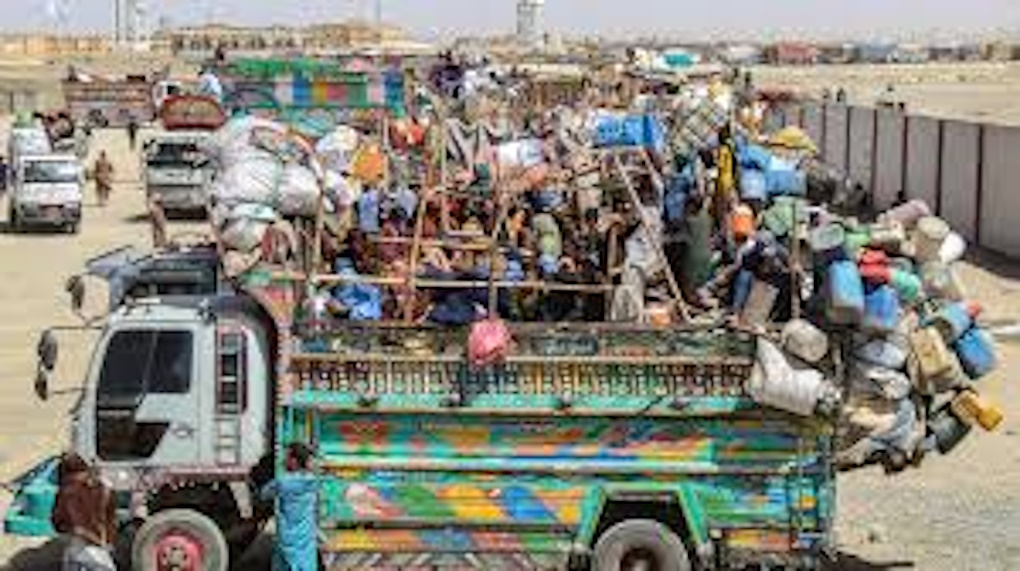
More than 6 million Afghan migrants have returned to their homeland over the past three years and the tide shows no sign of slowing the United Nations Human Settlements Programme (UN-Habitat) reported on Thursday. In a post on its official X (formerly Twitter) account, the agency highlighted that this massive and sustained influx is placing unprecedented strain on Afghanistan’s already fragile housing stock, urban infrastructure, and basic service delivery systems.
“This is not a short-term spike; it is a fundamental demographic shift occurring in a country with very little capacity to absorb it,” a UN-Habitat spokesperson noted. The agency stressed that access to adequate shelter is not merely a matter of roofs and walls but represents the foundational first step toward restoring dignity, safety, and stability for returnee families many of whom have spent years in exile. UN-Habitat urgently appealed to the international community for increased financial and logistical support to help host communities, local municipalities, and provincial authorities cope with the swelling population, warning that without swift action, overcrowding, informal settlements, and health crises could spiral out of control.
The agency’s appeal comes against a backdrop of relentless daily arrivals, driven by a combination of forced deportations particularly from neighboring Iran and Pakistan and voluntary returns amid shifting regional policies, economic pressures, and tightening border controls. In recent months, Pakistani authorities have intensified a crackdown on undocumented foreigners, accelerating the exodus of Afghan families who had sought refuge across the border for decades. Meanwhile, Iran has continued to repatriate thousands of Afghan workers, many of whom had been supporting families back home through remittances, now abruptly severed.
This housing warning follows closely on the heels of a grim update from the UN Office for the Coordination of Humanitarian Affairs (OCHA), which painted an even more dire picture of the shelter emergency. According to OCHA, displaced populations, newly arrived returnees, and communities already reeling from recurrent natural disasters including devastating floods, earthquakes, and droughts face an acute and immediate need for safe, weather-resistant shelter as winter approaches. Many returnees are arriving to find their former homes destroyed, occupied, or located in areas with no functioning water, electricity, or sanitation.
Yet humanitarian responders are hamstrung by a crippling funding deficit. OCHA revealed that its shelter assistance appeal, which requested $160 million to cover emergency tents, transitional housing, roofing materials, and repairs for partially damaged homes, has received only a fraction of that sum leaving a staggering gap of $153 million, or over 95% unfunded. This shortfall has already forced agencies to scale back distributions, delay planned repairs, and turn away families at reception centers. As a result, thousands of returnees are being left with no option but to sleep in open fields, abandoned buildings, or makeshift lean-tos, heightening risks of exposure, disease, and gender-based violence, particularly for women and children.
The broader humanitarian picture remains among the most critical in the world. UN agencies have repeatedly underscored that Afghanistan’s needs compounded by four decades of conflict, a decimated economy, soaring unemployment, food insecurity affecting nearly 20 million people, and the increasing frequency of climate-induced catastrophes rank as one of the largest and most complex global emergencies. The return of millions, far from alleviating pressure, has added a new demographic layer to an already overstretched aid system. Without a dramatic infusion of donor funds and a coordinated international strategy that bridges short-term relief with longer-term reintegration and livelihood support, UN-Habitat and OCHA warn that the country risks trading one crisis for another turning the hope of return into a cycle of displacement, destitution, and despair.
Our Pashto-Dari Website

Support Dawat Media Center
If there were ever a time to join us, it is now. Every contribution, however big or small, powers our journalism and sustains our future. Support the Dawat Media Center from as little as $/€10 – it only takes a minute. If you can, please consider supporting us with a regular amount each month. Thank you
DNB Bank AC # 0530 2294668
Account for international payments: NO15 0530 2294 668
Vipps: #557320

Comments are closed.