
Lebanon State Media Reports New Israeli Strikes in South After Netanyahu Order; Ceasefire Further Strains

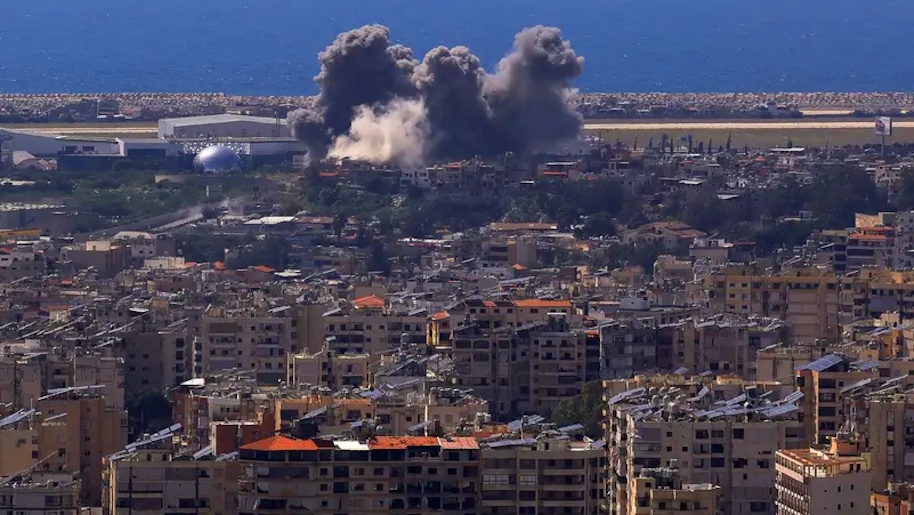
BEIRUT/JERUSALEM – Lebanese state media reported a fresh wave of Israeli airstrikes across at least four locations in southern Lebanon on Saturday, following a direct order from Israeli Prime Minister Benjamin Netanyahu to attack Hezbollah over alleged violations of a fragile ceasefire.
The strikes mark a significant escalation in tensions, coming just days after the ceasefire was extended and as both sides accuse each other of breaching the terms of the agreement brokered by the United States.
Details of the Strikes
Lebanon’s state-run National News Agency (NNA) reported a pair of rapid, successive strikes on a town in the Bint Jbeil district, known as a Hezbollah stronghold. Additional strikes were reported on a town in the Tyre district and on two more towns in the Nabatieh district. Thick plumes of smoke were seen rising from several of the targeted areas, according to local witnesses.
The Israeli military confirmed the operations, stating in a brief statement that it had “struck Hezbollah terrorist infrastructure used for military purposes across southern Lebanon.” The military added that it would “continue to operate decisively against threats,” without providing further details on the specific targets.
Casualties and Rocket Fire
The escalation turned deadly on Saturday. Lebanon’s state news agency reported that four people were killed in the Israeli strikes in the south, though it was not immediately clear if the fatalities were combatants or civilians. The Israeli military, meanwhile, claimed that Hezbollah had fired rockets into northern Israel, posing the latest challenge to the already tenuous truce.
The Israeli military later detailed that it had struck “loaded rocket launchers” belonging to Hezbollah in three locations in southern Lebanon overnight, and had targeted “several Hezbollah fighters” in separate strikes. Later on Saturday, the military said it had also struck facilities used by Hezbollah’s elite Radwan forces. It remained unclear whether the four reported deaths were directly linked to these specific strikes.
The Israeli military reiterated a stern warning for Lebanese residents not to approach the Litani River area in southern Lebanon, a key zone of operation where it says it is actively battling Hezbollah operatives. The military also reported intercepting a “suspicious aerial target” within areas its forces currently occupy and said two rockets were fired by Hezbollah into northern Israel, one of which was intercepted. There were no reports of casualties on the Israeli side.
Political Context and Ceasefire Under Strain
The violence follows a direct directive from Prime Minister Benjamin Netanyahu, who ordered the military to “prepare for intense fighting” in response to what Israel describes as repeated Hezbollah ceasefire violations. On Saturday, Israel vowed to attack Hezbollah targets “forcefully,” further testing a fragile ceasefire with Lebanon that U.S. President Donald Trump recently announced had been extended by three weeks. The original truce had been due to expire on Sunday.
The ceasefire, initially agreed upon after some of the heaviest cross-border fighting in years, has led to a significant reduction in overall hostilities. However, Israel and the Iran-backed militant group Hezbollah have continued to clash in southern Lebanon, where Israel has maintained a military presence in a self-declared buffer zone along the border.
Hezbollah Rejects Extension
Adding to the diplomatic fragility, a Hezbollah lawmaker declared on Friday that the U.S.-mediated ceasefire in the war with Israel was “meaningless,” a direct rebuke just a day after the Trump administration announced the three-week extension. The lawmaker accused Israel of failing to honor the original agreement’s terms, which included a full withdrawal of Israeli forces from southern Lebanon a stipulation Israel has so far not fully met.
With both sides digging in and accusing the other of bad faith, the internationally brokered truce appears increasingly precarious, raising fears of a return to wider conflict along the Israel-Lebanon border.
Our Pashto-Dari Website

Support Dawat Media Center
If there were ever a time to join us, it is now. Every contribution, however big or small, powers our journalism and sustains our future. Support the Dawat Media Center from as little as $/€10 – it only takes a minute. If you can, please consider supporting us with a regular amount each month. Thank you
DNB Bank AC # 0530 2294668
Account for international payments: NO15 0530 2294 668
Vipps: #557320

Comments are closed.