
From Panama to Malacca: Inside America’s Emerging Strategy to Contain China
Ahmad Fawad Arsala

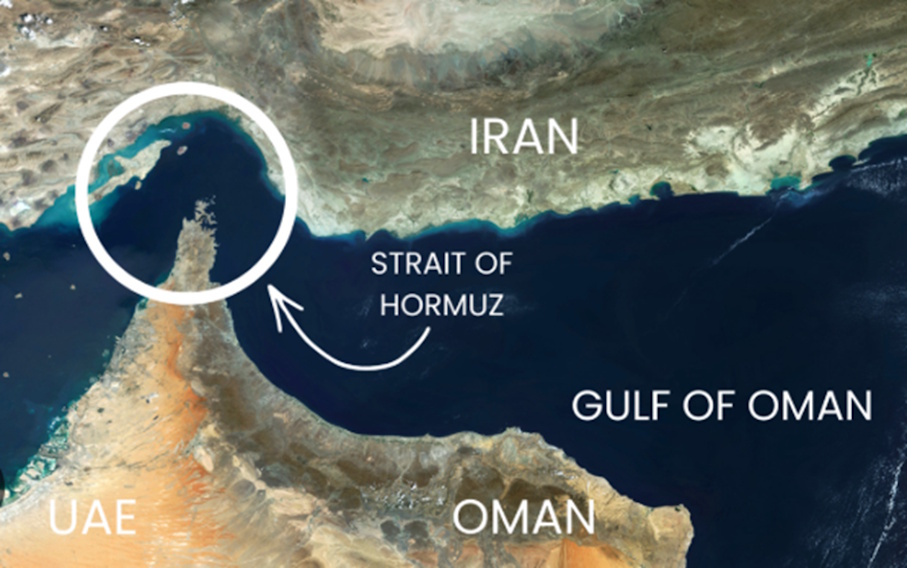
America is no longer pretending. What used to look like a scatter of foreign policy decisions now reads like a map, and not a subtle one. Step back for a moment and the pattern sharpens. From Latin America to the Persian Gulf to Southeast Asia, the United States is positioning itself around the narrow passages that keep the global economy moving. This is not about isolated crises. It is about control.
Consider Venezuela first. The removal of Nicolás Maduro was framed, predictably, in the language of democracy and stability. That framing misses the point. Venezuela sits on immense oil reserves, and over the past two decades China has treated it as a strategic hedge against instability in the Middle East. Washington’s move was not just about who governs Caracas. It was about interrupting a supply relationship that mattered deeply to Beijing’s long-term planning. When you disrupt energy at its source, you are not just changing politics. You are changing calculations.
Now shift north to the Panama Canal. What happened there barely registered in public debate, yet it may prove to be one of the most consequential moves of all. When BlackRock led a consortium to acquire major port operations tied to the canal, it was presented as a financial transaction. It was anything but. Those ports had previously been linked to a Hong Kong based operator, and their transfer came after sustained pressure and quiet diplomacy. Soon after, Panama aligned more closely with Washington on security matters, opening the door to expanded U.S. operational access. It is a subtle shift, but an important one. Control the infrastructure around the canal, and you gain influence over how global trade reroutes when other pathways are under stress.
That stress is no longer theoretical. In the Strait of Hormuz, the United States moved from signaling to action. Strikes on Iranian targets were followed by what is, in practical terms, a blockade. Ships are intercepted. Traffic slows. Insurance costs surge. Markets react in real time. Washington does not need to close the strait completely to make its point. It only needs to demonstrate that it can shape the flow of energy leaving the Gulf. For countries dependent on that flow, especially China, the implication is immediate and uncomfortable.
But energy does not stop in the Gulf. It has to move east, and that journey leads straight through the Strait of Malacca. This is where the strategy tightens. The recent defense pact between the United States and Indonesia is not just another agreement to file away under regional cooperation. It expands military coordination, increases joint operations, and, most importantly, gives Washington greater operational reach in and around one of the busiest shipping lanes on earth. Indonesia sits at the crossroads of the Indian and Pacific Oceans. Greater access there means greater visibility, and in a crisis, potentially greater control.
Seen one by one, each of these moves can be explained away. Venezuela is about politics. Panama is about investment. Hormuz is about Iran. Southeast Asia is about partnerships. Put them together, though, and the story changes. The United States is positioning itself along the routes that matter most, upstream where energy is produced, midstream where it can be disrupted, and downstream where it must pass to reach Asia.
This is not the old model of containment. There are no rigid blocs, no single dividing line. Instead, there is a network, flexible, distributed, and built around geography. It does not rely on dramatic confrontation. It relies on quiet leverage. Control the chokepoints, influence the flows, and you do not have to fire a shot to shape the outcome.
That is the uncomfortable reality taking shape. The United States is not simply competing with China in the traditional sense. It is building the capacity to squeeze the system that China depends on, gradually, selectively, and with precision. And once that capacity exists, the balance of power begins to shift long before anyone calls it a conflict.
Control the Oil, Control China: The Grand Strategy Unfolding in Hormuz
Our Pashto-Dari Website

Support Dawat Media Center
If there were ever a time to join us, it is now. Every contribution, however big or small, powers our journalism and sustains our future. Support the Dawat Media Center from as little as $/€10 – it only takes a minute. If you can, please consider supporting us with a regular amount each month. Thank you
DNB Bank AC # 0530 2294668
Account for international payments: NO15 0530 2294 668
Vipps: #557320

Comments are closed.