
Hibatullah Akhundzada in Eid Message Urges Officials to Avoid Oppressing the People Amid Afghanistan’s Deepening Crisis

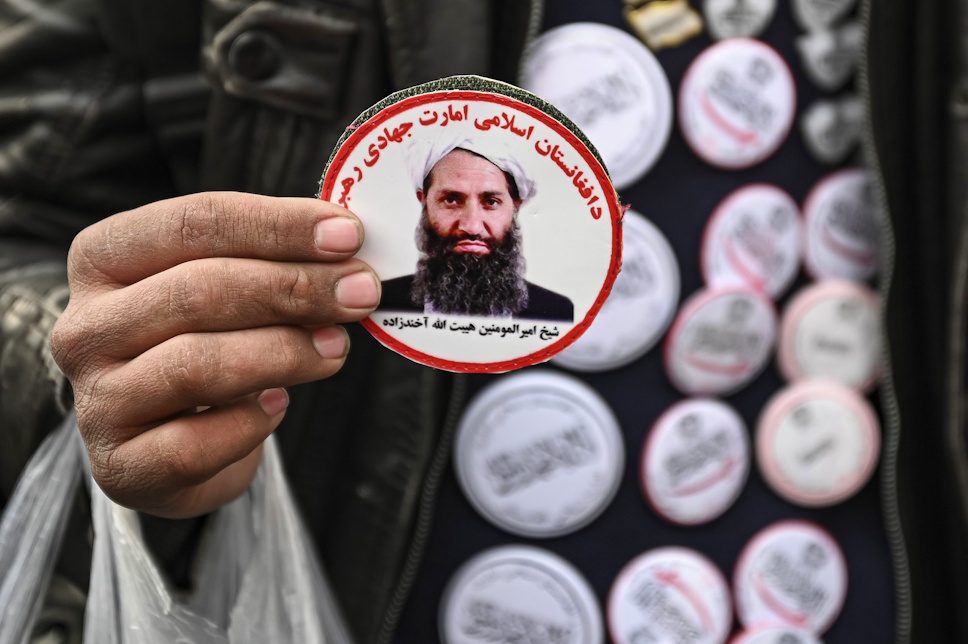
The Supreme Leader of the Islamic Emirate of Afghanistan (IEA), Sheikh Hibatullah Akhundzada, called on Taliban officials to avoid oppressing or mistreating the Afghan people, warning that injustice and abuse of power ultimately lead to humiliation and defeat.
In his Eid-ul-Adha message, published Sunday by Taliban spokesman Zabihullah Mujahid on X, Akhundzada stressed that officials must fully carry out their duties in serving the public, ensuring security, and providing welfare in accordance with Sharia principles. He instructed Taliban authorities to keep their doors open to the people, respond to public concerns promptly, and process affairs fairly and efficiently.
“Under the governance of the Islamic Emirate, the Sharia-based rights of all citizens are safeguarded. No one is permitted to oppress another; injustice must be prevented, and the rights of the oppressed must be pursued,” the statement said.
Akhundzada emphasized that Sharia courts are actively implementing Islamic law and that the Ministry for the Promotion of Virtue and Prevention of Vice continues efforts to reform Afghan society according to Islamic teachings. He called on religious scholars, ministry officials, and preachers to intensify efforts to educate people on essential religious obligations, especially prayer and moral conduct.
The Taliban leader also reaffirmed his administration’s commitment to supporting vulnerable groups, including widows, orphans, people with disabilities, and the poor. He instructed authorities to pay greater attention to Afghan refugees returning from neighboring countries and to improve land distribution, transportation, and resettlement services for them.
At the same time, Akhundzada called on Afghans to preserve and protect what he described as the country’s “Islamic system,” saying it was established through the sacrifices of thousands of Taliban fighters and supporters.
“It is our shared responsibility to protect and preserve our Islamic system, which has come through the sacred blood of many martyrs and the sacrifices of Mujahideen and sincere Muslims,” he said. He urged unity among Afghans to resist what he called the “evil intentions of enemies” and to strengthen the Taliban-led administration.
The Taliban chief also reiterated that the Islamic Emirate seeks political and economic relations with the international community—particularly Islamic countries—within what he described as the framework of Sharia law. He claimed the Taliban has fulfilled its responsibilities in this regard.
However, Akhundzada’s message notably omitted any mention of women’s rights, girls’ education, political inclusion, or civil liberties—issues that remain at the center of international criticism of Taliban rule.
Since regaining power in August 2021, the Taliban have imposed sweeping restrictions on women and girls, including bans on secondary and university education, severe limits on employment opportunities, restrictions on movement without a male guardian, and exclusion from most areas of public life. These measures have drawn widespread condemnation from the United Nations, human rights organizations, and foreign governments.
Meanwhile, Afghanistan continues to face one of the world’s worst humanitarian crises.
Millions of Afghans are living in extreme poverty, while unemployment remains widespread and economic activity has sharply declined since the Taliban takeover. International sanctions, frozen Afghan assets, declining foreign aid, and the collapse of development programs have pushed many families into desperation.
According to United Nations agencies, more than half of Afghanistan’s population requires urgent humanitarian assistance, with millions facing severe food insecurity. Malnutrition among children has reached alarming levels, while healthcare services remain critically underfunded and overstretched.
Afghan families across the country continue to struggle with rising prices, lack of jobs, forced displacement, and limited access to education and medical care. Thousands of young people are leaving the country in search of safety and opportunity, while many who remain face growing uncertainty about their future.
The Taliban administration also remains diplomatically isolated. No country has formally recognized its government, with concerns over women’s rights, girls’ education, political freedoms, and inclusive governance continuing to block broader international recognition and significant foreign investment.
Despite Akhundzada’s calls for justice and service to the people, many Afghans and international observers argue that the country’s worsening economic hardship, social restrictions, and lack of basic freedoms continue to deepen public frustration and suffering under Taliban rule.
Our Pashto-Dari Website

Support Dawat Media Center
If there were ever a time to join us, it is now. Every contribution, however big or small, powers our journalism and sustains our future. Support the Dawat Media Center from as little as $/€10 – it only takes a minute. If you can, please consider supporting us with a regular amount each month. Thank you
DNB Bank AC # 0530 2294668
Account for international payments: NO15 0530 2294 668
Vipps: #557320

Comments are closed.