

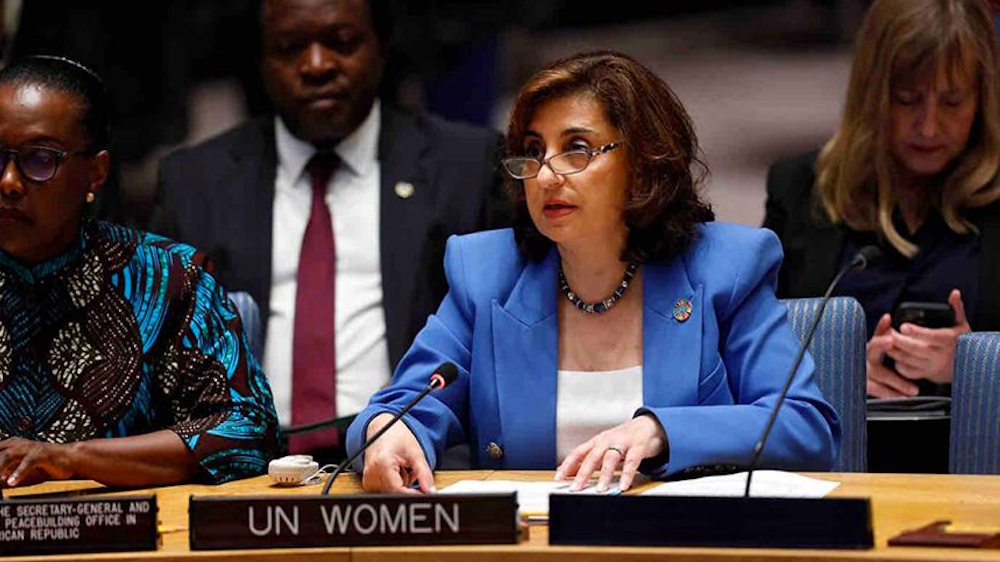
Sima Bahous, Executive Director of UN Women, has issued a stark warning on the fifth anniversary of the Taliban’s return to power: the systematic exclusion of women and girls in Afghanistan must never become a normalized feature of international relations or global governance. In a forceful statement posted to X on Monday, August 17, Bahous declared that women’s rights in Afghanistan are “not negotiable,” reaffirming that UN Women stands firmly alongside Afghan women and girls in their ongoing fight for dignity, equality, and the right to be heard.
Bahous’s remarks land at a grim milestone. Five years after the Taliban seized control, Afghan women and girls are enduring what the UN has classified as “gender apartheid” a sweeping, legally codified system of oppression unparalleled in the modern world. Girls remain indefinitely barred from secondary schools and universities, erasing an entire generation of female scholars. Women face draconian restrictions on employment, are prohibited from travelling without a male guardian, and have been effectively erased from public life, including from parks, gyms, and even basic healthcare settings in some provinces.
These gender-based policies are not merely a violation of fundamental human rights; they have profoundly accelerated Afghanistan’s broader humanitarian and economic collapse. The United Nations has repeatedly warned that excluding half the population from education and the workforce is economically self-destructive, depriving the country of vital skills and talent. International economists estimate that the ban on women working in NGOs and the UN alone has cost the Afghan economy hundreds of millions of dollars and crippled the delivery of essential health and nutrition services, particularly in rural areas.
Humanitarian organizations on the ground have stressed that women’s participation is not an optional extra, but an operational necessity. Female aid workers are often the only personnel permitted to reach women and children in conservative communities, where cultural norms strictly limit interaction with male staff. Without women on the frontlines of relief efforts, millions of vulnerable families are cut off from food distributions, malnutrition screenings, and maternal healthcare, turning a political crisis into a life-or-death emergency.
The wider humanitarian picture remains catastrophic. Today, more than two-thirds of Afghanistan’s population requires humanitarian assistance to survive. Widespread poverty, unemployment exceeding 30%, acute food insecurity, and the near-collapse of the public health system have pushed families to the brink. While the UN and its partners continue to deliver critical aid, severe funding shortages exacerbated by global competing crises are forcing agencies to scale back lifesaving programs just as needs reach historic highs.
The international community has largely condemned the Taliban’s decrees, but the response has been fragmented. While UN officials and global leaders have denounced the policies as having profound social, economic, and psychological consequences, they have also warned that the Taliban’s isolation is deepening. By rejecting basic international norms, the de facto authorities are cutting Afghanistan off from diplomatic engagement, development finance, and global legitimacy—further entrenching the suffering of ordinary Afghans.
As the world reflects on five years of regression, Bahous’s message is clear: silence is complicity, and gradual acceptance is a betrayal. The exclusion of Afghan women cannot be dismissed as an internal cultural matter or a temporary political inconvenience. It is a deliberate, ongoing crime against humanity. The international community must move beyond statements of concern and take cohesive, decisive action whether through diplomatic pressure, accountability mechanisms, or sustained, conditional humanitarian funding to ensure that the women and girls of Afghanistan are not forgotten, and that their rights remain at the very center of the global agenda.
Our Pashto-Dari Website
Support Dawat Media Center
If there were ever a time to join us, it is now. Every contribution, however big or small, powers our journalism and sustains our future. Support the Dawat Media Center from as little as $/€10 – it only takes a minute. If you can, please consider supporting us with a regular amount each month. Thank you
DNB Bank AC # 0530 2294668
Account for international payments: NO15 0530 2294 668
Vipps: #557320

Comments are closed.