


Why America’s changing priorities and Afghanistan’s growing ties with Russia, China, and Central Asia make the November 19 meeting unlikely to undermine Kabul’s position.
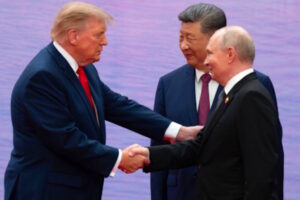
The November 19, 2026, meeting between Donald Trump, Vladimir Putin, and Xi Jinping in Shenzhen has raised questions about the future of international relations and whether the world’s three major powers might reach understandings over regional conflicts and strategic interests. For Afghanistan, the concern is whether such an agreement could affect its political position or undermine the relationships it has developed with neighboring countries.
There are good reasons to believe this is unlikely. Afghanistan is no longer the strategic priority it once was for Washington. The United States is preoccupied with the war involving Iran, tensions across the Middle East, its competition with China, and its confrontation with Russia over Ukraine. Meanwhile, Russia has formally recognized the Taliban government, China is expanding its political and economic engagement with Kabul, and Central Asian countries are developing closer trade and transportation ties with Afghanistan.
These developments have changed Afghanistan’s regional position. The country is increasingly connected to a network of neighboring states that have direct economic and security interests in its stability. The three major powers may have reasons to manage their differences, but there is little evidence that Afghanistan is a subject on which they intend to reach a new political arrangement.
Washington’s Attention Has Shifted
The United States’ priorities have changed considerably since its military withdrawal from Afghanistan in August 2021. Washington no longer maintains a military presence in the country, and there is little indication that the Trump administration intends to return to the kind of direct political and military involvement that defined American policy for two decades.
The war involving Iran has further shifted American attention and resources toward the Middle East. The conflict has consequences for regional security, energy supplies, international trade, and the wider balance of power. It has also placed additional demands on American military and diplomatic resources.
At the same time, Washington must manage its relationship with China, the continuing war in Ukraine, and its broader competition with Moscow and Beijing. These are immediate strategic concerns for the United States. Afghanistan, by comparison, is no longer at the center of American foreign policy.
This does not mean Washington has abandoned every concern about Afghanistan. Terrorism, regional security, the treatment of women and girls, and the question of political legitimacy remain issues in its relationship with the Taliban authorities. But there is a significant difference between maintaining those concerns and having the political appetite to intervene directly in Afghanistan’s affairs.
That distinction matters. The United States may continue to monitor developments in Afghanistan, but its present priorities leave little room for a major new initiative there. Nor is there a compelling reason to assume that Washington would seek an agreement with Moscow and Beijing that would restrict their existing economic and diplomatic relations with Kabul.
Russia Is Building a Direct Relationship With Kabul
Russia’s growing engagement with Afghanistan is one of the clearest indications that the regional situation has changed. Moscow has moved beyond limited diplomatic contact and is pursuing practical economic cooperation with the Taliban government.
On November 13, Russian Deputy Prime Minister Alexei Overchuk arrived in Kabul with a delegation of approximately 70 Russian business representatives. The delegation met senior Taliban officials, including Prime Minister Mohammad Hassan Akhund, Deputy Prime Minister for Economic Affairs Abdul Ghani Baradar, and Foreign Minister Amir Khan Muttaqi.
The discussions covered transport, logistics, agriculture, pharmaceuticals, mining, road and railway construction, factories, and the possibility of establishing a special economic zone in Afghanistan. Russian companies also expressed interest in areas such as chemical fertilizers and the development of fertilizer production inside Afghanistan.
According to Overchuk, bilateral trade during the first eight months of 2026 exceeded $349 million, more than double the level recorded during the comparable period. The visit also produced an economic memorandum of understanding between the Afghanistan Chamber of Commerce and Investment and Russia’s business representatives. These are concrete commercial developments, not simply diplomatic gestures. https://www.euronews.com/2026/11/13/russia-sends-major-business-delegation-to-kabul-for-business-talks-with-the-taliban
Russia formally recognized the Taliban government in July 2025, becoming the first country to take that step since the Taliban returned to power. That decision gave Moscow a different position from most other governments, which continue to maintain varying degrees of contact with Kabul without granting formal recognition.
Russia’s reasons for engagement are practical. It wants to expand its economic presence, develop trade routes, protect its regional security interests, and maintain influence in Central Asia. Afghanistan’s location gives it potential importance in connecting Central and South Asia. A stable Afghanistan could also help Russia pursue broader commercial and transportation links with the region.
Moscow’s policy toward Kabul is therefore based on its own calculations. It is not dependent on American approval, and a meeting between Trump, Putin, and Xi does not erase Russia’s independent interests in Afghanistan.
China’s Interests Are Strategic, but Its Approach Remains Cautious
China’s relationship with Afghanistan is shaped by geography, security, economic opportunity, and its broader regional ambitions. Afghanistan shares a short border with China’s Xinjiang region and occupies a position connecting Central Asia, South Asia, and the Middle East. Beijing has reasons to maintain working relations with whichever government controls Kabul.
China’s priorities include preventing militant groups from using Afghan territory to threaten its western region, protecting Chinese citizens and investments, and securing access to Afghanistan’s mineral resources. Beijing also wants to avoid instability that could affect its wider regional projects, including the China-Pakistan Economic Corridor.
China has not, however, moved as quickly as the Taliban government would like on major investment and infrastructure commitments. Its approach remains cautious, particularly where security is concerned. The opening of the Wakhan Corridor road illustrates both Afghanistan’s ambitions and the limits of China’s current commitment.
On October 4, 2026, Afghanistan inaugurated a 121-kilometer road through the Wakhan Corridor in Badakhshan province, connecting the country to the Chinese border. The project cost approximately 365 million Afghanis, or $5.5 million. Afghan officials said the road was constructed by Afghan engineers without foreign engineers or advisers. https://www.aa.com.tr/en/asia-pacific/afghanistan-inaugurates-wakhan-corridor-road-linking-country-to-china/4077721
The road is strategically important because it could eventually provide Afghanistan with another route to Chinese and regional markets. It could also reduce the country’s dependence on Pakistani transit routes, which have repeatedly been affected by political tensions and border closures.
But the project should not be overstated. The road reaches the Chinese frontier, not an operating commercial crossing. China has not opened a customs facility at the Wakhjir Pass, and the border remains closed to regular commercial traffic. Beijing continues to weigh the potential economic benefits against security concerns, particularly the threat posed by militant groups. https://www.aljazeera.com/features/2026/11/14/wakhan-corridor-afghanistan-china-taliban
Even with these limitations, the road represents a significant Afghan effort to diversify its economic connections. It also demonstrates that Kabul is looking beyond its traditional routes and seeking a stronger position in regional trade.
China’s interests in Afghanistan are not dependent on the outcome of the Shenzhen summit. Beijing has its own reasons to maintain relations with Kabul, just as it has its own security concerns and economic priorities. The summit may provide an opportunity for the three governments to discuss international issues, but it does not eliminate China’s separate calculations in Afghanistan.
Central Asia Is Becoming More Important to Afghanistan
Perhaps the most practical change in Afghanistan’s regional position is the growing engagement of Central Asian countries. For these states, Afghanistan is not simply a political problem or a security concern. It is also a potential trade corridor, an energy partner, and a link between markets in Central Asia and South Asia.
Uzbekistan has been particularly active in developing relations with Kabul. Its approach has focused on trade, transportation, humanitarian assistance, and regional connectivity. Turkmenistan has its own economic interests, particularly in energy transmission and the proposed Turkmenistan-Afghanistan-Pakistan-India gas pipeline. Kazakhstan is an important supplier of grain and other goods to Afghanistan, while regional discussions continue over railway and transit connections.
These relationships are increasingly practical. Afghanistan needs reliable access to food, fuel, electricity, industrial goods, and export markets. Central Asian countries want access to wider markets and more efficient transportation routes. Both sides benefit from predictable trade and a more stable regional environment.
The recent export of Bamyan potatoes to Uzbekistan is a small but meaningful example. On November 12, the first shipment of eight trucks carrying potatoes from Bamyan began its journey toward Termez through the Hairatan crossing. The Afghanistan Chamber of Commerce and Investment said the two countries’ chambers had also agreed to work toward an arrangement for exporting 100,000 metric tons of Bamyan potatoes to Uzbekistan, with the commercial agreement still being finalized. https://pajhwok.com/2026/11/12/1st-shipment-of-bamyan-potatoes-exported-to-uzbekistan/
This is the kind of economic cooperation Afghanistan needs. It creates markets for Afghan farmers, encourages investment in agricultural production, and gives businesses a reason to develop more reliable trade connections. If expanded carefully, such arrangements can support rural incomes and help diversify Afghanistan’s exports.
Regional trade is not a substitute for broader economic reform, but it can provide a foundation for it. The more Afghanistan becomes connected to neighboring economies, the greater the practical interest those countries will have in its stability.
Pakistan’s Leverage Is Facing New Challenges
For decades, Pakistan’s geography gave it considerable influence over Afghanistan’s access to international markets. Afghan businesses relied heavily on Pakistani ports and border crossings to move goods. When relations between Kabul and Islamabad deteriorated, border closures and transit restrictions caused serious economic disruption.
That dependence has encouraged Afghanistan to look for alternatives. The Wakhan road, expanded use of routes through Iran, and stronger commercial relations with Central Asian states all reflect Kabul’s desire to diversify its options.
The Wakhan Corridor is not yet a functioning alternative to Pakistan’s major trade routes. Its difficult terrain, seasonal weather, limited infrastructure, and closed border crossing make that clear. Nevertheless, it represents a longer-term possibility. If China eventually agrees to open the crossing and the necessary infrastructure is developed, Afghanistan could gain another route into East Asian markets.
This possibility also has implications for Pakistan. A country with several reliable trade routes is less vulnerable to pressure from any single neighbor. Afghanistan does not need to abandon trade with Pakistan, which remains geographically and economically important. It needs alternatives that allow it to negotiate and trade from a stronger position.
China’s own position is more complicated. Beijing continues to value its relationship with Pakistan and its investment in the China-Pakistan Economic Corridor. It has not indicated that it intends to replace that route with Wakhan. But China’s continued caution does not diminish Afghanistan’s interest in developing other connections. Kabul’s objective should be diversification, not the replacement of one dependency with another.
The Trump-Xi-Putin Summit: Afghanistan Is Not a Bargaining Chip
The November 19 summit in Shenzhen was historic because it brought together the leaders of the United States, China, and Russia for an unprecedented trilateral meeting. Its significance should not be dismissed. The three countries have enormous military, economic, and diplomatic influence, and their ability to manage competition has consequences for international security.
Following the meeting, the three governments issued a joint “Declaration toward Peace.” The statement addressed strategic stability, international security, energy supplies, nuclear risks, and the need for dialogue. It also called for greater attention to international institutions and diplomatic arrangements. https://www.afp.com/en/china-us-russia-issue-declaration-toward-peace-after-first-summit
But the declaration did not identify Afghanistan as a subject of agreement, nor did the available reporting indicate that the country’s political future or its relations with neighboring states formed part of a new arrangement among the three leaders.
The meeting should not automatically be compared with the 1945 Yalta Conference, when the victorious powers of World War II negotiated the postwar settlement and the division of influence in Europe. The circumstances are different. Trump, Putin, and Xi arrived in Shenzhen with competing interests and separate foreign policy objectives. Analysts also cautioned against interpreting the meeting as a new division of the world into spheres of influence. https://www.aljazeera.com/news/2026/11/19/what-do-trump-putin-and-xi-want-from-their-shenzhen-meeting
The declaration itself was broad, and the summit did not resolve the major conflicts that divide the three countries. The war in Ukraine and the conflict involving Iran remain serious points of disagreement. The leaders may have an interest in keeping diplomatic channels open, but that does not mean they have reached a comprehensive understanding on every regional issue.
Afghanistan is unlikely to be an exception. Russia has formally recognized the Taliban government and is pursuing commercial agreements with Kabul. China has its own security and economic interests along the Afghan border. Central Asian states are expanding trade and transport cooperation with Afghanistan because it serves their own economic and security interests.
None of these relationships requires Washington’s permission. Nor is there an obvious reason why Russia or China would abandon their interests in Afghanistan simply because their leaders met with the American president.
The more reasonable conclusion is that the summit is unlikely to change Afghanistan’s regional position in any fundamental way. It may influence the broader international environment, but there is no clear evidence that Afghanistan was treated as a bargaining chip or that the three powers agreed to restrict their engagement with Kabul.
Afghanistan’s Future Will Be Decided in Kabul
Afghanistan’s changing regional relationships create opportunities, but they do not guarantee economic recovery or political stability. The Taliban government still faces serious challenges. International recognition remains limited, the banking system and financial restrictions continue to complicate business, and foreign investors remain concerned about legal certainty, security, and the reliability of government institutions.
The restrictions on women and girls, particularly their exclusion from secondary and higher education and many areas of employment, remain a major obstacle to international engagement. These policies also deprive Afghanistan of the skills and contributions it needs for economic development. No amount of regional trade can compensate for the loss of an entire generation’s educational and professional opportunities.
The government must also address concerns about militant groups operating from Afghan territory, improve relations with neighboring countries, and establish predictable rules for investment and commerce. Regional governments may be willing to work with Kabul, but they will continue to judge Afghanistan by its ability to provide security and honor its commitments.
A more balanced foreign policy would serve Afghanistan’s interests. Kabul should maintain working relations with Russia and China without becoming dependent on either. It should strengthen ties with Uzbekistan, Turkmenistan, Kazakhstan, and other regional partners while keeping channels open with the United States and European countries. Afghanistan should avoid becoming part of any major power’s rivalry and instead use its geographical position to encourage trade, transit, and economic cooperation.
The November 19 summit does not appear to threaten this approach. If anything, the growing involvement of regional countries gives Afghanistan more room to pursue its own economic interests than it had when its foreign relations were dominated by the United States and Pakistan.
The real question is whether the Taliban government can use this opportunity responsibly. The Russian business delegation, the Wakhan road, and the first shipment of Bamyan potatoes to Uzbekistan are encouraging developments, but they are only early steps. They must lead to sustained investment, reliable trade routes, jobs, and improvements in the lives of ordinary Afghans.
Afghanistan is not likely to be a casualty of the Trump-Xi-Putin summit. Its future will depend much more on the decisions made in Kabul, the government’s ability to build trust with its neighbors, continue expanded ties and transactions with central Asia, China and India and to some extent its willingness to address the political and social problems that continue to hold the country back.
Support Dawat Media Center
If there were ever a time to join us, it is now. Every contribution, however big or small, powers our journalism and sustains our future. Support the Dawat Media Center from as little as $/€10 – it only takes a minute. If you can, please consider supporting us with a regular amount each month. Thank you
DNB Bank AC # 0530 2294668
Account for international payments: NO15 0530 2294 668
Vipps: #557320
