
Iran’s Assembly of Experts Names Mojtaba Khamenei as New Supreme Leader Following Father’s Death in Strike

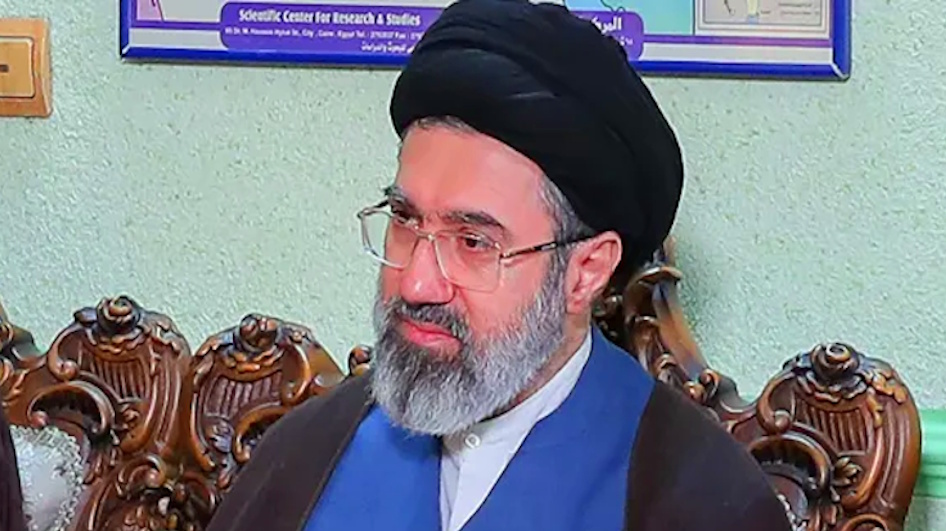
TEHRAN- Iran’s Assembly of Experts has selected Ayatollah Mojtaba Khamenei as the Islamic Republic’s third supreme leader, state media reported early Monday, filling a leadership vacuum created by the death of his father, Ayatollah Ali Khamenei, in a military strike.
The 88-member clerical assembly convened an emergency session after reports emerged that the 85-year-old Ali Khamenei had been killed on February 28 in what Iran has described as a joint U.S.-Israeli attack on his compound in Tehran. His wife, daughter-in-law, and one of his daughters were also reportedly killed in the strike. Mojtaba Khamenei, 56, was not present at the time of the attack.
In a statement circulated on state media, the Assembly of Experts confirmed the succession was carried out with an “overwhelming majority vote” and “without interruption” to prevent a power vacuum during what it termed “wartime conditions.” The body urged all Iranians, “especially the elites and intellectuals of the seminaries and universities,” to “pledge allegiance to the leadership and maintain unity.”
The swift appointment marks a historic and unprecedented shift in the Islamic Republic. For the first time in its 47-year history, the son of a supreme leader has succeeded his father, establishing what critics decry as a hereditary transfer of power, a system the 1979 revolution was explicitly launched to overthrow.
From the Shadows to the Pinnacle of Power
Mojtaba Khamenei has long been one of the most powerful yet enigmatic figures in Iran. While holding no formal public office, he has for decades been a central player in the inner circle of the late supreme leader’s office, cultivating deep and influential ties with the paramilitary Islamic Revolutionary Guard Corps (IRGC). His formal elevation moves him from the shadows to directly lead a system his family has dominated for over four decades.
In recent years, as his father’s health declined, Mojtaba’s name was increasingly touted by hardline factions as the natural successor. His ascension is a clear sign that these factions remain firmly in control of the establishment and signals a likely hardening of the regime’s stance amid the current conflict.
A mid-ranking cleric with the title of hojatoleslam—a rank below the ayatollah typically required for the supreme leader—Khamenei’s religious credentials are expected to be a point of contention. However, the constitution was amended in 1989 to accommodate his father, who also lacked the traditional qualifications at the time of his appointment, paving the way for a similar compromise.
Ties to Security Forces and Accusations of Brutality
Khamenei’s relationship with the IRGC dates back to his youth, when he served in the force’s Habib Battalion during the Iran-Iraq War in the 1980s. Many of his wartime comrades have since risen to top posts in the country’s security and intelligence apparatus, forming a loyal network around him.
For nearly two decades, opposition figures, both inside and outside Iran, have linked Khamenei’s name to the violent suppression of dissent. The reformist camp first accused him of wielding influence over the IRGC’s Basij force to crush protesters during the Green Movement in 2009, which erupted following the disputed re-election of President Mahmoud Ahmadinejad.
Basij forces have since been at the forefront of crackdowns on multiple waves of nationwide protests. Most prominently, human rights organizations have accused state forces of killing hundreds of protesters during unrest in late 2022 and early 2023, a charge the government has consistently denied, blaming “terrorists” and “rioters” allegedly backed by foreign adversaries.
A Low Profile and Allegations of Financial Empire
Despite his immense influence, Mojtaba Khamenei has assiduously avoided the public eye. He does not give public lectures, deliver Friday sermons, or make political addresses—to the point that many Iranians are unfamiliar with his voice, even as they knew of his rising star within the theocracy.
His public image is further complicated by longstanding allegations of amassing a vast economic empire. Under U.S. and Western sanctions, Khamenei is accused of controlling billions of dollars in assets through a network of insiders and front companies. Reports by outlets like Bloomberg have linked him to Ali Ansari, whose Bank Ayandeh was forcibly dissolved by the state after incurring massive debts from loans to unnamed insiders. The bank’s collapse reportedly contributed to Iran’s rampant inflation, with losses partly compensated by public funds. Neither Khamenei nor Ansari has publicly addressed the allegations, which also include the purchase of luxury properties in Europe.
International Reaction
International reaction to the sudden leadership change has been guarded. In an interview with the Times of Israel, U.S. President Donald Trump declined to comment directly on Mojtaba Khamenei’s appointment, stating only: “We’ll see what happens.” However, in an earlier interview with ABC News, Trump adopted a more interventionist tone, asserting that if Iran’s next leader did not receive approval from Washington, “he will not last long,” and adding that the United States should have a role in shaping Iran’s future leadership.
A Nation at War
Mojtaba Khamenei now assumes leadership of a country under intense military pressure. Following the strike that killed his father, the U.S. and Israel have launched an extensive bombing campaign across Iran. In response, the government has imposed a nationwide internet blackout and severely restricted the flow of information, making it difficult to assess the full scale of the conflict or the public’s reaction to the new leader.
As the Islamic Republic enters this perilous and uncertain chapter, the question remains whether the new, untested supreme leader can command the loyalty of a fractured establishment and a war-weary population.
Our Pashto-Dari Website

Support Dawat Media Center
If there were ever a time to join us, it is now. Every contribution, however big or small, powers our journalism and sustains our future. Support the Dawat Media Center from as little as $/€10 – it only takes a minute. If you can, please consider supporting us with a regular amount each month. Thank you
DNB Bank AC # 0530 2294668
Account for international payments: NO15 0530 2294 668
Vipps: #557320

Comments are closed.