

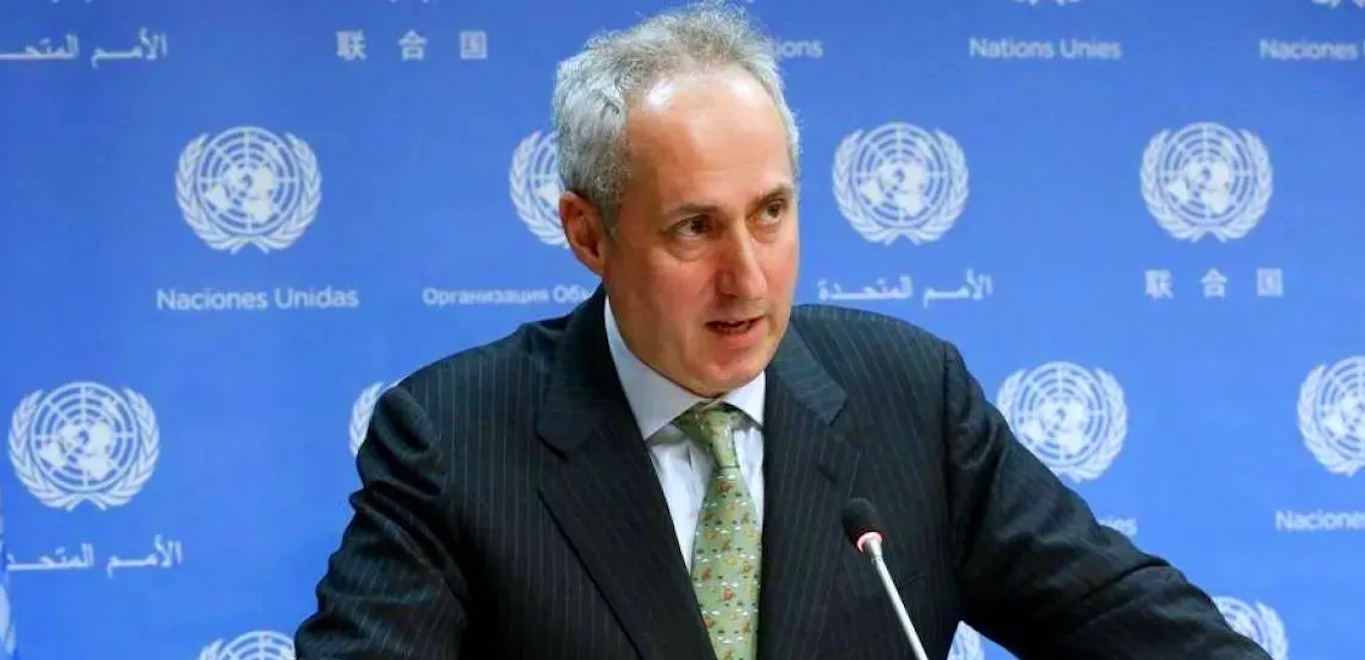
The United Nations and UNICEF have issued stark warnings that Afghanistan’s continued ban on girls’ education could cost the nation billions, exacerbate workforce shortages, and cripple its already fragile health and education systems. Beyond the immediate violation of human rights, the country faces mounting economic losses and deepening social strain as millions of girls remain deprived of schooling.
The United Nations has reported that ongoing restrictions on girls’ education are inflicting significant economic damage, with estimated losses reaching approximately $84 million annually. UN spokesperson Stéphane Dujarric, citing a recent UNICEF analysis, emphasized that the systematic exclusion of girls from classrooms is undermining Afghanistan’s long-term development, economic resilience, and social stability. According to the analysis, at least one million girls are currently denied their right to education in a country that already had one of the world’s lowest female literacy rates. The UN further warns that if the restrictions persist until 2030, more than two million girls could be blocked from receiving an education beyond the primary level, entrenching gender inequality and severely limiting future opportunities for an entire generation.
The crisis has intensified dramatically since the Taliban’s return to power in 2021. Secondary education for girls has been largely suspended, and severe restrictions have been imposed on women’s employment across most sectors. Despite repeated international appeals and widespread condemnation from global organizations and human rights groups, the Taliban’s policies remain firmly in place. In addition to school closures, recent edicts have banned women from universities, NGOs, and many forms of public life, further shrinking the space for female participation in society.
UNICEF has cautioned that the continued exclusion of girls from education and women from the workforce could create severe structural shortages in critical fields requiring female professionals. By 2030, Afghanistan may face a deficit of more than 25,000 female teachers and healthcare workers, sectors that rely heavily on women to operate effectively within the country’s cultural context, where female patients and students often cannot be served by men.
A recent UNICEF report projects that up to 20,000 female teachers and approximately 5,400 female health workers could leave their professions due to the current climate, placing additional strain on already crumbling systems. This trend not only diminishes the existing skilled workforce but also blocks the entry of a new generation of educated women into the labor market, creating a self-perpetuating cycle of exclusion and poverty.
The impact is already visible. In the education sector, the number of female teachers declined from approximately 72,963 in 2022 to around 66,208 in 2024, despite sustained demand for schooling. This shortage disproportionately affects girls, as the presence of female teachers is often essential for their families to permit their continued education and for creating safe learning environments.
In the health sector, access to services especially for women is expected to deteriorate further. Cultural and social restrictions in many parts of Afghanistan limit women’s ability to seek care from male health workers, making female doctors, nurses, and midwives critical for delivering maternal and child healthcare. Without enough female professionals, life-saving services such as prenatal care, childbirth assistance, and treatment for common illnesses could become inaccessible. This is particularly alarming given Afghanistan’s already high maternal and infant mortality rates, among the worst globally.
UNICEF has warned that the decline in female health professionals could drastically reduce access to essential services, leading to long-term public health consequences, including preventable deaths and increased malnutrition. Without urgent and decisive international action to restore girls’ education and women’s participation in the workforce, Afghanistan risks deepening its humanitarian crisis, weakening its prospects for sustainable recovery, and condemning millions of girls and women to a future of poverty, illiteracy, and preventable disease. The window for meaningful intervention is rapidly closing.
Our Pashto-Dari Website
Support Dawat Media Center
If there were ever a time to join us, it is now. Every contribution, however big or small, powers our journalism and sustains our future. Support the Dawat Media Center from as little as $/€10 – it only takes a minute. If you can, please consider supporting us with a regular amount each month. Thank you
DNB Bank AC # 0530 2294668
Account for international payments: NO15 0530 2294 668
Vipps: #557320

Comments are closed.