
Heavy Rain Floods Tents Housing Displaced Palestinians in Gaza as Aid Shortages Hamper Response

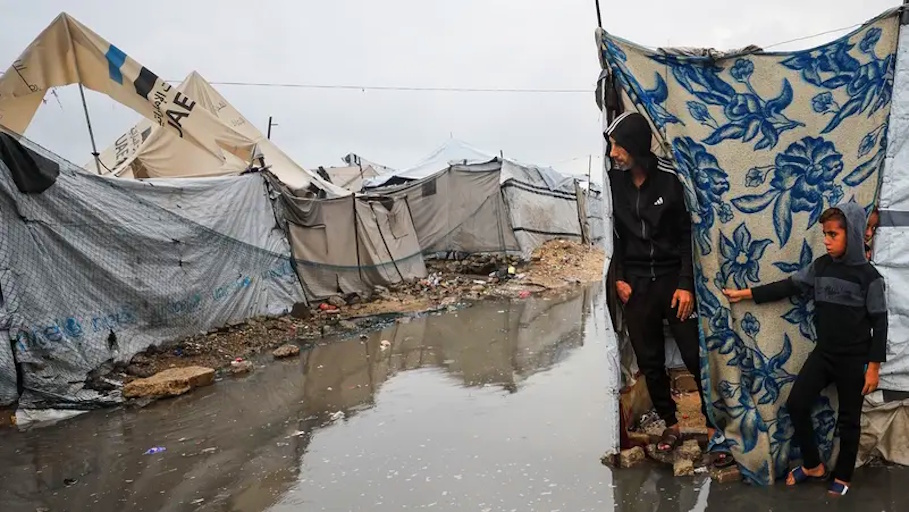
Heavy rains have flooded tens of thousands of tents sheltering displaced Palestinians packed into encampments across the Gaza Strip, washing away makeshift shelters and soaking blankets and mattresses, local authorities reported on Saturday. The deluge has compounded an already dire humanitarian crisis, leaving families exposed to the elements as winter approaches and aid agencies struggle to respond.
Widespread Flooding Affects Tens of Thousands
The Hamas-run Gaza government media office said at least 70,000 tents had been flooded within a 12-hour period, affecting tens of thousands of displaced people. While no fatalities were reported, the flooding caused injuries and widespread damage to personal belongings and temporary shelters.
The territory’s civil defense service said it had received approximately 1,500 distress calls from displaced residents seeking help. Three abandoned houses also collapsed under the weight of the rain, though no injuries were reported in those incidents.
Residents Struggle to Cope
At a tent encampment in Gaza City, scenes of desperation unfolded as displaced families attempted to salvage what remained of their shelters. Some people tried to repair their damaged tents, while others used sand to reinforce them and prevent water from seeping inside. Parents rushed to evacuate their children from flooded tents, and many families found themselves without dry bedding or a place to sleep.
Olfat Magdoub, a Gaza resident, tried in vain to sweep water away from her tent as the rain continued to fall.
“This is the first day of rain, and of course we are already flooded. What will happen if it rains again the next day? This is only the first day and we’re already overwhelmed,” she said.
Recounting previous storms, she added: “Two weeks ago when it rained, I swear to God, I spent four days sleeping on blankets spread on the floor because the rainwater had flooded the bedding. Same now, the mattresses are wet so we sleep on the ground.”
Rafiq Ghattas, another displaced resident, stood barefoot in the middle of a large pool of rainwater as he described the lack of support.
“We have no resources, no tarpaulins, no tents and no one is checking on us,” he said.
Infrastructure Devastated, Response Crippled
Municipal and civil defense officials said they were unable to cope with the storm due to severe fuel shortages and damage to essential equipment. They reported that Israel had destroyed hundreds of vehicles during its military campaign against Hamas, including bulldozers and water-pumping trucks that would normally be deployed during flooding emergencies.
The war has displaced most of Gaza’s more than 2 million residents and left much of the territory in ruins. The vast majority of the population now lives in tent camps that offer little protection against the elements, and the approaching winter rainy season threatens to worsen conditions further.
Competing Narratives on Aid and Responsibility
Hamas blamed Israel for not allowing shelters and construction materials into Gaza, accusing Israeli authorities of restricting imports that could help displaced families prepare for winter.
COGAT, the Israeli military agency that coordinates aid deliveries, did not immediately respond to the accusations. In a statement issued Friday, the agency said it had stepped up efforts to improve sanitary conditions across Gaza ahead of the heavy rain, which had been forecast, in coordination with international organizations.
The agency reported that four additional vacuum trucks entered Gaza this week through the International Committee of the Red Cross, joining eight others brought in over the past month. These vehicles are intended to support sewage pumping, weekly waste removal, and repairs to water and sewage infrastructure.
Ceasefire Stalls, Reconstruction Lags
A US-brokered ceasefire agreement last year called for the eventual reconstruction of Gaza, but little progress has been made toward that goal. Negotiators have failed to reach agreement on terms for Hamas to disarm or for Israel to withdraw its troops, which currently control approximately two-thirds of the territory. Residents in those areas have been ordered to leave.
The lack of a durable ceasefire and the unresolved political questions have left reconstruction efforts at a standstill, leaving displaced families in limbo and increasingly vulnerable to natural hazards.
Mounting Toll of the Conflict
Palestinian authorities say more than 74,000 people have been killed in Gaza since Israel began its military campaign in response to the October 7, 2023 attacks, in which Hamas-led fighters killed approximately 1,200 people in southern Israel and took hundreds hostage.
The humanitarian situation in Gaza remains catastrophic, with widespread destruction of homes, hospitals, schools, and infrastructure. International aid organizations have repeatedly warned that the territory is on the brink of famine and that disease outbreaks are likely as sanitation systems collapse.
Winter Brings New Threats
The flooding this week is a harbinger of the challenges ahead as the winter rainy season sets in. Tents that offer minimal protection during dry weather become death traps in storms, and without adequate drainage, fuel for pumps, or materials to reinforce shelters, displaced families face months of misery.
Aid agencies have called for unimpeded access to deliver winterization kits, including tarpaulins, warm clothing, blankets, and heating fuel. But with border crossings restricted and bureaucratic obstacles persisting, the response remains woefully inadequate to meet the scale of need.
For families like Magdoub’s, the immediate future offers little relief. “This is only the first day and we’re already overwhelmed,” she said. “What will happen if it rains again?”
Our Pashto-Dari Website

Support Dawat Media Center
If there were ever a time to join us, it is now. Every contribution, however big or small, powers our journalism and sustains our future. Support the Dawat Media Center from as little as $/€10 – it only takes a minute. If you can, please consider supporting us with a regular amount each month. Thank you
DNB Bank AC # 0530 2294668
Account for international payments: NO15 0530 2294 668
Vipps: #557320

Comments are closed.